Catastrophe Preserved in Ash
Across the ancient world, few discoveries have captured the imagination quite like cities frozen at the exact moment of disaster. Among the most extraordinary are Akrotiri and Pompeii—two civilizations separated by more than a thousand years, yet united by a similar fate.
Both cities were buried beneath volcanic ash, sealing buildings, objects, and even moments of daily life in astonishing detail. Yet despite these similarities, the stories they tell are profoundly different—offering contrasting insights into how ancient societies lived, responded to disaster, and ultimately disappeared.
Akrotiri: The Bronze Age City Ahead of Its Time
Long before the rise of classical Greece, Akrotiri flourished on the island of Santorini during the Bronze Age, around the 17th century BCE. It was part of the wider Minoan world, a civilization known for its maritime trade, artistic sophistication, and advanced infrastructure.
A Remarkably Advanced Society
Excavations at Akrotiri have revealed a city that feels strikingly modern in its design. Its features include:
Multi-story buildings with stone and timber frameworks
Complex drainage and sewage systems
Carefully planned streets and neighborhoods
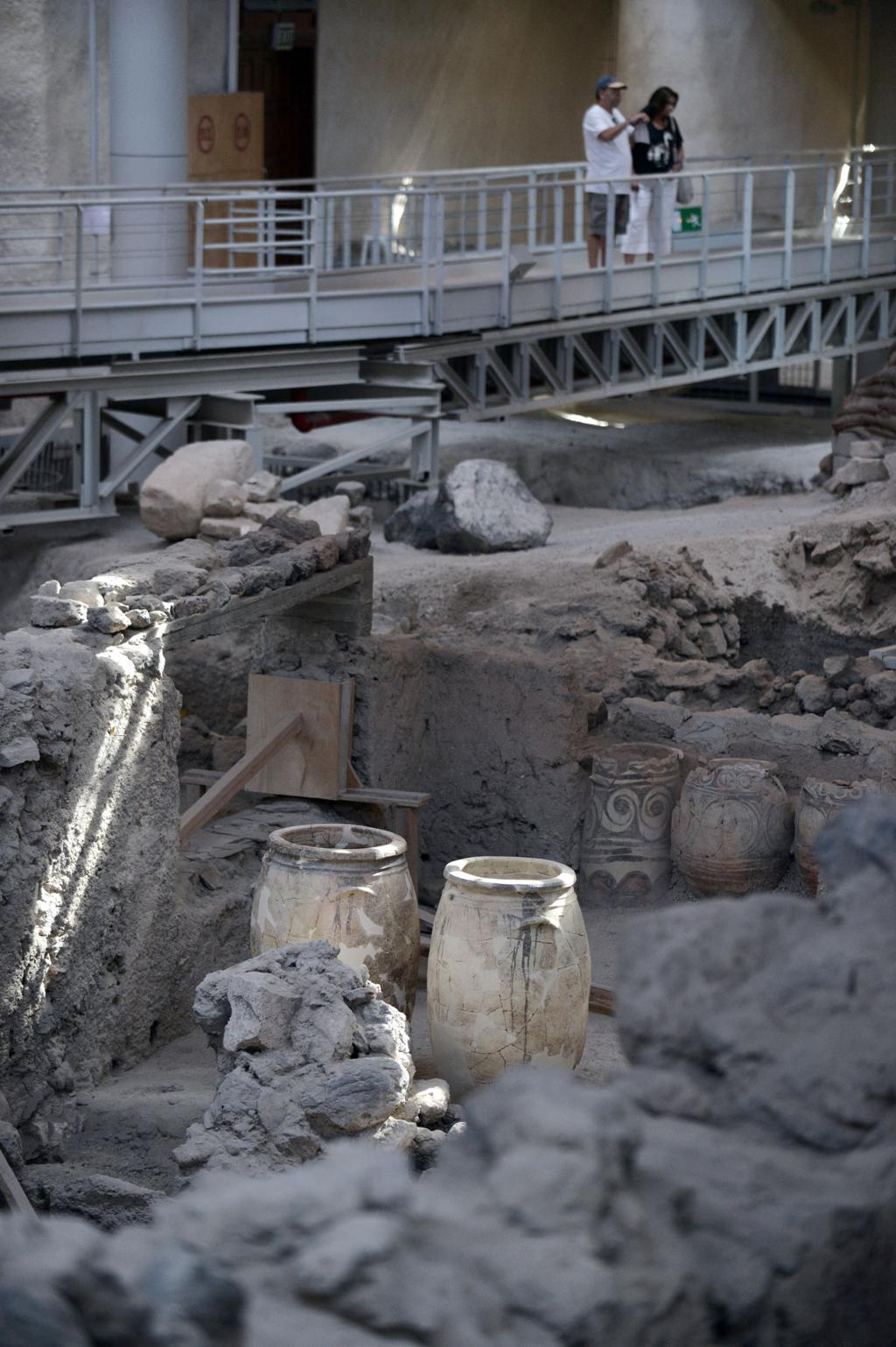
Large storage jars (pithoi) for food and trade goods
These elements suggest a highly organized urban environment, one that prioritized both functionality and comfort.
Art That Captured Everyday Life
Perhaps the most breathtaking discoveries at Akrotiri are its frescoes. These vibrant wall paintings depict:
Maritime scenes with ships and coastal landscapes
People engaged in daily activities
Animals, plants, and symbolic imagery
Unlike many ancient artworks focused on rulers or warfare, Akrotiri’s frescoes offer a more human perspective—capturing moments of life, movement, and culture.
The Mystery of the Missing People
One of the most puzzling aspects of Akrotiri is what is not found: human remains.
Despite the scale of the eruption that destroyed the city, archaeologists have uncovered very few bodies. This strongly suggests that residents may have evacuated in advance, possibly after experiencing warning signs such as earthquakes or volcanic activity.
If true, Akrotiri represents not just a tragedy—but a rare example of successful disaster response in the ancient world.
Pompeii: A Roman City Caught in Time
More than a millennium later, another city would meet a similar but far more devastating fate. In 79 CE, the eruption of Mount Vesuvius buried Pompeii under layers of ash and pumice.
Unlike Akrotiri, Pompeii tells a story of sudden catastrophe and human loss.
A Snapshot of Roman Life
Pompeii offers one of the most detailed records of daily life in the Roman Empire. Its remains include:
Houses decorated with mosaics and frescoes
Shops, bakeries, and taverns
Public baths and temples
Streets with preserved wheel tracks
Everyday objects—from cooking utensils to graffiti—provide an intimate look at how people lived, worked, and socialized.
The Human Tragedy
What makes Pompeii especially powerful is the presence of its victims. Archaeologists have created plaster casts of bodies found in the ash, capturing their final moments.
These haunting figures reveal:
People shielding themselves from falling debris
Families huddled together
Individuals attempting to flee
They transform Pompeii from a historical site into a deeply human story—one of fear, confusion, and loss.
No Time to Escape
Unlike Akrotiri, Pompeii’s residents appear to have had little warning. The eruption unfolded rapidly, releasing deadly gases and ash that overwhelmed the city.
Many people likely did not understand the danger until it was too late.
Comparing Two Ancient Tragedies
Although both cities were preserved by volcanic eruptions, their differences highlight the unpredictability of natural disasters.
Timing and Warning
Akrotiri: Likely experienced warning signs, allowing evacuation
Pompeii: Sudden eruption, leaving little time to escape
Human Impact
Akrotiri: Few casualties discovered
Pompeii: Thousands perished, preserved in ash
Cultural Context
Akrotiri: Bronze Age, Minoan-influenced society
Pompeii: Roman Empire, highly urbanized and structured
Preservation Style
Akrotiri: Focus on architecture and art
Pompeii: Preserves both environment and human experience
What These Cities Reveal About the Ancient World
Together, Akrotiri and Pompeii provide an unparalleled window into the past.
They show us:
How ancient cities were designed and organized
The role of art, trade, and daily life in different cultures
The impact of natural disasters on human societies
Most importantly, they reveal how people responded to crisis—whether through preparation or panic.
Lessons That Still Matter Today
These ancient disasters are not just historical events—they carry lessons that remain relevant in the modern world.
The importance of early warning systems
The need for disaster preparedness
The vulnerability of even advanced societies
Both cities remind us that while technology and knowledge have advanced, humanity is still deeply connected to the forces of nature.
Frozen Moments, Living Stories
Akrotiri and Pompeii are more than archaeological sites. They are time capsules, preserving moments that would otherwise have been lost forever.
In Akrotiri, we see a society that may have escaped in time—leaving behind a silent, beautifully preserved city.
In Pompeii, we encounter the human cost of disaster—lives interrupted in an instant.
Together, they tell a powerful story:
civilizations may fall, but their stories endure—etched in ash, waiting to be rediscovered.