When we think of the great rulers of antiquity, we usually picture monuments designed to overwhelm the senses. The pharaohs built towering, pointed pyramids; Roman emperors favored massive, sprawling mausoleums wrapped in columns; and later Persian kings carved intricate, colossal facades directly into vertical cliff faces at Naqsh-e Rostam.
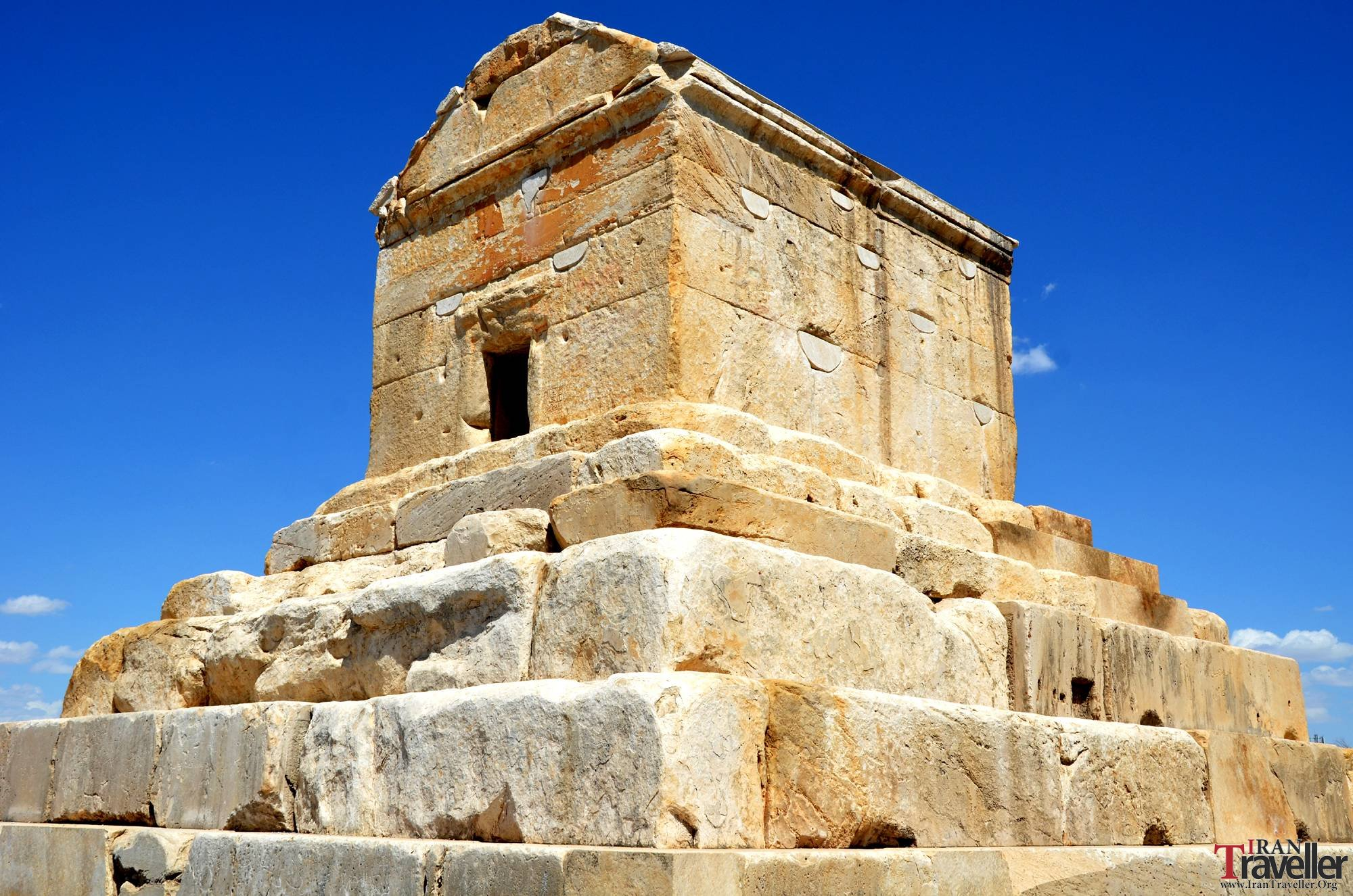
Yet, the resting place of Cyrus the Great—the visionary founder of the Achaemenid Persian Empire—shuns all imperial grandiosity. Standing completely isolated on the wind-swept plains of Pasargadae in modern-day Iran, his tomb is an exercise in radical simplicity. It is an enduring architectural paradox: a remarkably small, austere structure built to honor a man who ruled the largest empire the world had ever seen.
1. The Anatomy of the Monument
Constructed in the 6th century BCE, the tomb is a masterclass in clean, geometric lines. It relies entirely on structural proportion rather than ornate decorations or inscriptions to project power.
The structure is built out of massive blocks of white, crystalline limestone, fitted together using advanced dry-masonry techniques with iron swallow-tail clamps—no mortar required. Architecturally, it is divided into two distinct components:
The Plinth (The Base): A rectangular, six-tiered stepped platform that closely resembles a Mesopotamian ziggurat or an Elamite temple structure. The steps diminish symmetrically as they rise, lifting the sacred inner chamber away from the dusty earth.
The Cella (The Chamber): Sitting squarely on top of the sixth tier is a modest, rectangular building with a steeply pitched, gabled roof. This simple design replicates an archaic, foundational house form—the gird-khana (house of tents or wood)—reminding onlookers of the Persians' pastoral, nomadic origins before their sudden rise to global dominance.
2. A Fusion of Conquered Cultures
Though the overall aesthetic feels uniquely Persian, Cyrus's tomb is actually an early, brilliant example of geopolitical multiculturalism. Rather than erasing the identities of the peoples he conquered, Cyrus incorporated their finest craft traditions into his new imperial capital.
       [ MESOPOTAMIA ] ────────► Stepped Ziggurat Base
                                      │
                                      ▼
    [ TOMB OF CYRUS ] ◄───────── [ URARTU / ANATOLIA ] ───► Gabled Roof & Masonry
                                      ▲
                                      │
          [ LYDIA / IONIA ] ──────────┴─► Advanced Ashlar Stonecutting
By fusing the monumental stonecutting techniques of Ionian Greece and Lydia with the structural shapes of Mesopotamia and Anatolian Urartu, the tomb stood as a physical manifesto of Cyrus's imperial policy: unity through synthesis, rather than forced cultural assimilation.
3. The Minimalist Interior and the Lost Treasures
The burial chamber itself is tiny—measuring roughly 10 feet long, 7 feet wide, and 7 feet high, with exceptionally thick limestone walls.
While the outside looks like an unassuming stone house today, classical Greek historians like Arrian and Strabo wrote that the interior was once a scene of profound reverence, protected by a dedicated hereditary guard of Magi (priests).
Inside the Sacred Cella: According to ancient accounts, Cyrus was laid to rest inside a golden coffin, resting on a couch with golden feet. The room was draped in rich, royal Babylonian tapestries and purple cloaks, and surrounded by costly Persian jewelry, swords, and precious garments.
Crucially, Greek chronicles note that an inscription was carved onto the tomb. While no physical trace of it survives on the weathered limestone today, the recorded words perfectly echo Cyrus’s understated philosophy:
"O man, whoever you are and wherever you come from, for I know you will come, I am Cyrus who won the Persians their empire. Do not therefore begrudge me this little earth that covers my body."
4. Witness to History: Alexander the Great’s Visit
The extreme simplicity of the tomb had a profound psychological impact on the ancient world's other great conqueror: Alexander the Great.
When Alexander marched into Persia and destroyed the magnificent imperial palace complex at Persepolis in 330 BCE, he made a special, reverent pilgrimage north to Pasargadae to visit the tomb of Cyrus, whom he deeply admired.
 [ First Visit ] ──────► Alexander pays respects; orders the tomb sealed and protected.
                             │
                             ▼
 [ Second Visit ] ─────► Finds the tomb plundered by thieves during his campaign.
                             │
                             ▼
 [ The Retribution ] ──► Infuriated by the desecration, Alexander tortures and
                         executes the plunderers, and orders the monument fully restored.
Alexander commanded his architect, Aristobulus, to meticulously repair the exterior stonework, seal the tiny doorway with a solid stone wall, and replicate the inner royal furnishings, demonstrating that Cyrus's legacy of quiet dignity commanded absolute respect even from his conquerors.
5. Survival Through Rebranding: The Tomb of Solomon's Mother
How did a prominent, pre-Islamic monument survive intact through centuries of religious and political upheavals? The answer is a brilliant historical case of identity camouflage.
When Arab armies swept through the region in the 7th century CE, they routinely demolished ancient monument structures associated with Zoroastrian kings. However, local caretakers and peasants devised a clever strategy to protect Cyrus’s resting place: they convinced the newcomers that the unique, ancient stepped structure was actually the Tomb of the Mother of King Solomon (Mashhad-e Madar-e Soleiman).
PeriodCultural InterpretationPreservation Status6th Century BCEResting place of Cyrus, First King of Kings.Sacred imperial shrine guarded by Magi.7th–20th Century CETomb of King Solomon's Mother.Repurposed as an Islamic local pilgrimage site; a small mosque was built around it using palace debris.1971–PresentRecognized as Cyrus the Great's authentic tomb.Designated a UNESCO World Heritage site; restored to its original, isolated layout.
Because Islamic tradition holds King Solomon in deep reverence as a prophet, the invading forces left the monument completely untouched. The local population even brought antique building blocks from nearby palace ruins to build a small, protective courtyard mosque around the structure, inadvertently shielding the core limestone blocks from destruction for over a millennium.
Today, stripped of its protective medieval walls, the tomb stands exactly as it did 2,500 years ago: a quiet, unadorned stone monument in an empty basin, demonstrating that true historical majesty doesn't need to shout to be remembered.