The rock art of Alta in northern Norway represents one of the most extraordinary prehistoric artistic traditions in Europe. The carvings at Alta span thousands of years, with the earliest examples dating to approximately 7,000 years ago. Together, the sites provide an exceptionally long record of changing human relationships with animals, landscapes, technology, and ritual.
The Alta rock art complex is significant not simply because of its age but because of the enormous number and diversity of images preserved.
A Landscape of Rock Art
The major rock-art sites around Alta include extensive panels carved into gently sloping rock surfaces.
The location was important. The carvings were positioned in landscapes associated with movement, water, seasonal activity, and changing environmental conditions.
The images were therefore part of a physical environment rather than isolated artworks displayed in galleries.
The Earliest Images
The earliest carvings belong to hunter-gatherer societies.
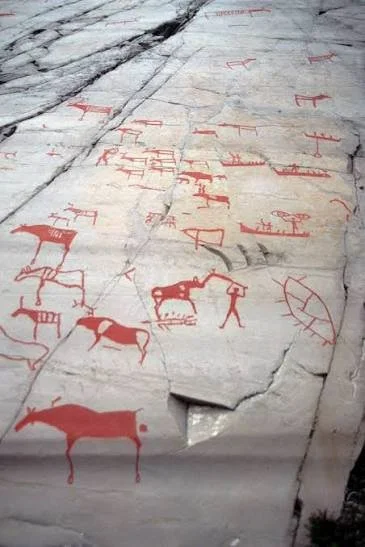
Animals dominate much of the imagery, including reindeer, elk, bears, fish, whales, and other creatures.
This reflects the importance of animals to northern communities, which depended heavily on hunting and fishing.
However, the presence of animals in art should not be interpreted purely as an economic inventory. Their repeated depiction may also indicate spiritual or cosmological significance.
Human Figures
Human figures appear in numerous scenes. Some are represented hunting, traveling, or participating in activities involving animals.
The interaction between human and animal figures is particularly important because it may reveal how people conceptualized their relationship with the natural world.
Some images appear narrative, although reconstructing complete stories is difficult.
Boats and Maritime Life
Boats are another important motif.
For communities living in northern Norway, maritime travel provided access to resources and connected settlements across the coast. The representation of boats therefore reflects an important technological and social reality.
Some boats are large and elaborate, suggesting that watercraft held symbolic importance as well as practical value.
Changing Art Through Time
Alta's greatest archaeological value lies in its chronological depth.
The style, subject matter, and composition of the carvings changed over thousands of years. These changes correspond broadly with transformations in technology, subsistence, social organization, and cultural contacts.
Later periods show new motifs and artistic conventions, allowing archaeologists to study cultural change over very long timescales.
The Meaning of the Art
The precise meaning of Alta's carvings remains uncertain.
Several interpretations have been proposed, including hunting magic, mythology, initiation rituals, cosmology, territorial marking, and storytelling.
It is possible that different images served different purposes.
The rock surfaces may have functioned as places where communities interacted with supernatural forces, ancestors, animals, or the wider cosmos.
Why Alta Matters
Alta demonstrates that prehistoric northern societies possessed sophisticated visual traditions long before writing.
The carvings reveal technological knowledge, artistic skill, environmental awareness, and complex symbolic thinking.
They also challenge outdated assumptions that prehistoric hunter-gatherers lived culturally simple lives. The scale and longevity of the Alta tradition demonstrate sustained investment in symbolic expression.
Today, the site provides an extraordinary record of northern European prehistory and is recognized as a major cultural heritage landscape.