Bees have played important ecological and economic roles in human landscapes for thousands of years. Through pollination, they contribute to the reproduction of many flowering plants, while their honey and wax have been used as foods, medicines, sealants, lighting materials, and components of craft production. Reconstructing the distances ancient bees traveled to collect nectar and pollen can help archaeologists investigate the relationship between beekeeping, vegetation, agriculture, and settlement. Pollen evidence offers one possible approach to this question, but estimating foraging ranges requires careful consideration of bee behavior, plant ecology, and the conditions under which pollen was preserved.
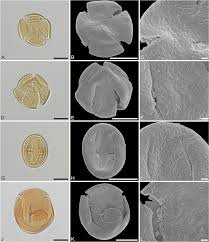
Pollen grains are produced by flowering plants and can be transported by wind, water, insects, and other mechanisms. Bees collect pollen as a source of protein and other nutrients, while nectar provides energy-rich sugars. When pollen is recovered from honey residues, bee-related archaeological deposits, or associated environmental samples, its composition may reveal which plants were available to foraging insects. Certain pollen types can be identified through their distinctive microscopic structures, allowing researchers to reconstruct aspects of the vegetation surrounding an ancient apiary or settlement.
The composition of a pollen assemblage depends on more than the plants growing nearby. Different plants produce different quantities of pollen, and some pollen grains are more likely than others to be collected by bees. The behavior of the bee species also matters. Honeybees may forage over considerable distances when nearby resources are limited, whereas other bee species may have smaller typical foraging areas. Flower abundance, weather, seasonal changes, and competition with other pollinators can influence how far insects travel. Consequently, the relative frequency of a pollen type does not directly reveal the distance between its source plant and the location where the sample was recovered.
Reconstructing ancient foraging ranges begins with identifying the botanical sources represented in the pollen spectrum. Researchers may compare the pollen with modern reference collections and botanical records to determine which plant groups were present. Some plants are strongly associated with particular habitats, such as wetlands, grasslands, woodland edges, or cultivated fields. If several pollen types indicate different habitats, the assemblage may suggest that bees had access to a varied landscape. However, plant distributions have changed over time, and the same species may occur in different ecological settings depending on climate, soil, and land management.
The relationship between pollen and honey production is particularly important. Honey may preserve pollen from plants that supplied nectar, but it can also contain pollen introduced during collection, processing, or storage. Some flowers contribute abundant pollen while producing relatively little nectar, whereas others provide substantial nectar but may leave a smaller pollen signature in the finished honey. The composition of honey residues is therefore not a simple map of the plants that bees visited. Researchers must account for these differences when estimating the contribution of particular plant species to the bees' foraging environment.
Archaeological evidence for beekeeping can help place pollen findings in a broader context. Honeycomb remains, wax residues, specialized containers, possible hive structures, and written references may indicate the management or collection of bee products. Yet many bee-related materials are difficult to preserve, and wax can be reused for purposes unrelated to honey production. A pollen assemblage found in a vessel might represent honey, plant material, or contamination from the surrounding environment. The interpretation becomes more reliable when pollen evidence is supported by chemical analysis and a secure archaeological context.
Modern ecological studies can provide comparative information about bee foraging behavior. Researchers can observe how far bees travel under different conditions, document the plants they visit, and compare pollen collected by bees with pollen present in nearby vegetation. These observations can help develop models for interpreting ancient samples. However, modern data cannot be transferred directly to every ancient landscape. Bee species, colony management, vegetation, climate, and human land use may have differed significantly. A reconstruction should therefore use modern comparisons as a guide while acknowledging the limits of applying present-day behavior to the past.
Landscape reconstruction is essential because pollen spectra may reflect changes in vegetation over time. Pollen preserved in lake sediments, wetlands, or archaeological deposits can indicate the expansion of cultivated land, the reduction of woodland, or shifts in the composition of flowering plants. If pollen associated with bee products is compared with independent environmental records, researchers may be able to investigate whether bees foraged in landscapes dominated by natural vegetation, agricultural fields, orchards, or mixed habitats. Even then, the precise route taken by individual bees generally cannot be recovered from pollen alone.
The availability of flowering plants would have varied seasonally, influencing the resources available to managed and wild bee populations. Communities could have benefited from different plants flowering at different times of year, while agricultural changes may have altered the timing and abundance of floral resources. Pollen assemblages from several periods can help investigate these changes, particularly when combined with evidence of crop cultivation, orchard management, and woodland use. Nevertheless, a single sample usually provides only a partial view of the landscape and cannot establish the full seasonal pattern of bee activity.
Ancient bee foraging ranges are best understood as estimates developed from multiple sources of evidence rather than precise measurements derived from pollen alone. Pollen spectra can identify plant resources and suggest the kinds of habitats available to bees, while archaeological remains and environmental records help establish the context in which honey and wax were collected or used. By combining botanical identification, chemical analysis, modern ecological comparisons, and landscape reconstruction, researchers can investigate how bees interacted with ancient environments. This work contributes to a wider understanding of beekeeping, agricultural change, and the ecological relationships that connected human communities with flowering plants and pollinating insects.