Salt has been an important resource throughout human history, serving as a means of preserving food, seasoning meals, processing animal products, and supporting various craft and economic activities. In coastal environments, tidal flats can provide opportunities for salt production because seawater regularly enters shallow areas and leaves deposits as it evaporates. Some communities may have used these environments seasonally, establishing temporary camps to collect seawater, process brine, or harvest salt during favorable weather conditions. The archaeology of seasonal salt-work camps offers a way to investigate how people organized specialized production, managed coastal resources, and connected temporary work locations with permanent settlements.
Tidal flats are dynamic environments shaped by the movement of tides, sediment deposition, evaporation, and freshwater input. Their suitability for salt production depends on local climate, tidal patterns, soil composition, and access to seawater. In some settings, people could have collected naturally concentrated brine from shallow depressions or salt-rich sediments. In others, production may have involved repeatedly exposing seawater to evaporation or heating brine in containers. The precise methods used would have varied by region and period. Archaeologists therefore need to avoid assuming that all coastal salt production followed the same technological process.
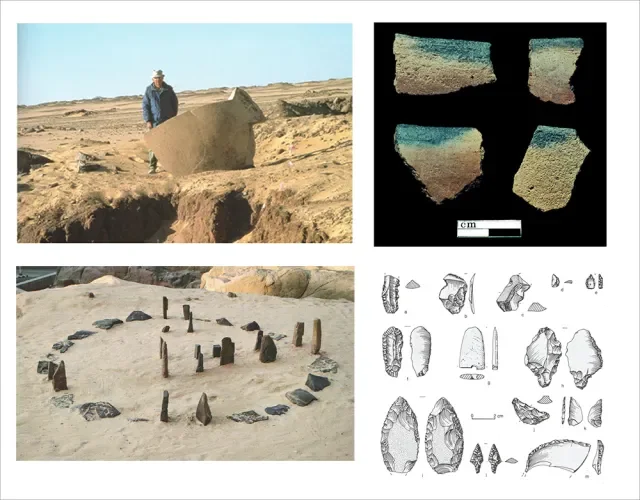
The material culture of salt-work camps can be difficult to identify because seasonal activities often leave relatively limited archaeological traces. Workers may have carried portable equipment to the coast and removed it when the season ended. Temporary shelters could have been constructed from timber, reeds, grasses, or other perishable materials that rarely survive in ordinary conditions. More durable remains might include hearths, pits, ceramic fragments, stone arrangements, storage features, and concentrations of ash or salt-affected sediment. The absence of substantial buildings does not necessarily indicate that a location was unimportant; it may reflect the temporary nature of the work.
Ceramic vessels can provide important evidence for salt production. Containers may have been used to heat brine, evaporate water, store salt, or transport processed material. Repeated heating can produce characteristic changes in pottery surfaces, while salt production may leave mineral deposits or other residues under favorable conditions. However, a vessel that has been exposed to heat could also have been used for cooking, metalworking, or other activities. Archaeologists need to examine vessel shapes, manufacturing techniques, surface alteration, residues, and associated features before assigning a specialized salt-working function.
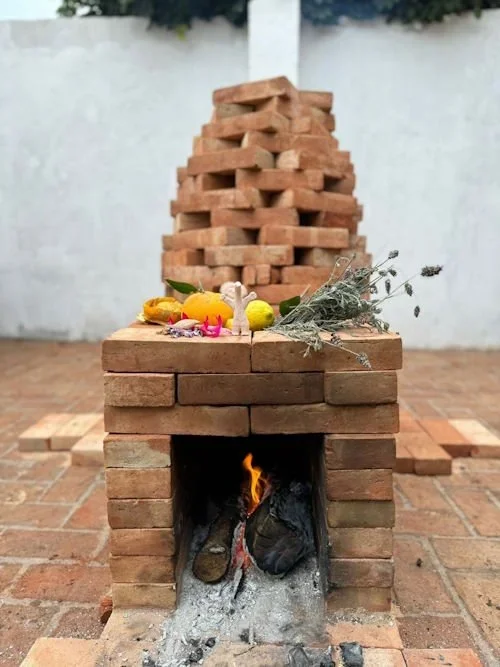
The presence of hearths and burned materials can help reconstruct how salt was processed. If brine was heated, workers would have needed a reliable fuel supply and a suitable arrangement for maintaining temperatures. Concentrations of charcoal, ash, heat-altered sediment, and damaged ceramic fragments may indicate repeated thermal activity. Yet the interpretation of these remains requires caution because ordinary cooking and other craft activities can produce similar evidence. Chemical analysis of deposits, experimental replication of salt-production techniques, and comparison with known salt-working sites can help distinguish among possible explanations.
Environmental conditions shaped the timing and organization of seasonal salt production. Evaporation rates depend on temperature, humidity, wind, and the availability of sunlight. Rainfall can dilute brine or interrupt production, while changing tides influence when workers can safely access particular areas. Seasonal camps may therefore have operated during periods when conditions were most favorable for harvesting salt. Researchers can investigate these possibilities by comparing the location of archaeological features with reconstructed shorelines, sedimentary evidence, and regional climate patterns. However, environmental suitability alone cannot establish that salt production actually occurred at a particular site.
Temporary camps may also preserve evidence of the people who carried out the work. Food remains, animal bones, pottery used for meals, personal ornaments, tools, and discarded household objects can reveal aspects of daily life during the production season. If several types of activity occurred together, the camp may have served as more than a simple industrial site. Workers might have cooked, repaired equipment, stored materials, and interacted with neighboring communities while producing salt. Nevertheless, the presence of domestic objects does not automatically establish whether workers lived at the site permanently, visited daily, or stayed only for part of the season.
The relationship between salt-work camps and permanent settlements is particularly important. Salt is transportable and can be exchanged for food, tools, livestock, textiles, and other goods. A coastal production camp may therefore have formed part of a broader network connecting tidal flats with inland villages, market centers, and transport routes. Archaeologists can investigate these relationships by comparing pottery styles, raw materials, food remains, and other artifacts found at the camp with those from nearby settlements. Similarities may indicate contact or shared traditions, although they do not always demonstrate direct trade between two specific locations.
Salt production could also have influenced the organization of labor and access to coastal resources. Some communities may have managed salt harvesting at the household level, while others could have coordinated larger groups during periods of intensive production. Access to suitable tidal flats, fuel supplies, and transport routes may have shaped who participated and how the resulting salt was distributed. Archaeological evidence rarely identifies the precise rules governing these arrangements. However, the scale of production features, the quantity of discarded materials, and the relationship between camps and settlements can help researchers investigate whether production was primarily domestic, community-based, or connected to wider exchange systems.
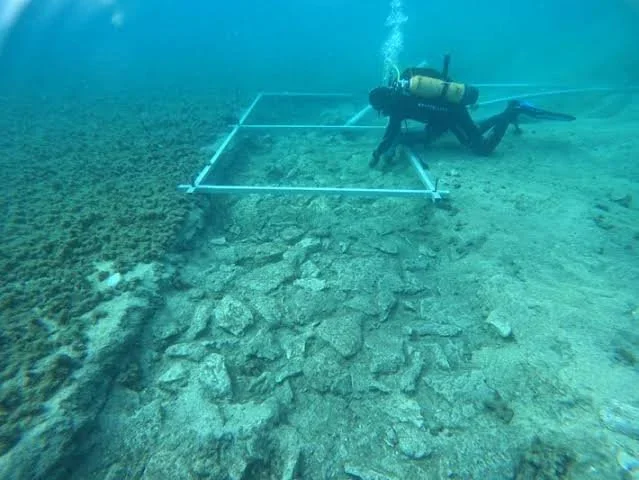
The preservation of salt-work camps presents several challenges. Tidal action can erode archaeological deposits, redistribute artifacts, and destroy shallow features. Salt-rich environments may alter some materials, while waterlogged sediments can preserve organic remains that would disappear elsewhere. Changes in sea level and shoreline position can also place former production areas underwater or bury them beneath later deposits. Coastal survey, sediment coring, remote sensing, and careful excavation are therefore essential for locating and documenting these sites before further environmental change damages them.
The archaeology of seasonal salt-work camps reveals how communities adapted production to the rhythms of coastal environments. Their remains can provide evidence of evaporation techniques, fuel use, temporary settlement, labor organization, and the movement of salt between coastal and inland areas. By combining artifact analysis, environmental reconstruction, experimental archaeology, and spatial study, researchers can investigate how these seasonal activities supported wider patterns of subsistence and exchange. Even when a camp leaves only modest traces, those remains can demonstrate the importance of temporary work sites in the economic and social life of past coastal communities.