Ancient Egyptian Astronomy: The Alignment of the Temples to the Stars
Introduction
Ancient Egyptians were keen observers of the night sky. Their knowledge of astronomy influenced religion, agriculture, timekeeping, and architecture. Many temples, pyramids, and sacred monuments were carefully aligned with celestial bodies, reflecting the belief that the heavens were closely connected to the divine order of the universe.
Astronomy in Ancient Egypt
The civilization of Ancient Egypt depended heavily on astronomical observations.
Astronomy helped Egyptians:
Predict the annual flooding of the Nile
Develop calendars
Determine religious festival dates
Orient temples and monuments
Connect earthly structures with the realm of the gods
The sky was viewed as a sacred manifestation of cosmic order.
The Importance of Stellar Alignment
Egyptian architects often aligned temples with:
Specific stars
Constellations
The rising or setting sun
Solstices and equinoxes
Cardinal directions
These alignments reinforced religious symbolism and linked temples to divine powers.
The Star Sirius and the Nile
One of the most important stars in Egyptian astronomy was Sirius, known to the Egyptians as Sopdet.
Significance of Sirius
Its heliacal rising occurred shortly before the annual Nile flood
It marked the beginning of the Egyptian New Year
It was associated with the goddess Isis
The appearance of Sirius served as both an astronomical and agricultural signal.
Temple Alignments and Solar Events
Many temples were oriented toward significant solar events.
Abu Simbel
The famous temple of Abu Simbel was designed so that sunlight illuminated the inner sanctuary on specific days of the year.
These events are commonly associated with:
The king's birthday
His coronation anniversary
The phenomenon demonstrates the precision of Egyptian architectural planning.
Karnak and Celestial Orientation
The vast temple complex of Karnak Temple Complex also shows evidence of astronomical alignment.
Features include:
Orientation toward the rising sun at certain times of year
Axes linked to ceremonial processions
Connections between celestial and religious symbolism
The temple evolved over centuries while maintaining important astronomical relationships.
Circumpolar Stars and Eternal Life
The Egyptians paid special attention to circumpolar stars—stars that never set below the horizon.
These stars were important because:
They appeared eternal and unchanging
They symbolized immortality
They were associated with the afterlife
Some scholars believe certain pyramids were aligned toward these stars to assist the pharaoh's journey into the heavens.
Astronomical Tools and Observation
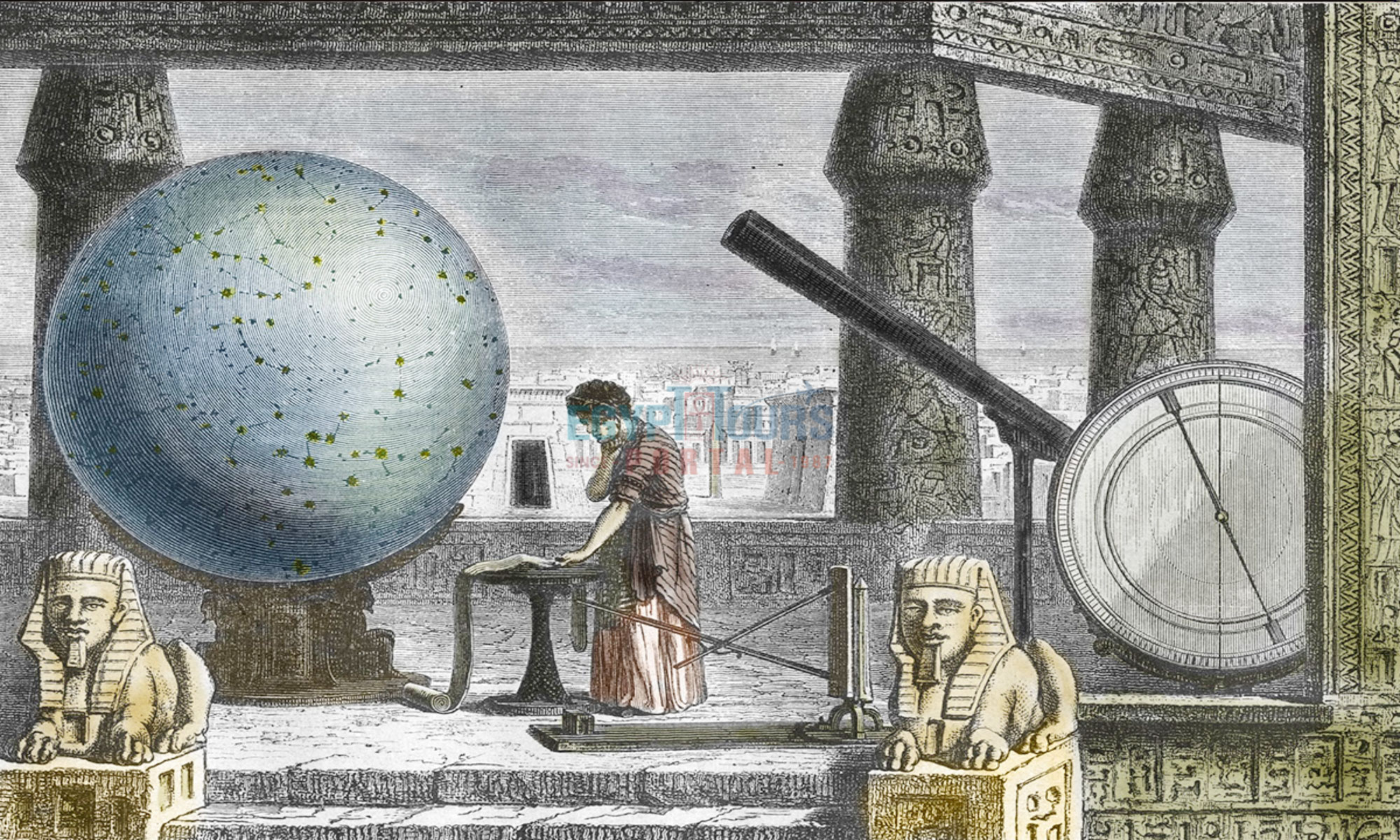
Egyptian priests used simple but effective instruments, including:
Sighting rods
Plumb lines
Measuring cords
Observation platforms
These tools helped establish accurate alignments for major structures.
Religion and the Cosmos
Egyptian religion emphasized Ma'at, the principle of cosmic order and balance.
Astronomical alignment reflected this belief by:
Connecting temples with heavenly bodies
Reinforcing divine authority
Symbolizing harmony between earth and sky
Architecture became a physical expression of the universe's sacred order.
Modern Archaeological Evidence
Archaeologists and archaeoastronomers continue to study Egyptian monuments to understand their celestial orientations.
Research has revealed:
Deliberate alignments with stars and solar events
Sophisticated observational knowledge
Integration of astronomy into religious architecture
These findings demonstrate that Egyptian builders possessed remarkable precision despite lacking modern instruments.
Conclusion
The alignment of Egyptian temples to stars and celestial events reflects the deep connection between astronomy, religion, and architecture in ancient Egypt. By orienting sacred structures toward significant heavenly bodies such as Sirius and the circumpolar stars, the Egyptians expressed their belief that divine order governed both the cosmos and human life. These achievements remain among the most impressive examples of astronomical architecture in the ancient world.