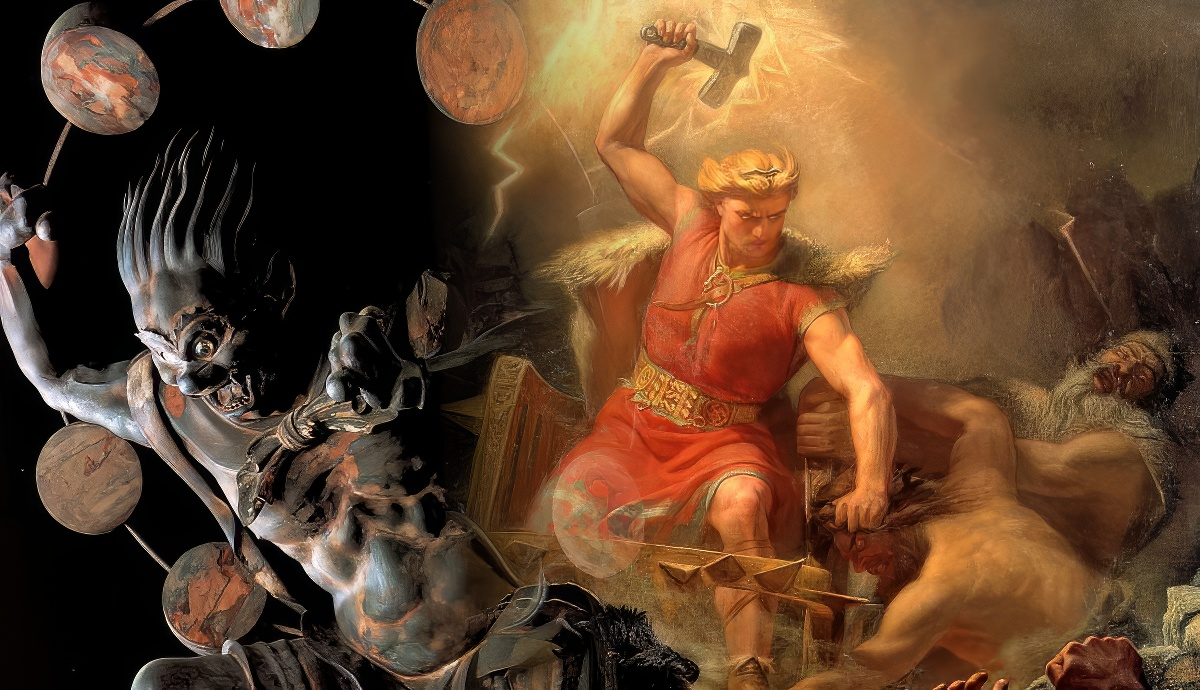
Forces of Nature Personified
Storms were among the most powerful and unpredictable natural events experienced by ancient societies. Thunder, lightning, and rain could bring both destruction and life. To make sense of these forces, many cultures created storm gods.
Shared Symbolism Across Cultures
Across regions, storm deities shared common traits. They were often powerful, sometimes unpredictable, and associated with authority or kingship.
In Mesopotamia, gods controlled thunder and rain. In Mesoamerica, storm deities were linked to agriculture. Indo-European traditions also featured thunder gods wielding powerful weapons.
Rain, Fertility, and Survival
Storm gods were closely tied to fertility and agriculture. Rain was essential for crops, making these deities vital to survival.
Myths and Stories
Stories about storm gods often involved battles, creation, and control over chaos. These myths helped people understand natural events and cope with uncertainty.
A Universal Pattern
The similarities between storm gods across cultures suggest shared human experiences. Despite geographic distance, people developed comparable ways of interpreting nature.