A small bronze cross recently discovered in western Brandenburg is transforming archaeologists’ understanding of how Christianity spread through northeastern Germany in the early Middle Ages. Dating to the 10th or early 11th century, the object is notable not for its size, but for an extraordinary archaeological link that ties it directly to a casting mold unearthed more than 40 years ago.
The wheel-shaped cross was found in the Havelland region by Juliane Rangnow, a certified volunteer heritage guardian working under official authorization. When experts at the Brandenburg State Office for Heritage Management and Archaeological Museum examined the artifact, they made a remarkable discovery: the cross fits perfectly into a bronze mold excavated in 1983 from a Slavic hillfort in Berlin-Spandau.
Until now, no finished object had ever been associated with that mold.
A Rare Reunion Across the Centuries
The Spandau mold—commonly known among scholars as the “Spandau Cross”—has long been considered one of the earliest pieces of material evidence for Christian symbolism in the region between the Elbe and Oder rivers. Found near the remains of an early wooden church, it suggested that Christian objects may have been produced locally during a time when historical knowledge largely relies on written sources.
The newly recovered cross fundamentally changes that understanding. Careful measurements and conservation work confirmed that the Havelland cross was cast using the Spandau mold. Archaeologists describe this as an exceptionally rare case: a medieval casting mold and its finished product reunited after more than a millennium.
“This kind of match is virtually unheard of,” said Franz Schopper, highlighting the value of long-term archaeological documentation and cooperation between professional researchers and trained volunteer finders.
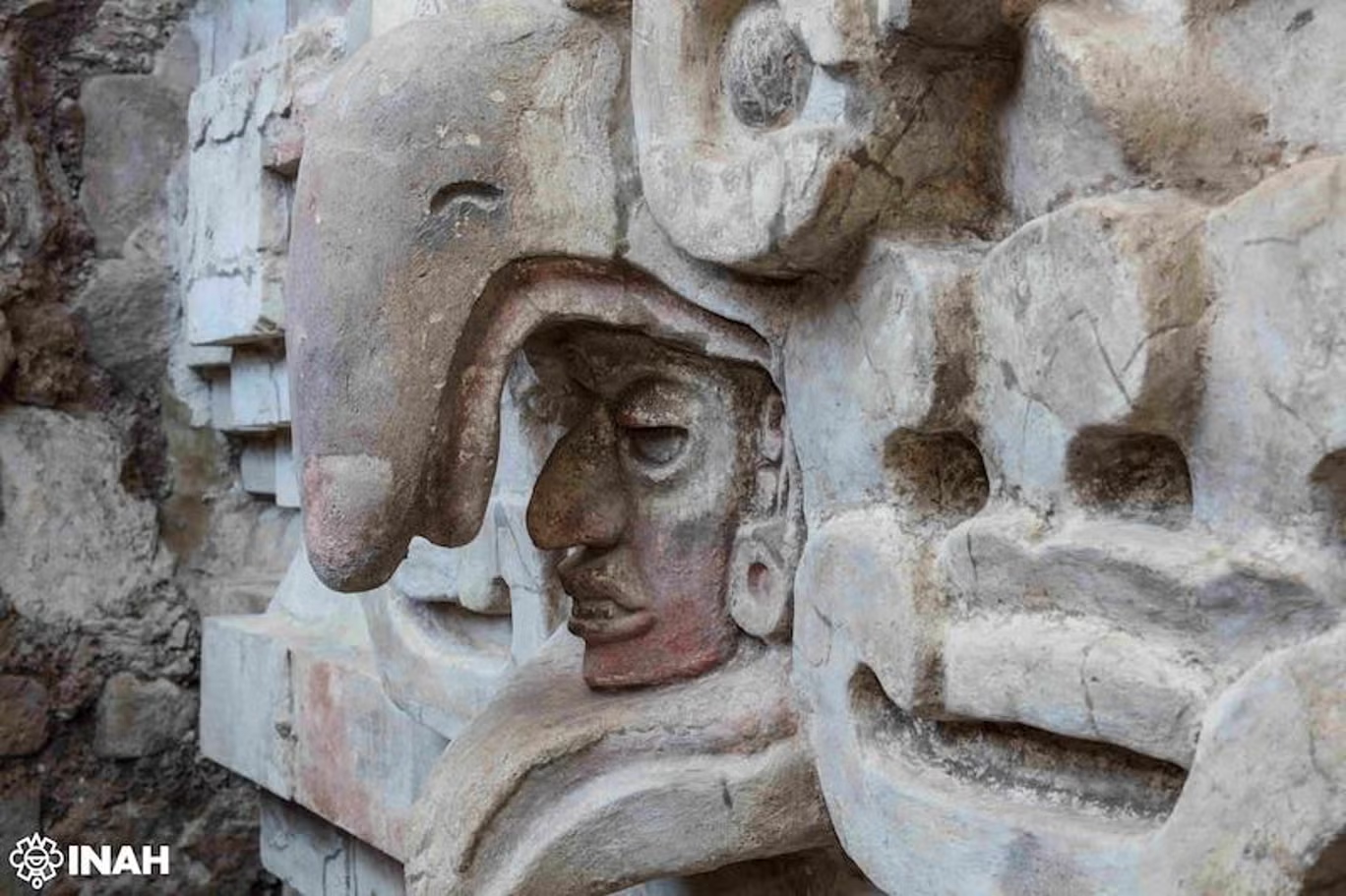
Owl statue found with man's face carved inside
In pre-Hispanic belief systems, the owl was closely associated with night and death, leading researchers to interpret the figure depicted in the sculpture as an honoured ancestor commemorated within the tomb.
President Pardo described the find as the most significant archaeological discovery in Mexico in the past decade, highlighting its exceptional state of preservation and the wealth of information it provides. He emphasized that the tomb stands as a powerful testament to Mexico’s cultural greatness.
Situated in the Central Valleys of Oaxaca, the tomb preserves the architectural sophistication of the Zapotec civilization and offers valuable insight into the society’s social structure and funerary practices, according to a statement from Mexico’s National Institute of Anthropology and History (INAH).
“It is an extraordinary discovery because of its level of preservation and what it reveals about Zapotec culture—its social organisation, burial rituals and worldview—expressed through architecture and mural painting,” said Claudia Curiel de Icaza, Mexico’s secretary of culture.
She added that the findings reflect “Mexico’s millennia-old greatness” and underline its central role in the cultural history of ancient Mesoamerica.
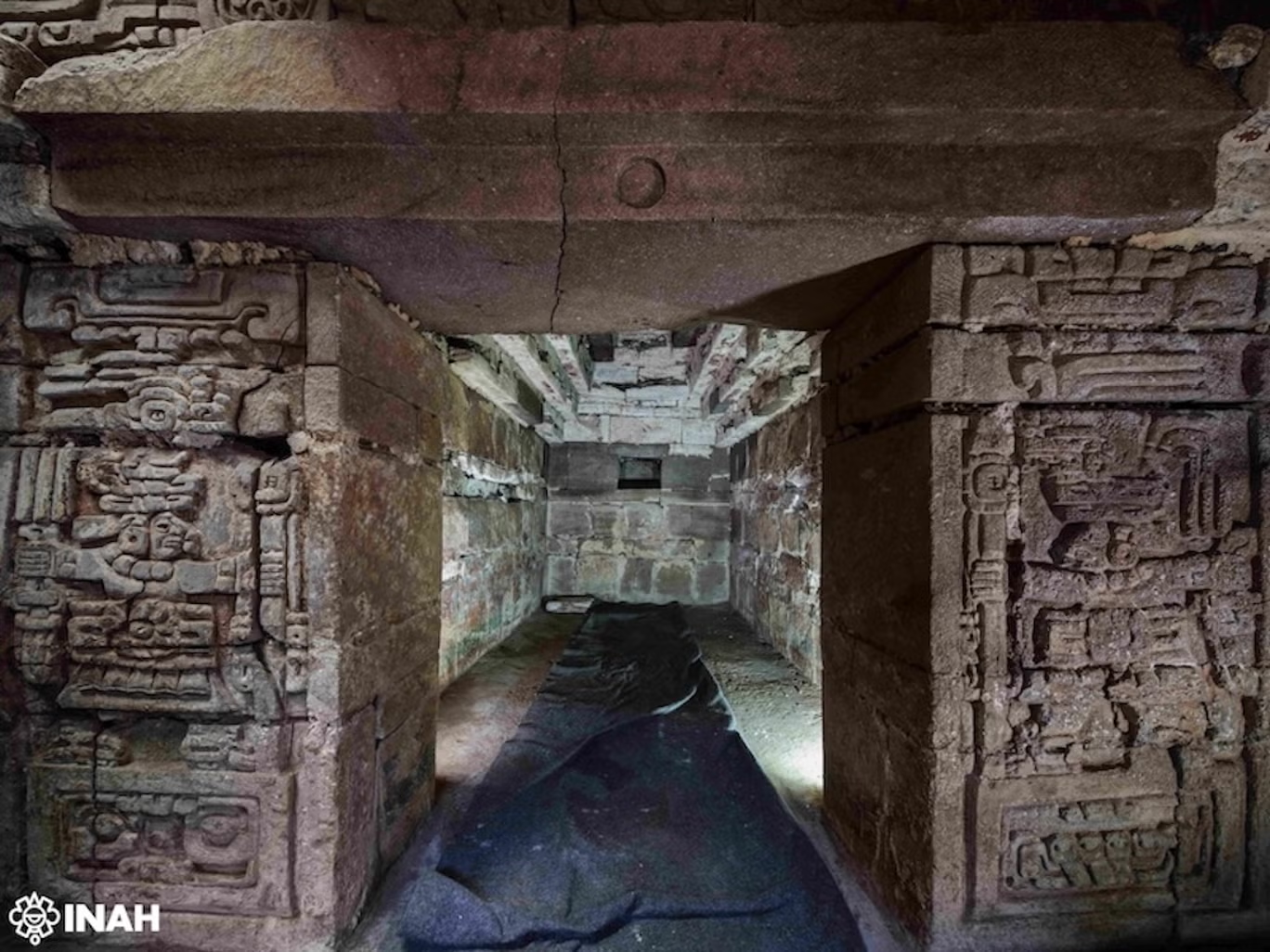
Zapotec tomb in southern Mexico
INAH also reported the discovery of “extraordinary” mural paintings in ochre, white, green, red, and blue. Located within the burial chamber, the murals depict a procession of figures carrying bags of copal and moving toward the entrance.
Specialist teams are currently conducting conservation and research at the site, focusing on stabilising the fragile mural paintings, which are threatened by encroaching roots and insect activity.