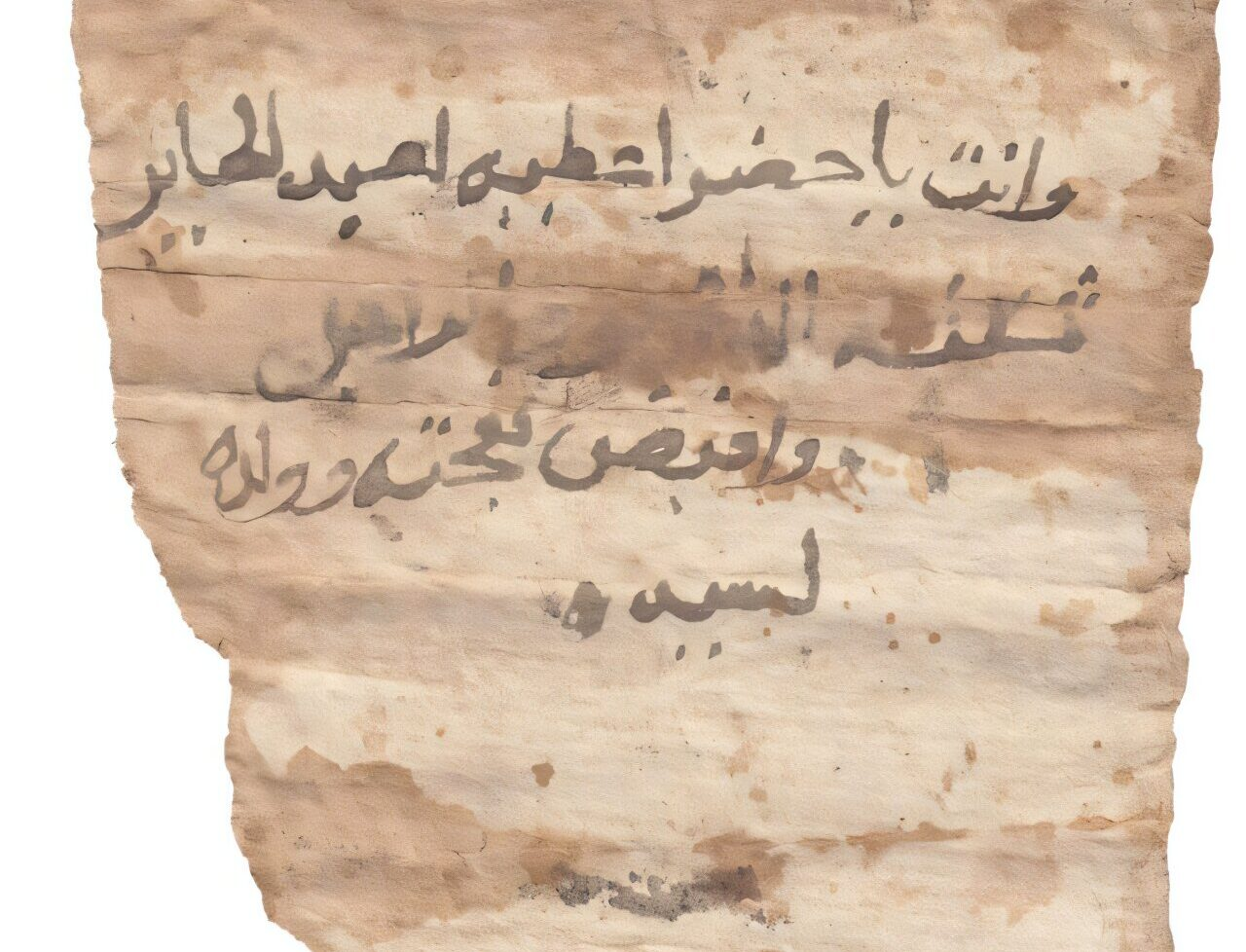
Ancient Document Confirms Existence of Nubian King Qashqash
A centuries-old piece of Arabic writing, long buried in a refuse layer within the citadel of Old Dongola, has provided the first concrete evidence of a previously semi-legendary ruler. Issued in the name of King Qashqash, the document verifies that this Nubian monarch truly existed and held power during a critical period in Sudan’s pre-colonial history.
The discovery, first reported by Phys.org, is analyzed in a recent peer-reviewed article in Azania: Archaeological Research in Africa. By combining archaeological context, linguistic analysis, radiocarbon dating, and numismatic evidence, researchers were able to determine both the age of the document and its political importance.
From Literary Legend to Archaeological Reality
For centuries, King Qashqash was known primarily through later texts and oral traditions, most notably the nineteenth-century Kitāb al-Ṭabaqāt. In these accounts, he is described as an ancestor of influential Islamic figures in the Dongola region. Until now, however, no contemporary record confirmed that he was an actual historical figure rather than a name preserved in stories and hagiographies.
Old Dongola’s Transitional Era
Old Dongola, once the capital of the Christian Kingdom of Makuria, entered a poorly documented transitional period after the 14th century. Historians often describe this era as one of political fragmentation and gradual Islamization, during which Arabic increasingly replaced earlier written traditions.
The lack of firm documentary evidence from this time has long left the identities and authority of local rulers uncertain. The discovery of the Qashqash document fills a significant gap, providing tangible proof of governance and leadership in a period previously known mostly through indirect sources.
Redefining Sudanese Pre-Colonial History
This small fragment of writing transforms our understanding of the region’s history, turning a legendary figure into a verified historical ruler. It not only confirms Qashqash’s existence but also sheds light on the political and cultural shifts that shaped Nubia during a pivotal moment of transition from Christian to Islamic influence.
By anchoring oral and literary traditions to material evidence, the find underscores the value of archaeology in bridging legend and history, offering a clearer picture of Sudan’s pre-colonial past.
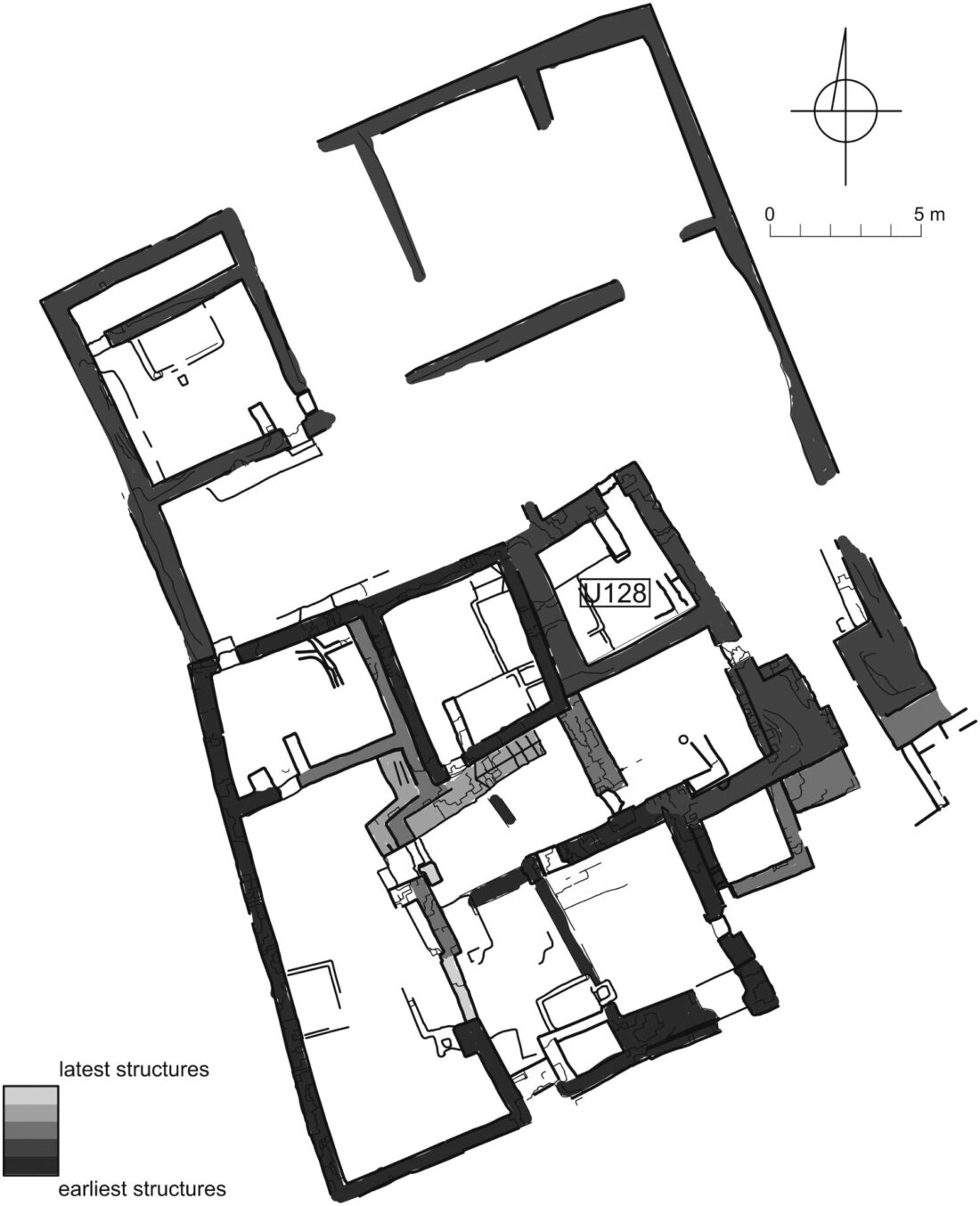
The plan of Building A.1 (House of the Mekk), located in the citadel at Old Dongola. A. Wujec, J. Wyżgoł, and M. Wyżgoł/PCMA.
Discovery in the House of the Mekk
Archaeologists uncovered the Qashqash document in Building A.1 within Old Dongola’s citadel—a structure traditionally associated with the residence of the mekk, or minor king. Excavations under the UMMA project revealed that the building stood out from ordinary houses of the period in both size and material wealth. Items such as silk and fine cotton textiles, leather footwear, an ivory or rhino horn dagger handle, a gold ring, and even musket balls were recovered, all pointing to elite occupation.
Among over twenty Arabic paper fragments found in the building was an order catalogued as Dongola inv. 1990. Although discarded in a rubbish layer, the text clearly carries royal authority. It opens with “From King Qashqash” and is directed to a subordinate named Khiḍr.
Establishing Chronology
The context of the find provides strong chronological clues. Ottoman silver coins discovered in the same room date to the early seventeenth century, while radiocarbon analysis of organic material from the deposit indicates disposal occurred no later than the eighteenth century. Internal references suggest that Qashqash ruled in the late sixteenth or early seventeenth century, making him one of the earliest post-medieval rulers of Dongola whose existence is securely documented.
A King Engaged in Everyday Governance
What makes this document remarkable is its focus on routine administration rather than warfare or conquest. Qashqash’s order instructs Khiḍr to collect goods described as ʾRDWYĀT—likely a type of textile—deliver a ewe and her offspring, and transfer cotton cloth or headwear to another individual. The note ends with a brief greeting and the identification of the royal scribe, Ḥamad.
This administrative tone portrays Qashqash as an active ruler managing micropolitics and the local economy. The exchanges described resemble systems of reciprocal gift-giving typical in pre-colonial Sudan, where textiles were not only trade items but also symbols of status and political alliance. Rather than the “always at war” image sometimes depicted by European travelers, Qashqash appears as a monarch engaged in trade, governance, and maintaining social networks.
Linguistic Insights into Arabization
The document also sheds light on cultural and linguistic shifts in Dongola. While written in Arabic, it exhibits grammatical irregularities and colloquial features. Pronouns do not always follow classical standards, and spellings reflect spoken forms rather than formal orthography.
These traits suggest that Arabic had become the primary language of administration, yet local Nubian speech traditions continued to influence its use. The document thus captures a transitional phase of gradual Arabization, showing both political authority and linguistic evolution in progress.
Reframing Nubian Political History
The confirmation of Qashqash’s existence reshapes understanding of post-medieval Nubian rulership. Previously known only from literary sources, he now emerges as a historically grounded figure operating within complex networks linking local elites, merchants, and possibly itinerant Arab traders.
The find also strengthens the connection between Building A.1 and royal authority, validating local traditions that identified it as a seat of power. In areas where written records are scarce, the convergence of archaeology and oral memory is particularly meaningful.
A Fragment Bridging Past and Present
Beyond its academic value, the document resonates with contemporary communities. Families in the Dongola region tracing their ancestry to Qashqash see it as confirmation of long-preserved genealogical traditions.
Ultimately, this small administrative order transforms historical narratives. Once discarded as refuse, it now anchors King Qashqash in verifiable time and place. He emerges not as a distant legend, but as a monarch actively managing livestock, textiles, and alliances in early modern Nubia.
In a region often described through absence and loss, this fragile sheet of paper speaks with extraordinary clarity—restoring a ruler, a dynasty, and a chapter of Sudanese history that was nearly forgotten.