• MAIN PAGE
  • LATEST NEWS
    • Lost Cities
    • Archaeology's Greatest Finds
    • Underwater Discoveries
    • Greatest Inventions
    • Studies
    • Blog
  • PHILOSOPHY
  • HISTORY
  • RELIGIONS
    • Africa
    • Anatolia
    • Arabian Peninsula
    • Balkan Region
    • China - East Asia
    • Europe
    • Eurasian Steppe
    • Levant
    • Mesopotamia
    • Oceania - SE Asia
    • Pre-Columbian Civilizations of America
    • Iranian Plateau - Central Asia
    • Indus Valley - South Asia
    • Japan
    • The Archaeologist Editor Group
    • Scientific Studies
    • Aegean Prehistory
    • Historical Period
    • Byzantine Middle Ages
    • Predynastic Period
    • Dynastic Period
    • Greco-Roman Egypt
  • Rome
  • PALEONTOLOGY
  • About us
Menu

The Archaeologist

  • MAIN PAGE
  • LATEST NEWS
  • DISCOVERIES
    • Lost Cities
    • Archaeology's Greatest Finds
    • Underwater Discoveries
    • Greatest Inventions
    • Studies
    • Blog
  • PHILOSOPHY
  • HISTORY
  • RELIGIONS
  • World Civilizations
    • Africa
    • Anatolia
    • Arabian Peninsula
    • Balkan Region
    • China - East Asia
    • Europe
    • Eurasian Steppe
    • Levant
    • Mesopotamia
    • Oceania - SE Asia
    • Pre-Columbian Civilizations of America
    • Iranian Plateau - Central Asia
    • Indus Valley - South Asia
    • Japan
    • The Archaeologist Editor Group
    • Scientific Studies
  • GREECE
    • Aegean Prehistory
    • Historical Period
    • Byzantine Middle Ages
  • Egypt
    • Predynastic Period
    • Dynastic Period
    • Greco-Roman Egypt
  • Rome
  • PALEONTOLOGY
  • About us

Archaeologists discover 'miracle' hidden in ancient Egyptian tomb

March 23, 2026

Taposiris Magna was established around 280 BCE by Ptolemy II, the son of one of Alexander the Great’s most celebrated generals and an ancestor of Cleopatra.

Researchers believe the temple at the site was devoted to the god Osiris and his consort Isis—a goddess closely linked to Cleopatra herself. Discoveries at the location include statues of Isis and coins featuring the names and images of both Cleopatra and Alexander the Great.

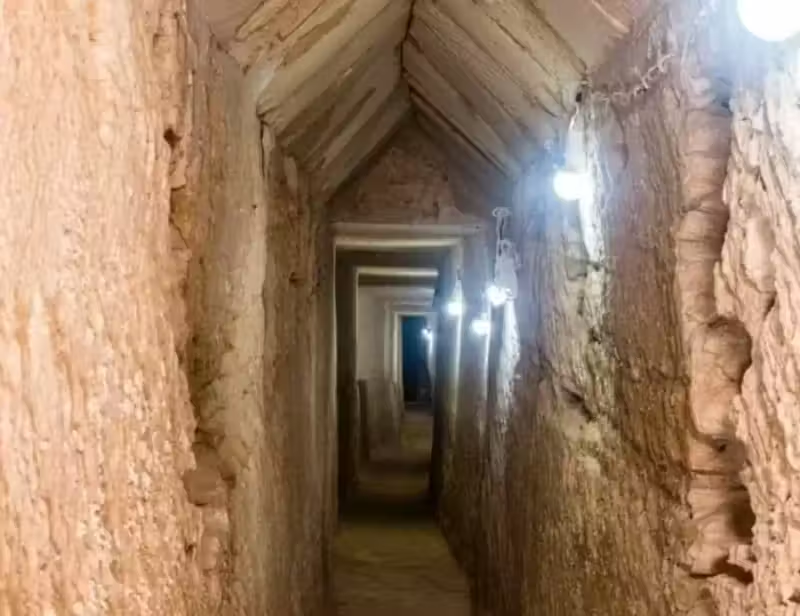
Ongoing investigations may reveal whether the newly uncovered tunnel leads to the long-sought tombs.

Upcoming efforts will also focus on the nearby Mediterranean Sea. Between 320 and 1303 CE, multiple earthquakes struck the coastline, causing sections of the temple to collapse and sink beneath the water. Earlier excavations have already uncovered an extensive tunnel system connecting Lake Mariout to the Mediterranean.

The tunnel has produced several artifacts so far, including a rectangular limestone block and fragments of pottery.

In 2009, former antiquities minister Zahi Hawass stated that finding the tombs of Cleopatra and Mark Antony would rank as the most significant discovery of the 21st century. Even without that discovery, he emphasized that the site has already yielded major archaeological findings both inside and beyond the temple.
← From the old to the new: Pompeii project revives ancient wine making tradition£108k funding secured for Burnley and Nelson Big Dig →
Featured
image_2026-03-23_001835553.png
Mar 23, 2026
Ancient Maya Marketplaces Discovered in Yucatán: Concentric “Nested” Complexes Reveal Hidden Trade Networks
Mar 23, 2026
Read More →
Mar 23, 2026
image_2026-03-23_001748532.png
Mar 23, 2026
World-Scale Discovery in Northern Israel Reveals Early Humans’ Sense of Aesthetics
Mar 23, 2026
Read More →
Mar 23, 2026
image_2026-03-23_001703075.png
Mar 23, 2026
From the old to the new: Pompeii project revives ancient wine making tradition
Mar 23, 2026
Read More →
Mar 23, 2026
image_2026-03-23_001445809.png
Mar 23, 2026
Archaeologists discover 'miracle' hidden in ancient Egyptian tomb
Mar 23, 2026
Read More →
Mar 23, 2026
image_2026-03-23_001402815.png
Mar 23, 2026
£108k funding secured for Burnley and Nelson Big Dig
Mar 23, 2026
Read More →
Mar 23, 2026
image_2026-03-23_001322557.png
Mar 23, 2026
10,000-year-old settlement challenges traditional views on the origins of sedentary life
Mar 23, 2026
Read More →
Mar 23, 2026
read more

Powered by The archaeologist