Reviving Ancient Winemaking in Pompeii
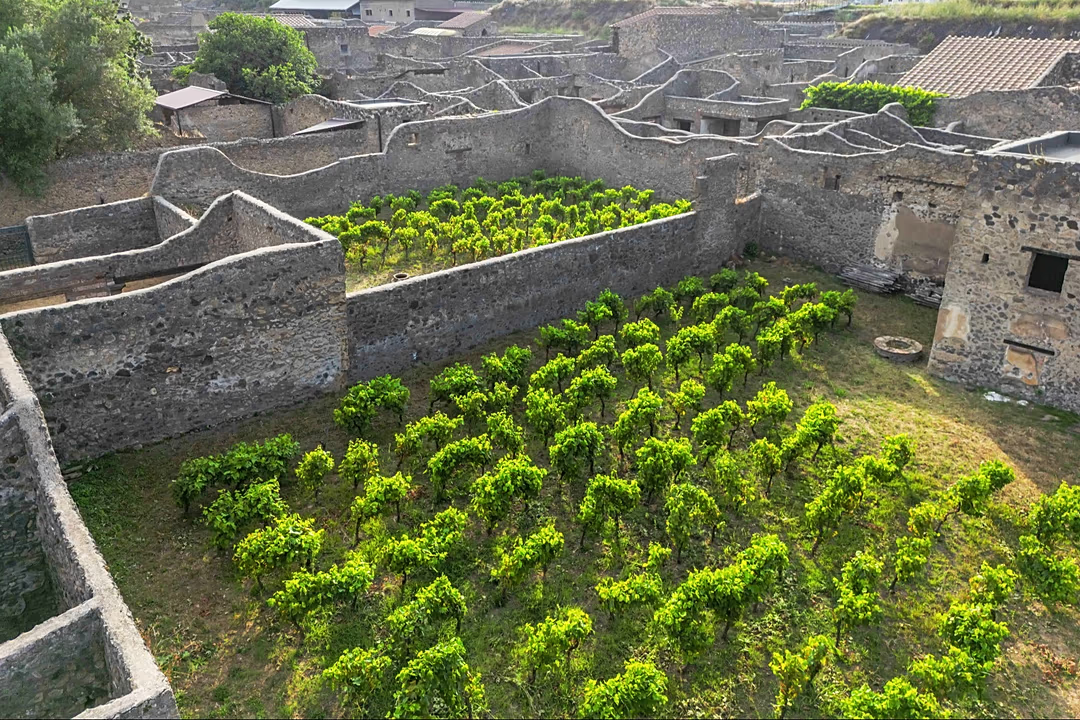
Heritage and history are taking center stage in a unique winemaking project inside Pompeii. The initiative aims to restore the region’s long-standing reputation for producing high-quality grapes—right within the walls of one of the world’s most famous archaeological sites.
Vineyards Among the Ruins
Dozens of grapevines have been planted across the ruins, with plans to produce thousands of bottles of wine using grapes grown on-site. This project blends archaeology with agriculture, bringing new life to land that has been dormant for nearly two millennia.
Pompeii was famously buried under nearly six meters of volcanic ash after the catastrophic eruption of Mount Vesuvius in 79 AD. Despite the destruction, the ash preserved remarkable details of daily Roman life—including their deep connection to wine.
Wine in Ancient Roman Culture
Frescoes uncovered in Pompeii reveal that wine played a central role in Roman society. Banquets and social gatherings often included rituals linked to Dionysus, the god associated with wine and celebration.
Archaeologists have also found buried ceramic containers used for storing wine, as well as amphorae designed for transporting it across long distances. These discoveries highlight how significant winemaking was to both daily life and trade.
A Project Rooted in History
The decision to reintroduce vineyards is not only about honoring the past—it also supports the present. According to Gabriel Zuchtriegel, director of the Archaeological Park of Pompeii, cultivating vineyards helps offset maintenance costs while offering visitors a deeper understanding of the site’s agricultural heritage.
He emphasizes that Pompeii’s history is closely tied to farming, the surrounding countryside, and the relationship between people and their environment.
Everyday Life and Wine Consumption
In ancient Pompeii, wine was more than a luxury—it was a daily staple. People from all walks of life, including soldiers, consumed it regularly. Wine was often enhanced with herbs and spices and even heated during colder months to create a warming drink similar to mulled wine.
The region produced such large quantities that wine became a major export, reaching markets across the Mediterranean, including Spain, North Africa, and parts of modern-day Turkey, as well as regions further north like Germany and Britain.
The Return of an Ancient Grape
The vineyards are being cultivated using Aglianico, an ancient grape variety originally from Greece and introduced to Italy between the 7th and 6th centuries BC. Known for its rich flavor and historical significance, Aglianico remains one of the most celebrated traditional grape varieties today.
Now grown in regions around the world, including California and Australia, this grape connects modern winemaking with its ancient roots.
Blending Past and Present
This innovative project in Pompeii beautifully merges history, culture, and sustainability. By reviving ancient vineyards, researchers are not only preserving the past but also creating new opportunities for education, tourism, and local economic growth—proving that even after 2,000 years, the legacy of Pompeii continues to thrive.