• MAIN PAGE
  • LATEST NEWS
    • Lost Cities
    • Archaeology's Greatest Finds
    • Underwater Discoveries
    • Greatest Inventions
    • Studies
    • Blog
  • PHILOSOPHY
  • HISTORY
  • RELIGIONS
    • Africa
    • Anatolia
    • Arabian Peninsula
    • Balkan Region
    • China - East Asia
    • Europe
    • Eurasian Steppe
    • Levant
    • Mesopotamia
    • Oceania - SE Asia
    • Pre-Columbian Civilizations of America
    • Iranian Plateau - Central Asia
    • Indus Valley - South Asia
    • Japan
    • The Archaeologist Editor Group
    • Scientific Studies
    • Aegean Prehistory
    • Historical Period
    • Byzantine Middle Ages
    • Predynastic Period
    • Dynastic Period
    • Greco-Roman Egypt
  • Rome
  • PALEONTOLOGY
  • About us
Menu

The Archaeologist

  • MAIN PAGE
  • LATEST NEWS
  • DISCOVERIES
    • Lost Cities
    • Archaeology's Greatest Finds
    • Underwater Discoveries
    • Greatest Inventions
    • Studies
    • Blog
  • PHILOSOPHY
  • HISTORY
  • RELIGIONS
  • World Civilizations
    • Africa
    • Anatolia
    • Arabian Peninsula
    • Balkan Region
    • China - East Asia
    • Europe
    • Eurasian Steppe
    • Levant
    • Mesopotamia
    • Oceania - SE Asia
    • Pre-Columbian Civilizations of America
    • Iranian Plateau - Central Asia
    • Indus Valley - South Asia
    • Japan
    • The Archaeologist Editor Group
    • Scientific Studies
  • GREECE
    • Aegean Prehistory
    • Historical Period
    • Byzantine Middle Ages
  • Egypt
    • Predynastic Period
    • Dynastic Period
    • Greco-Roman Egypt
  • Rome
  • PALEONTOLOGY
  • About us
No results found

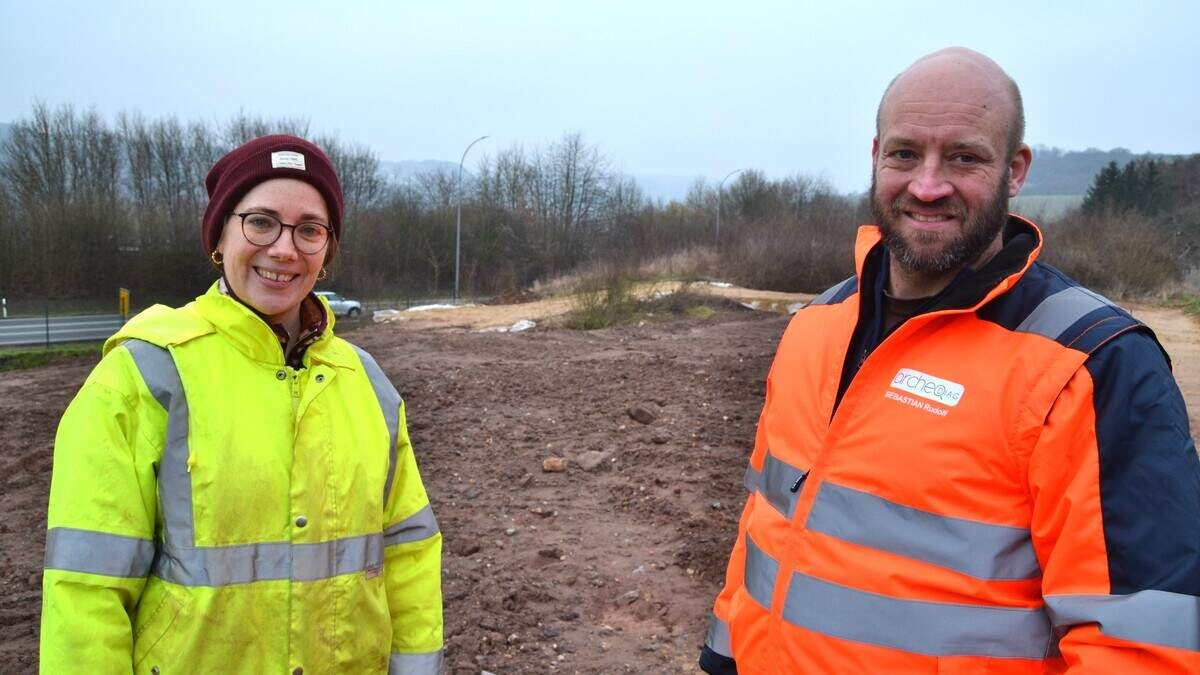
Archaeologists Johanna Steffestun and Rudolf Sebastian at the site in Schieren 

Archaeologists toil to preserve Roman villa site next to roadworks

February 1, 2026

Archaeologists are continuing efforts to protect a Roman villa site located close to planned construction works to expand the Schieren bypass.

For years, motorists using the Schieren bypass have been able to see the excavation area situated directly beside the roadway.

Construction to widen the B7 to two lanes in each direction between Schieren and Ettelbruck is scheduled to begin in September. The project will start with the building of a new viaduct in Schieren and is expected to last three years,
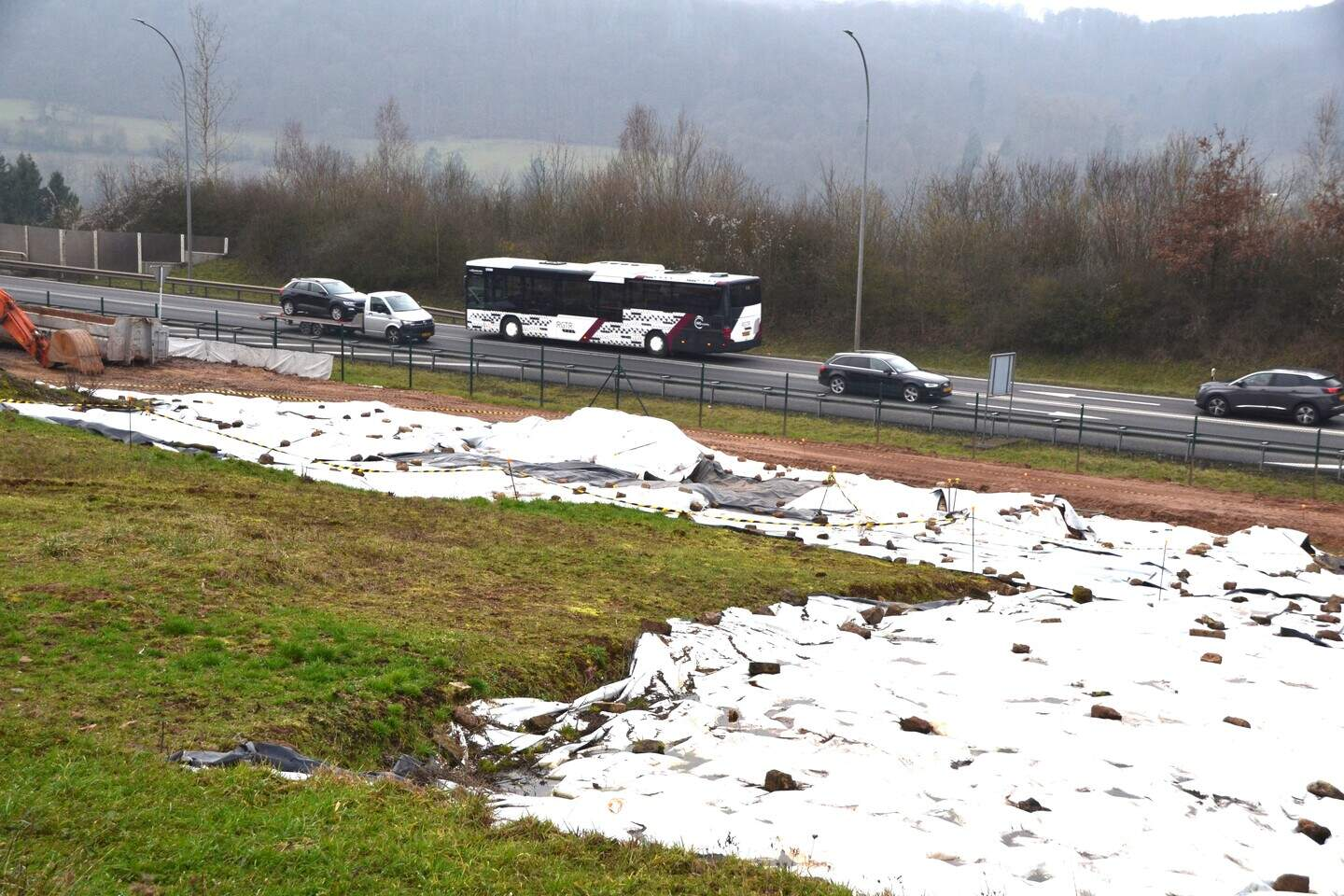
The excavations are covered with plastic sheeting before they are backfilled

This process involves reburying the uncovered and recorded remains, but it is far more careful than simply piling soil back on top.

Because the structures are extremely delicate, they are first protected with a geo-textile layer. A layer of sand is then added, followed by the final covering of soil. Steffestun explained that the sand serves a specific purpose: “We call it an indicator layer. If someone excavates this area again in the future, the sand clearly signals that something important lies beneath.”

One shovel at a time

Asked whether it is disheartening to see carefully excavated remains disappear underground again, the archaeologists agree that this approach is ultimately the best option.

“Once it is backfilled, I know the villa is as well protected as possible,” said Steffestun. Rudolf Sebastian, who is supervising the work on site, shares this view: “Ideally, it would never have been excavated at all. This is the next best solution.”

However, backfilling is a slow and highly controlled process. While transporting the soil is relatively straightforward, applying it safely is not. Some of the earth comes from the construction of the new tunnel at Ettelbrück railway station, where the N7 is set to run from 2028.

The soil is delivered by truck to the villa site, where small excavators spread it across designated areas. The final layer, however, is applied manually with shovels to prevent damage to the buried walls.

As a result, fully covering the entire site will take considerable time.
← Israel closes Hebron's center to secure settlers' storming of archaeological siteArchaeologists Rediscover Alexandria on the Tigris, a Lost City Founded by Alexander the Great →
Featured
image_2026-04-29_212431481.png
Apr 30, 2026
The Tomb of the Silver Shroud: Archaeology in Jerusalem’s Hinnom Valley
Apr 30, 2026
Read More →
Apr 30, 2026
image_2026-04-29_212402483.png
Apr 30, 2026
Ancient Chinese Oracle Bones: The Origins of Writing in East Asia
Apr 30, 2026
Read More →
Apr 30, 2026
image_2026-04-29_212200516.png
Apr 30, 2026
The Elgin Marbles Debate: The History of the Sculptures’ Journey to London
Apr 30, 2026
Read More →
Apr 30, 2026
image_2026-04-29_212122580.png
Apr 30, 2026
Roman Roads: The Engineering Marvel That Bound an Empire
Apr 30, 2026
Read More →
Apr 30, 2026
image_2026-04-29_212047360.png
Apr 30, 2026
The Cahokia Mounds: The Rise and Fall of a Mississippi Metropolis
Apr 30, 2026
Read More →
Apr 30, 2026
image_2026-04-29_212013827.png
Apr 30, 2026
Medieval Monasteries: The Centers of Knowledge and Agriculture
Apr 30, 2026
Read More →
Apr 30, 2026
read more

Powered by The archaeologist