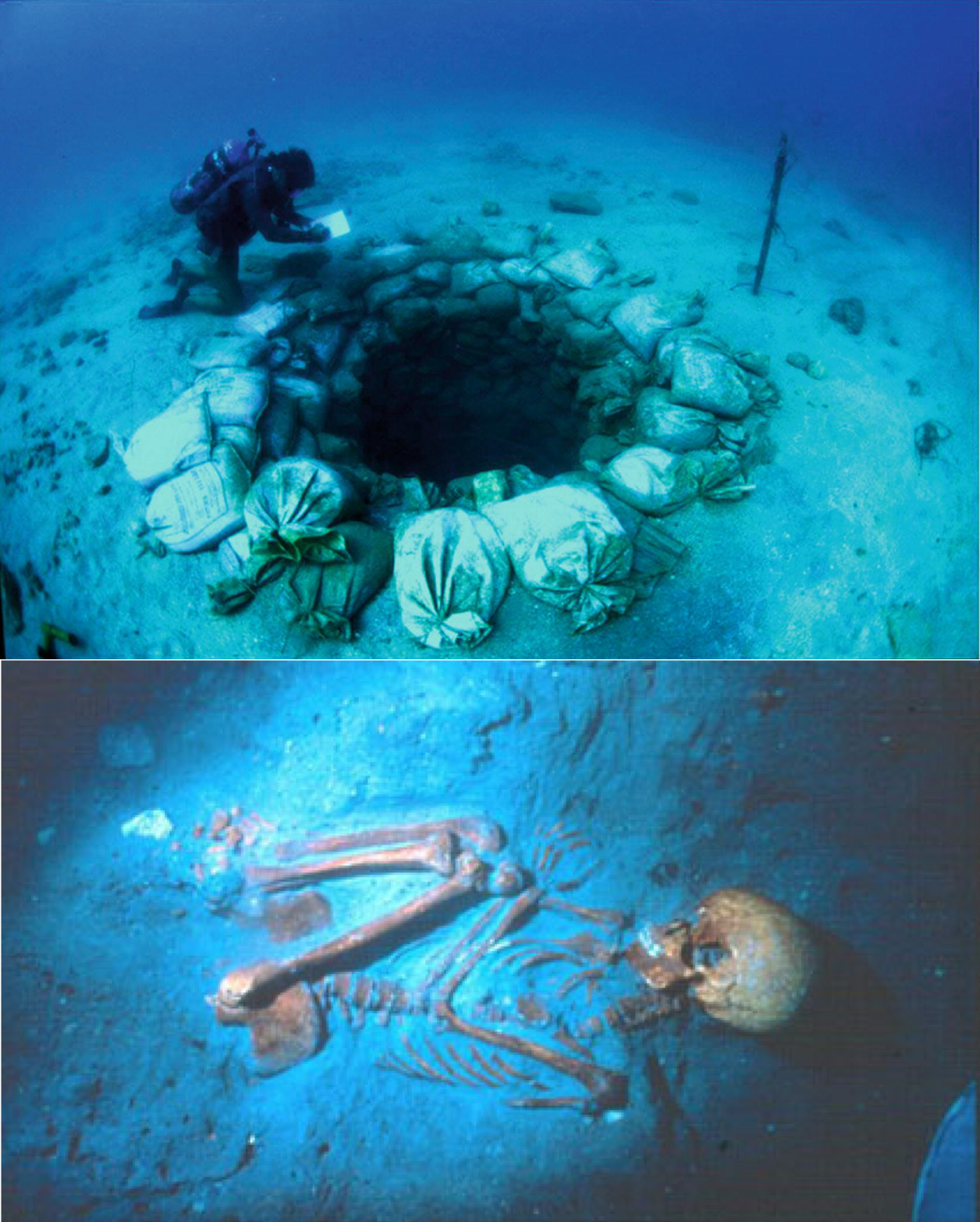
Located 400 meters off the coast of Atlit near Haifa, Israel, submerged under 8 to 12 meters of Mediterranean water, sits Atlit Yam. Dating to the Pre-Pottery Neolithic B period (c. 7000–6300 BCE), this 9,000-year-old settlement provides the most complete and pristine map of an early human maritime-agricultural community ever discovered.
The site was preserved when a massive, catastrophic tsunami—likely triggered by the structural collapse of the eastern flank of Mount Etna volcano thousands of miles away—swamped the coast, sealing the village under meters of marine sand before the ocean permanently reclaimed the shelf.
The Megalithic Marine Stonehenge
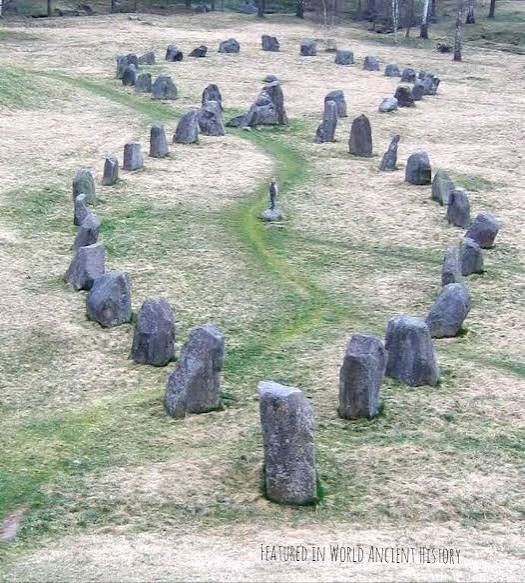
The absolute architectural centerpiece of Atlit Yam is a monumental, freestanding megalithic stone circle that sits silently on the ocean floor. The monument consists of seven massive stone pillars, each weighing up to half a ton, arranged in a perfect circle around a central freshwater spring.
The Bedrock Carvings: The inner faces of the megaliths feature deep, ground-out cupmarks designed to hold libations, liquid offerings, or sacred water.
The Ritual Geometry: The pillars form an outdoor, subterranean temple dedicated to a prehistoric water cult. As the surrounding sea levels rose at the end of the last Ice Age, salinating their coastal aquifers, the villagers erected this stone circle to appease the chthonic forces and protect their precious fresh water source.
The Early Domesticators and the Birth of TB
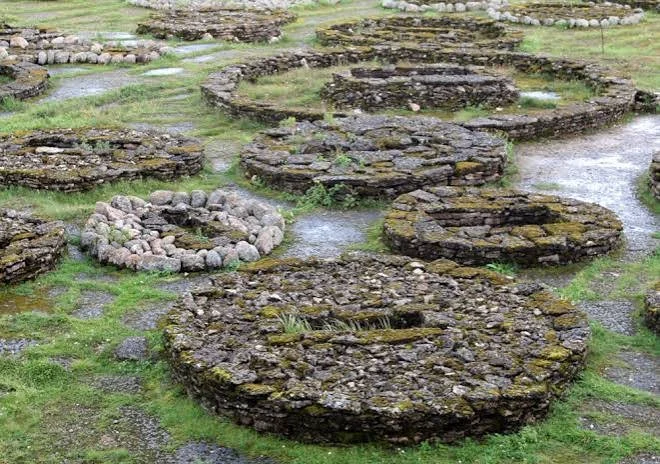
The domestic architecture of Atlit Yam consists of rectangular stone houses featuring heavy clay floors and integrated stone-lined storage pits. The organic preservation at the site is staggering; archaeologists have recovered the earliest known wooden structures, fishing nets, and the bones of domesticated cattle, sheep, and pigs, alongside tons of marine fish bones.
   [ MEGALITHIC FRESHWATER WELL ] ──► Salination of aquifer due to rising seas
                                                │
                                    (The Pathological Nexus)
                                                │
                                                ▼
   [ INTRA-MURAL BURIAL ANALYSIS ] ◄── Earliest genetic confirmation of Human Tuberculosis (TB)
The human skeletons buried beneath the house floors have provided geneticists with a world-class epidemiological breakthrough. DNA extracted from a mother and infant buried together at Atlit Yam provided the oldest definitive genetic confirmation of human tuberculosis (TB) in world history.
By studying these bones, scientists proved that TB did not jump from domesticated cattle to humans as previously believed, but was already mutating and decimating human populations within these early, densely packed maritime villages, providing a window into the health crises of early civilization.