• MAIN PAGE
  • LATEST NEWS
    • Lost Cities
    • Archaeology's Greatest Finds
    • Underwater Discoveries
    • Greatest Inventions
    • Studies
    • Blog
  • PHILOSOPHY
  • HISTORY
  • RELIGIONS
    • Africa
    • Anatolia
    • Arabian Peninsula
    • Balkan Region
    • China - East Asia
    • Europe
    • Eurasian Steppe
    • Levant
    • Mesopotamia
    • Oceania - SE Asia
    • Pre-Columbian Civilizations of America
    • Iranian Plateau - Central Asia
    • Indus Valley - South Asia
    • Japan
    • The Archaeologist Editor Group
    • Scientific Studies
    • Aegean Prehistory
    • Historical Period
    • Byzantine Middle Ages
    • Predynastic Period
    • Dynastic Period
    • Greco-Roman Egypt
  • Rome
  • PALEONTOLOGY
  • About us
Menu

The Archaeologist

  • MAIN PAGE
  • LATEST NEWS
  • DISCOVERIES
    • Lost Cities
    • Archaeology's Greatest Finds
    • Underwater Discoveries
    • Greatest Inventions
    • Studies
    • Blog
  • PHILOSOPHY
  • HISTORY
  • RELIGIONS
  • World Civilizations
    • Africa
    • Anatolia
    • Arabian Peninsula
    • Balkan Region
    • China - East Asia
    • Europe
    • Eurasian Steppe
    • Levant
    • Mesopotamia
    • Oceania - SE Asia
    • Pre-Columbian Civilizations of America
    • Iranian Plateau - Central Asia
    • Indus Valley - South Asia
    • Japan
    • The Archaeologist Editor Group
    • Scientific Studies
  • GREECE
    • Aegean Prehistory
    • Historical Period
    • Byzantine Middle Ages
  • Egypt
    • Predynastic Period
    • Dynastic Period
    • Greco-Roman Egypt
  • Rome
  • PALEONTOLOGY
  • About us
No results found

Barnaluasgan: Argyll's Standing Stones

September 9, 2026

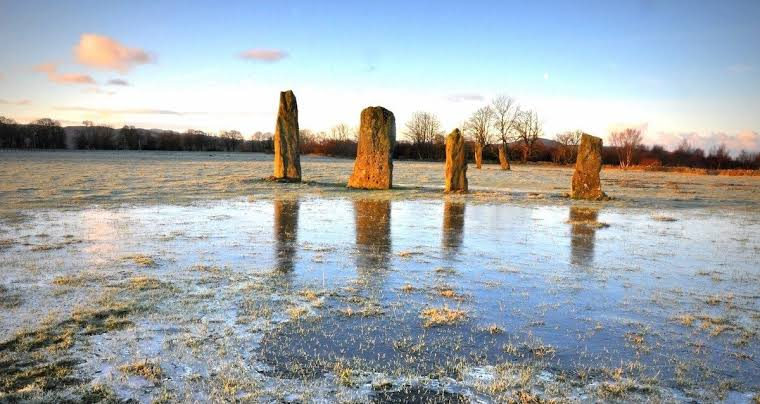
Standing stones are among the most recognizable archaeological remains of prehistoric Britain.

Barnaluasgan belongs to the broader tradition of deliberately positioned stones found throughout Argyll and particularly around the prehistoric landscapes of Kilmartin Glen.

These monuments demonstrate that prehistoric communities were capable of transforming natural landscapes into places of ceremony and memory.

What Are Standing Stones?

Standing stones are large stones deliberately erected vertically.

They vary enormously in:

  • size;

  • shape;

  • arrangement;

  • date;

  • and purpose.

Some stand alone, while others occur in pairs, rows, circles, or alignments.

Why Were They Built?

The exact purpose of individual standing stones is rarely known.

Possible functions include:

  • ceremonial activity;

  • territorial marking;

  • memorialization;

  • astronomical observation;

  • route marking;

  • or participation in rituals.

It is important not to assume that every standing stone served the same function.

The Argyll Landscape

Argyll contains numerous prehistoric monuments.

The region's mountains, valleys, lochs, and islands created a highly distinctive natural environment.

Standing stones could provide fixed reference points within this landscape.

Relationship With Burial Monuments

In Kilmartin Glen, standing stones frequently occur near burial cairns and other ritual monuments.

This proximity suggests that these features may have been conceptually connected.

Moving Megaliths

Moving large stones required substantial organization.

Depending on their size and distance, prehistoric builders may have used:

  • wooden sledges;

  • ropes;

  • rollers;

  • manpower;

  • and prepared tracks.

Such projects demonstrate collective labor and social coordination.

Symbolism

Stone possesses qualities that make it particularly appropriate for monuments.

It is:

  • durable;

  • visible;

  • difficult to move;

  • and capable of surviving for generations.

A standing stone could therefore become a physical symbol of permanence.

Conclusion

Barnaluasgan: Argyll's Standing Stones illustrates how prehistoric communities transformed natural stone into enduring cultural landmarks.

Although the precise meaning of the stones remains uncertain, their survival demonstrates that prehistoric societies deliberately shaped landscapes to express social and ritual ideas.
← Ri Cruin: Argyll's Bronze Age Cairn CircleBallymeanoch: Argyll's Kerbed Cairn →
Featured
image_2026-09-01_150407961.png
September 9, 2026
Dunadd Fort: Argyll's Inauguration Rock Carvings
September 9, 2026
Read more →
September 9, 2026
image_2026-09-01_150445885.png
September 9, 2026
Kilmartin Glen: Argyll's 5,000-Year Megalithic Landscape
September 9, 2026
Read more →
September 9, 2026
image_2026-09-01_150523753.png
September 9, 2026
Nether Largie: Argyll's Clyde Tomb Alignment
September 9, 2026
Read more →
September 9, 2026
image_2026-09-01_150612586.png
September 9, 2026
Ri Cruin: Argyll's Bronze Age Cairn Circle
September 9, 2026
Read more →
September 9, 2026
image_2026-09-01_150753980.png
September 9, 2026
Barnaluasgan: Argyll's Standing Stones
September 9, 2026
Read more →
September 9, 2026
image_2026-09-01_150644895.png
September 9, 2026
Ballymeanoch: Argyll's Kerbed Cairn
September 9, 2026
Read more →
September 9, 2026
read more

Powered by The archaeologist