Introduction
The Borre Mounds form one of Norway's most important archaeological landscapes associated with the Viking Age. Located in Vestfold, the site contains a remarkable concentration of monumental burial mounds and other archaeological remains.
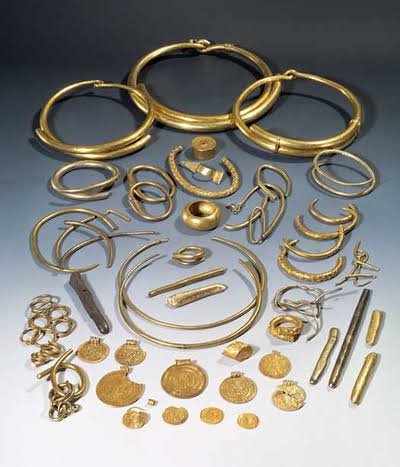
Borre is particularly significant because of its connection with elite society and because the site gave its name to the Borre artistic style, one of the major phases of Viking Age Scandinavian art.
The landscape demonstrates that Viking power was expressed not only through ships and weapons but also through monuments, burial rituals, visual symbolism, and control of important places.
The Burial Landscape
The Borre landscape contains numerous burial mounds.
These monuments were deliberately positioned within the landscape and would have been highly visible.
A large burial mound required considerable labor.
Soil and stone had to be moved, the burial prepared, and the monument constructed.
The result was a permanent statement of status.
Elite Burials
The scale of Borre's monuments indicates that high-status individuals were buried here.
Although it is tempting to label the cemetery as a royal burial ground, scholars must distinguish archaeological evidence from later assumptions.
The site clearly reflects elite social organization, but the exact identities and titles of those buried there are not always known.
The monuments nevertheless demonstrate the existence of powerful social hierarchies.
Monumental Architecture and Power
Burial monuments were political statements.
A mound visible across the surrounding landscape could communicate wealth and authority long after the deceased had died.
Monuments also connected the living with their ancestors.
A ruling family could use burial landscapes to establish continuity between generations.
This was particularly important in societies where political legitimacy could depend heavily on ancestry.
The Borre Artistic Style
Borre is famous for the artistic style associated with it.
The Borre style is characterized by highly stylized animal forms, gripping beasts, ribbon-like bodies, and intricate interlacing.
These designs appeared on objects made from:
metal;
wood;
stone;
bone.
The style spread widely across Scandinavia and beyond.
What Art Can Tell Us
Artistic styles provide evidence for cultural connections.
When similar motifs appear in distant locations, archaeologists can investigate whether they resulted from direct contact, movement of craftsmen, trade, imitation, or broader cultural influence.
The Borre style therefore provides a way to study Viking Age networks.
The Role of Ships
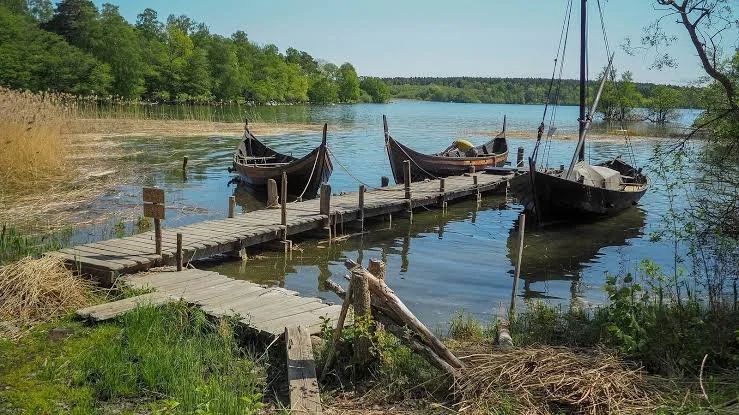
Viking burial traditions frequently incorporated ships.
Ships represented mobility and status.
Even when a ship was not physically buried, maritime symbolism could remain important.
At elite cemeteries, the association between ships, monuments, and high-status individuals demonstrates how strongly seafaring was connected to political power.
The Wider Vestfold Region
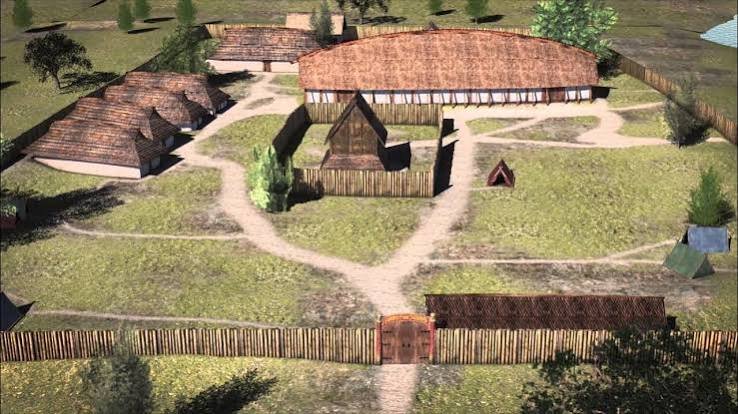
Borre existed within a broader landscape of elite settlements and archaeological sites in Vestfold.
The region contains evidence for farms, burial grounds, craft production, and maritime activity.
This suggests that political power was concentrated within a network rather than confined to a single isolated settlement.
Borre's monumental cemetery was one component of a larger social system.
Ritual and Belief
Viking Age funerary practices varied considerably.
Burials could involve cremation or inhumation, depending on local traditions and social circumstances.
Grave goods might include weapons, jewelry, tools, animals, vehicles, or ships.
These practices provide clues about beliefs concerning death and social identity.
However, archaeologists must be cautious when reconstructing specific religious beliefs from objects alone.
Archaeological Investigation
Modern archaeological techniques have changed our understanding of Borre.
Geophysical surveys, aerial photography, environmental archaeology, and scientific dating methods can reveal features without extensive excavation.
These approaches allow researchers to investigate the broader landscape surrounding the visible mounds.
Heritage and Modern Interpretation
Borre has become an important location for understanding Viking heritage in Norway.
The site's significance extends beyond individual artifacts.
Its value lies in the landscape itself—the relationship between monuments, settlement, geography, and historical memory.
Conclusion
The Borre Mounds represent one of the most impressive Viking Age monumental landscapes in Norway.
They demonstrate how elite Scandinavian communities used burial monuments to communicate status, ancestry, and political power.
The site is equally important because of the artistic tradition that bears its name.
The Borre artistic style provides evidence of cultural connections extending across Viking Age Scandinavia.
Ultimately, Borre shows that Viking power was expressed through more than warfare. It was also expressed through monumental landscapes, artistic traditions, ancestry, ritual, and the ability to mobilize communities for large construction projects.