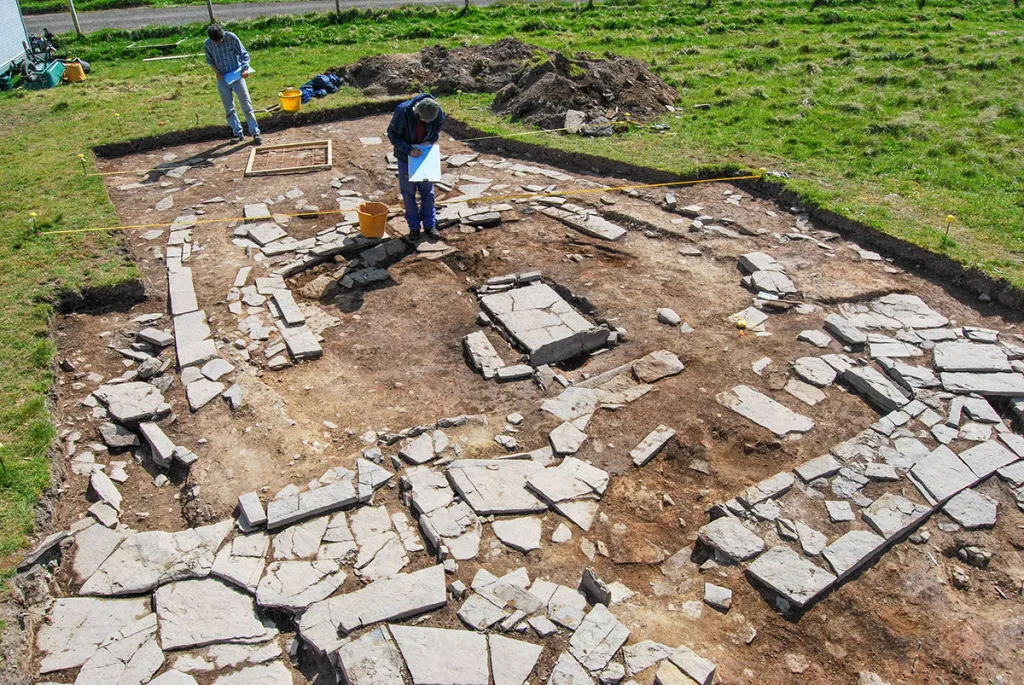
The Braes of Ha'Breck on the island of Wyre provides important evidence for Neolithic settlement in Orkney.
The site is particularly significant because it reveals that Neolithic communities were not only constructing monumental tombs and ceremonial structures but were also building substantial houses in which people lived, worked, and organized their communities.
Neolithic Wyre
Wyre is a small island in Orkney.
Despite its modest size, it preserves remarkable prehistoric archaeological evidence.
The Braes of Ha'Breck settlement demonstrates that small islands could support substantial farming communities during the Neolithic period.
Houses
The settlement contained stone-built structures.
The houses included:
walls;
floors;
hearths;
working spaces;
and internal divisions.
Farming
Neolithic communities practiced agriculture.
They cultivated crops and raised livestock.
Animal husbandry likely included:
cattle;
sheep;
goats;
and pigs.
Domestic Life
Archaeological remains can reveal everyday activities.
Grinding stones may indicate grain processing.
Pottery can reveal cooking and storage.
Animal bones provide evidence for diet and livestock management.
Community Organization
The construction of multiple houses indicates that the settlement was not merely a temporary campsite.
People lived together within an organized community.
Island Networks
Wyre was connected to other Orkney islands by sea.
This allowed communities to exchange:
stone;
food;
pottery;
tools;
and other materials.
Monumental Orkney
The Braes of Ha'Breck settlement is particularly important because it complements Orkney's famous monuments.
While sites such as Maeshowe and the Ring of Brodgar reveal ceremonial life, settlements reveal ordinary domestic activity.
Conclusion
Braes of Ha'Breck: Wyre's Neolithic Houses provides a valuable window into everyday life in prehistoric Orkney.
Its houses demonstrate that Neolithic island communities possessed sophisticated architectural traditions and organized agricultural economies.
The site reminds us that the people who built Orkney's monumental landscape also lived in ordinary homes where they cooked, worked, raised animals, and raised families.