Rousay is one of Orkney's richest archaeological islands.
Its prehistoric landscape contains numerous chambered cairns, settlements, and ceremonial monuments.
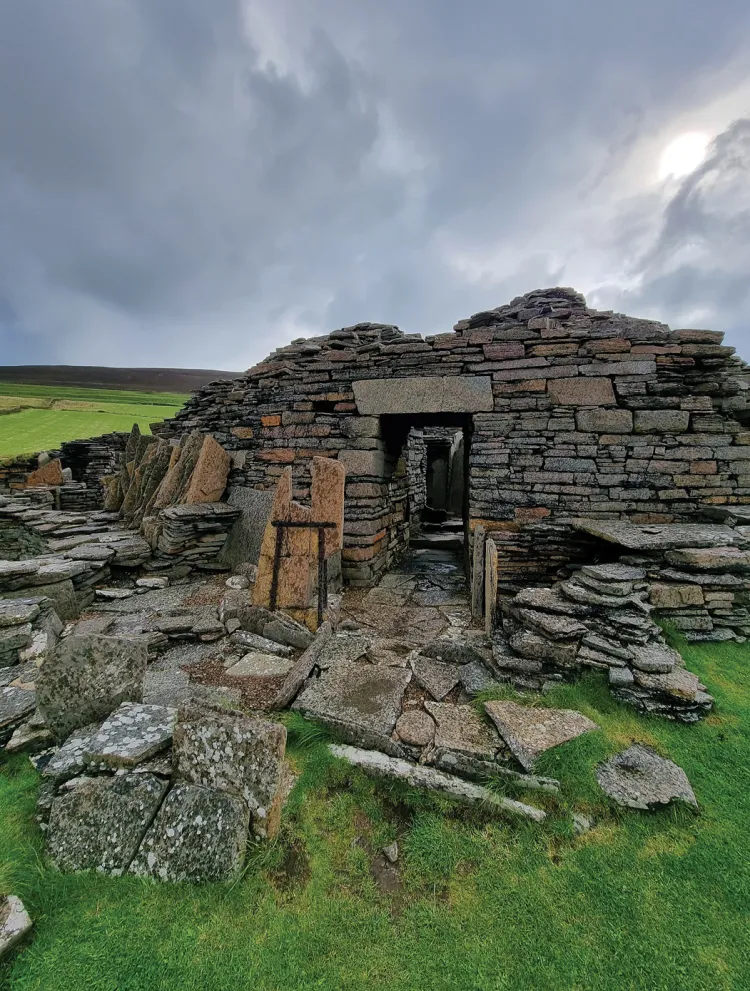
The Knowe of Hunclett belongs to this wider tradition of Neolithic burial architecture.
Chambered Tombs
Neolithic chambered cairns were monumental burial structures.
They typically consisted of:
a stone-built chamber;
passages;
dividing slabs or stalls;
and a large mound.
Communal Burial
These monuments could accommodate multiple burials.
Rather than serving one individual, they may have represented ancestral communities.
Human remains could be added over many generations.
Architecture
The construction required careful planning.
Large slabs had to be:
selected;
transported;
positioned;
stabilized;
and incorporated into the chamber.
Rousay's Archaeological Landscape
Rousay contains several important chambered cairns.
The concentration of monuments suggests that the island played an important role in prehistoric Orkney.
Landscape Relationships
Neolithic monuments were often positioned in relation to:
hills;
valleys;
coastlines;
settlements;
and other monuments.
This indicates that burial architecture was part of a wider landscape strategy.
Ancestry
The repeated use of tombs suggests that prehistoric communities maintained strong relationships with the dead.
The monuments could have served as places where community identity was reinforced.
Conclusion
Knowe of Hunclett: Rousay's Neolithic Tomb represents the broader tradition of monumental burial architecture that makes Rousay one of Orkney's most important prehistoric landscapes.
Its significance lies in the evidence it contributes to our understanding of Neolithic burial, ancestry, architecture, and community organization.