Introduction
Wind affects sailing, farming, travel, construction, and many other human activities. Communities living in exposed landscapes or relying on boats may have developed detailed knowledge of wind direction and seasonal patterns. The idea of portable weathervanes in the Bronze Age raises an interesting question: did people use movable objects to observe or symbolize the wind?
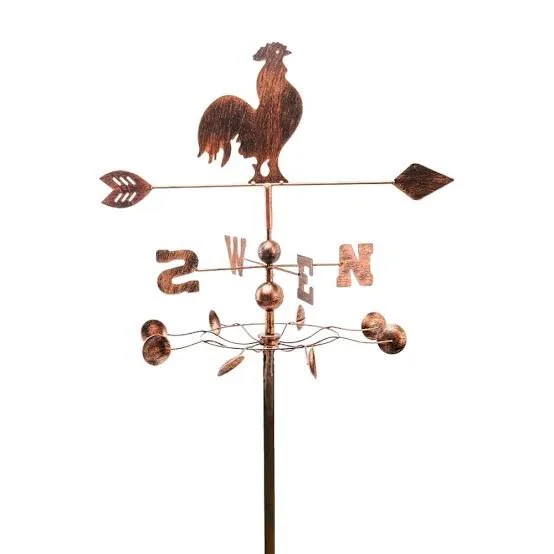
A weathervane is generally a device that turns in response to wind and indicates its direction. Although wind indicators are technically plausible in many periods, the existence of specific Bronze Age portable weathervanes must be demonstrated through archaeological evidence. A small metal object with a bird, animal, or arrow-shaped form is not automatically a weather instrument.
The subject is best approached as a research question connecting ancient technology, environmental knowledge, symbolism, and the interpretation of small artifacts.
What Is a Weathervane?
A weathervane typically has a movable element mounted so that it can rotate with the wind. Its shape and balance allow it to align with the direction from which the wind is blowing.
Modern weathervanes often include an arrow or other indicator and may be mounted above buildings. A portable device would need a suitable pivot, support, and design that allowed it to respond to air movement.
The archaeological identification of such a device requires more than a shape that resembles an arrow or animal. Researchers would need to identify the mechanical features that allowed it to move and demonstrate that the object was intended to indicate wind direction.
Wind Knowledge in Bronze Age Communities
The Bronze Age covered different periods in different regions, but many communities relied on agriculture, animal husbandry, maritime travel, and long-distance exchange.
Wind could influence sailing routes, coastal fishing, the movement of smoke, and the timing of certain activities. People did not need a mechanical instrument to develop useful wind knowledge. They could observe clouds, vegetation, water surfaces, and recurring seasonal conditions.
In maritime settings, practical knowledge of prevailing winds could be especially valuable. However, the existence of such knowledge does not prove that people used portable mechanical instruments to record it.
How a Portable Device Might Function
A portable wind indicator would need to rotate freely and respond to airflow. Its design might include a central pivot, a balanced body, or a directional marker.
If a Bronze Age artifact were proposed as a weathervane, researchers would examine its joints, wear patterns, balance, and evidence of attachment to a support.
A small metal figure might have been part of a vehicle, a standard, a decorative fitting, a toy, or a ritual object. Its original configuration may be incomplete, making the function difficult to reconstruct.
Experimental replicas could test whether the object would turn in the wind, but mechanical feasibility alone would not establish its historical use.
Materials and Craftsmanship
Bronze is an alloy primarily of copper and tin, though ancient metal compositions varied. Bronze Age craftspeople developed casting, hammering, finishing, and joining techniques that could produce a wide range of objects.
A portable instrument would need to withstand repeated handling and movement. If it contained a pivot, the design would have to balance responsiveness with durability.
Small metal objects can preserve evidence of sophisticated craft knowledge, but their size does not tell us what they were designed to do.
Metallurgical analysis may help identify the composition and manufacturing process. It cannot independently establish whether an object served a practical, ceremonial, or decorative purpose.
Could Wind Indicators Have Ritual Meaning?
Wind can be associated with storms, seasonal change, sailing, agricultural conditions, and other forces that influence human life. In many cultures, natural phenomena also acquire symbolic or religious meanings.
A wind-responsive object could theoretically have been used in a ritual setting, particularly if its movement was interpreted as significant. Yet this possibility cannot be inferred from the object alone.
Evidence for ritual use might include a secure ceremonial context, repeated deposition of similar objects, distinctive decoration, or associated practices documented in reliable sources.
Even then, ritual and practical functions would not necessarily be mutually exclusive. A device could have provided useful information while also carrying symbolic significance.
Status and Portable Objects
Objects made from bronze could be valuable because they required access to metal resources, skilled labor, and established production networks.
A finely crafted object might therefore have conveyed wealth or social position. However, bronze objects served many purposes, and material value alone does not establish that an item was an elite status symbol.
The object's size, decoration, rarity, wear, and archaeological context all matter.
A portable instrument might have been useful to a sailor, craftsperson, or traveler, but identifying a specific user group requires evidence beyond the proposed function.
Archaeological Context and Dating
A small object may be found in a settlement, burial, hoard, workshop, or isolated deposit. Each context can suggest different possibilities, but none automatically reveals the object's original use.
A metal object deposited in a burial might have been a personal possession, an offering, a symbol of status, or an item selected specifically for the burial.
Dating may rely on associated artifacts, the chronology of the deposit, and metallurgical comparison. The date of deposition may be later than the date of manufacture if the object was retained or inherited.
Alternative Explanations
A proposed Bronze Age weathervane should be compared with alternative interpretations.
The object might have served as a decorative fitting, a standard, a component of a larger mechanism, a symbolic representation of an animal, or a ceremonial implement.
Researchers should ask which interpretation best explains the object's physical features and context. If the weathervane hypothesis requires a missing pivot or an unattested mounting system, the uncertainty should be acknowledged.
A strong interpretation should also explain why the object is different from known examples of other artifact types.
Experimental Archaeology
Experimental archaeology can test whether a reconstructed object responds to wind and whether its materials and shape are suitable for repeated use.
Researchers can reproduce possible pivots, supports, and balances, then compare the wear produced by movement with the surviving artifact.
Such experiments can rule out some mechanical possibilities, but they cannot prove that an ancient object was used in the same way. A design can be mechanically functional without having been invented or adopted in the past.
Conclusion
Bronze Age portable weathervanes are an intriguing topic because they connect practical environmental knowledge with metalworking, symbolism, and social identity. Wind observation was important to many ancient activities, especially sailing and seasonal resource use.
However, the existence of a particular portable weathervane must be supported by identifiable mechanical features and a reliable archaeological context. An animal-shaped bronze object or directional-looking fitting is not enough on its own.
A careful investigation would combine metallurgical analysis, wear study, experimental reconstruction, and comparison with known artifacts. This approach allows researchers to explore the possibility of ancient wind indicators without confusing technological plausibility with verified archaeological evidence.