Introduction
Salt has been an essential resource for human communities because it contributes to food preparation and preservation and can be used in several technical and economic activities. Although salt is often associated with coastal evaporation or underground deposits, it can also be obtained from inland sources, including salt springs, brines, and mineral-rich mountain environments.
In some regions, salt production may have been seasonal. People could travel to a source during a particular period, extract or process salt, and return to their usual settlements afterward. The material culture of these workers can reveal how they organized production, managed travel, and adapted to difficult environments.
However, seasonal salt mining must be demonstrated through evidence. A salt source in a mountain valley does not automatically prove that people visited it only during a particular season or that the activity involved a specialized group of miners.
Why Salt Was Valuable
Salt has several practical uses. It can improve the flavor of food and, under suitable conditions, help preserve meat, fish, and other products by reducing the availability of water for many microorganisms.
Salt may also be important in animal husbandry and certain manufacturing processes. Its value depends on local resources, transport costs, demand, and the availability of alternatives.
Where salt was scarce, a reliable source could support exchange between communities. People living near a salt source might produce more than they needed locally and trade the surplus for grain, livestock, tools, or other goods.
Yet not every salt source became a major commercial center. Some may have supplied only nearby households or seasonal groups.
Salt Sources in Mountain Valleys
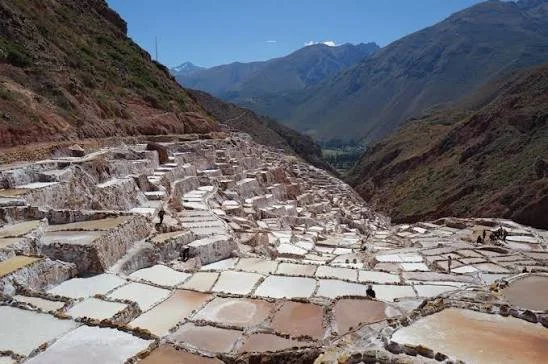
Mountain valleys can contain saline springs, evaporative basins, and geological deposits associated with ancient water systems. Their productivity depends on geology, climate, water flow, and the concentration of dissolved salts.
Some sources may produce brine that can be collected and evaporated. Others may expose salt-bearing sediments or mineral deposits that require different methods of extraction.
Researchers need geological analysis to understand how the salt formed and whether the source could have been exploited using the technology available in a particular period.
The modern appearance of a spring may also differ from its ancient condition because of erosion, changes in groundwater, or human modification.
What Seasonal Work Might Look Like
Seasonal salt production could be shaped by weather, water availability, travel conditions, and the timing of agricultural work.
Workers might visit a salt source when roads were passable, when evaporation conditions were favorable, or when household farming duties allowed people to leave their settlements.
A seasonal camp might contain temporary shelters, hearths, storage areas, and equipment used for processing brine. More permanent installations could indicate repeated use over many generations.
However, short-lived deposits can be difficult to identify. A small hearth and a few artifacts might represent a brief visit, but they could also belong to another activity unrelated to salt production.
Tools and Equipment
Salt production may require containers for collecting brine, vessels for evaporation, fuel for heating, tools for scraping or collecting mineral deposits, and equipment for transporting the finished product.
The specific tools depend on the production method. Some systems rely heavily on natural evaporation, while others require considerable heating and fuel.
Containers and furnace remains can provide clues about production intensity. Yet vessels may have been used for several purposes, and a heating installation is not necessarily a salt-processing furnace.
Residue analysis, mineral deposits, and comparison with known production techniques can help establish the function of the equipment.
Material Culture and Everyday Life
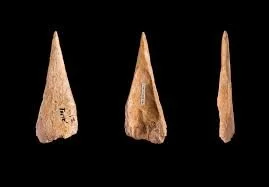
The objects found at a salt-working site may include pottery, food remains, personal ornaments, stone tools, animal bones, and items used for repair or transport.
These materials can reveal whether workers stayed for extended periods or made brief visits. Food remains may indicate how people provisioned themselves, while the presence of specialized tools can help distinguish production areas from ordinary camps.
Imported objects may suggest that workers participated in exchange networks. However, an imported artifact does not prove that salt was traded directly with the region from which the object originated.
The material assemblage must be interpreted within its local economic and chronological context.
Fuel, Forests, and Environmental Impact
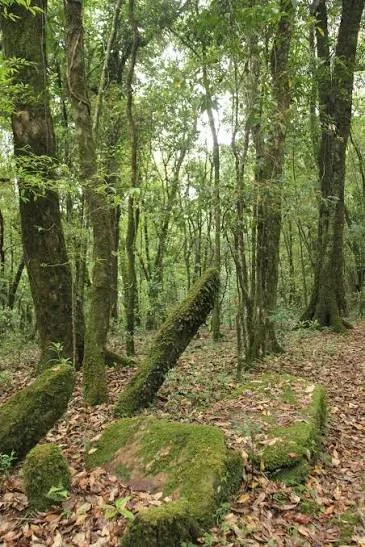
If salt production required boiling brine, fuel could become a major resource. Repeated heating might place pressure on nearby woodland, especially where production was intensive.
Charcoal analysis can identify the types of wood used, although the fuel may come from several activities at the same site.
Environmental evidence can also reveal changes in vegetation around a production area. However, deforestation cannot be attributed to salt production without considering other causes, including farming, construction, metalworking, and natural changes.
Salt production could therefore be investigated as part of a wider relationship between industry and the mountain environment.
Transporting Salt Through Mountain Landscapes
Salt is relatively easy to store when dry, but transport across mountainous terrain can be difficult. Steep paths, snow, rivers, and seasonal weather may limit movement.
Pack animals, carts, sledges, or human carriers could be used depending on the terrain and historical period. Archaeological evidence for routes may include tracks, bridges, stopping places, and concentrations of associated settlements.
A route connecting a salt source with another settlement does not automatically prove that salt was the main commodity transported along it. The route may have supported several types of exchange.
Researchers must consider the broader pattern of movement and the evidence for production at the source.
Seasonal Labor and Social Organization
Seasonal salt production may involve household labor, specialized craftspeople, hired workers, or coordinated groups. The organization depends on the scale of production and the demands of the process.
A small source might be used by families who produce salt for their own needs. A larger operation could require the coordination of fuel collection, brine processing, storage, and transport.
However, specialized equipment does not automatically indicate a centralized authority. Communities can develop sophisticated production techniques without a state administration.
Evidence of standardized measures, storage facilities, controlled access, or documentary regulations may help clarify how the activity was organized.
Dating Salt-Working Sites
Dating can be challenging because salt itself is often difficult to date directly. Researchers may rely on charcoal, pottery, organic remains, construction phases, and stratigraphic relationships.
Radiocarbon dates from charcoal require caution because old wood may produce dates earlier than the activity being investigated. A piece of pottery found nearby may also have been deposited after the original production phase.
The best chronology comes from several independent sources that are securely linked to the salt-working activity.
Conclusion
The material culture of seasonal salt miners in mountain valleys offers a way to explore resource extraction, mobility, specialized labor, and exchange in challenging environments. Tools, hearths, containers, transport routes, and food remains can reveal how people obtained and processed salt.
However, seasonal production cannot be assumed from a mountain salt source alone. Researchers must establish when the site was used, what methods were employed, and whether the evidence indicates repeated seasonal visits rather than continuous occupation.
When geology, archaeology, environmental evidence, and historical sources are combined, salt-working sites can reveal how communities organized labor around valuable resources. They also demonstrate that seemingly remote valleys could become important places of production and connection within wider economic landscapes.