Introduction
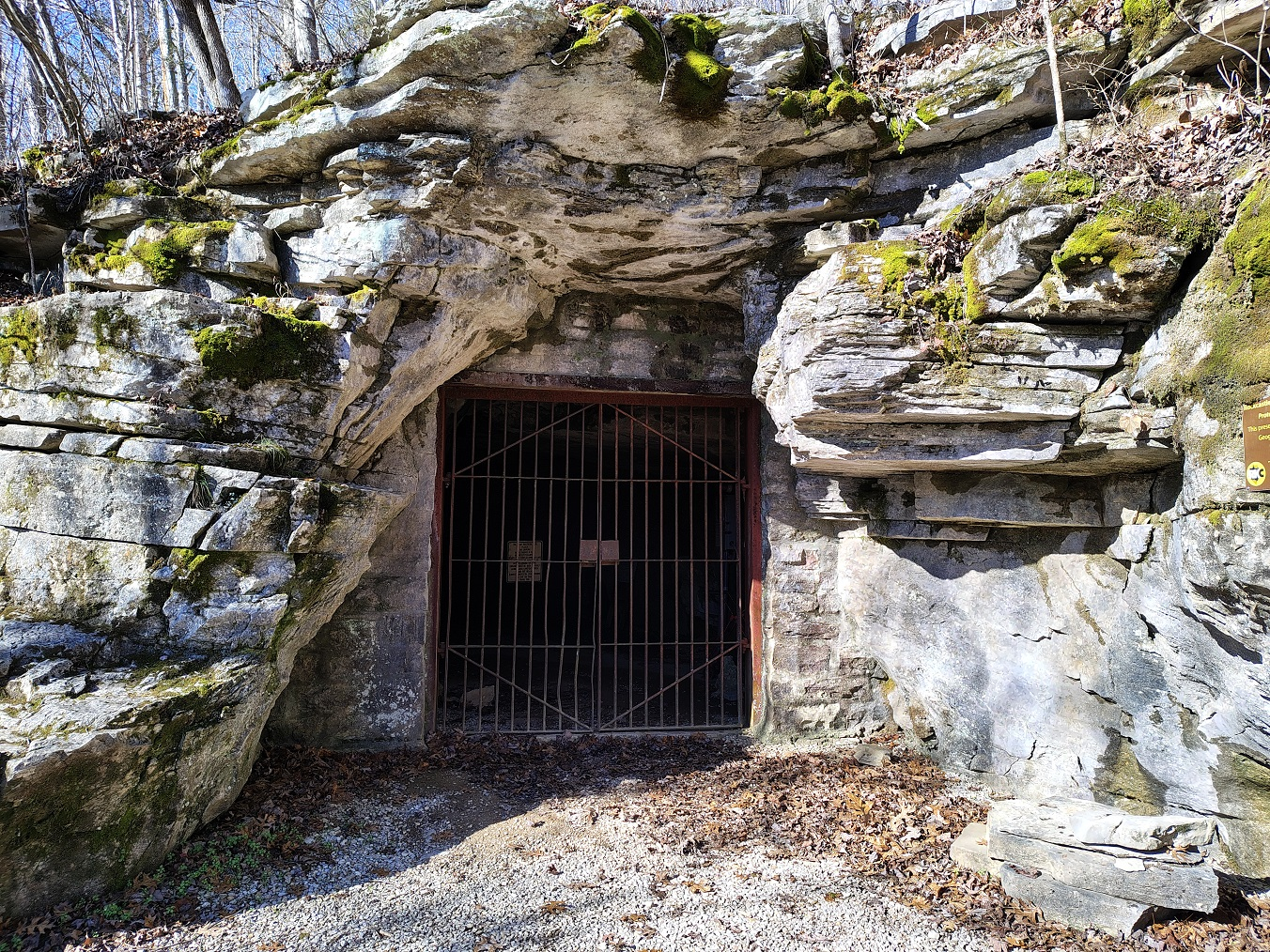
Located along the towering limestone bluffs of the Ohio River in Hardin County, Illinois, Cave-in-Rock is one of the largest natural cave systems in the American Midwest. Formed through thousands of years of erosion within Mississippian limestone, the cave features a massive entrance measuring nearly 55 feet (17 m) wide and extending more than 120 feet (37 m) into the bluff. Long before European settlement, Indigenous peoples visited the cave for shelter, ceremonies, and resource gathering. During the late eighteenth and nineteenth centuries, Cave-in-Rock gained additional importance as a source of saltpeter (potassium nitrate), an essential ingredient in gunpowder. Its strategic river location later made it famous as a refuge for traders, river travelers, and, at times, notorious river pirates.
Geology and Saltpeter Formation
Saltpeter formed naturally inside the cave through the slow decomposition of bat guano mixed with moisture-rich limestone sediments. Over many years, mineral-rich deposits accumulated along the cave floor, producing nitrate-bearing earth suitable for extraction.
During the early nineteenth century, miners excavated these deposits and processed the nitrate-rich soil by soaking it in water, filtering the solution, and evaporating it to produce potassium nitrate crystals. These crystals were then transported to nearby gunpowder mills, where they were combined with sulfur and charcoal to manufacture black powder.
Indigenous Use
Archaeological evidence indicates that Native American communities visited Cave-in-Rock for thousands of years before European arrival. Stone tools, pottery fragments, charcoal, and food remains suggest that the cave functioned as a temporary shelter, hunting camp, storage location, and ceremonial gathering place.
Its prominent location overlooking the Ohio River also made it a recognizable landmark along one of eastern North America's most important prehistoric transportation corridors.
Historical Importance
Beyond its geological significance, Cave-in-Rock became a well-known stop for flatboats and keelboats traveling the Ohio River during the late eighteenth century. Its protected interior offered temporary shelter for travelers, although it also became associated with outlaw gangs and river pirates who exploited the cave's strategic location.
Today, the cave is preserved within Cave-In-Rock State Park, where visitors can explore one of Illinois' most remarkable natural and historical landmarks.
Conclusion
Cave-in-Rock combines remarkable geological formation, prehistoric Indigenous occupation, valuable saltpeter resources, and colorful frontier history. Its limestone cavern, mineral deposits, and strategic river setting make it one of Illinois' most significant natural and archaeological sites.