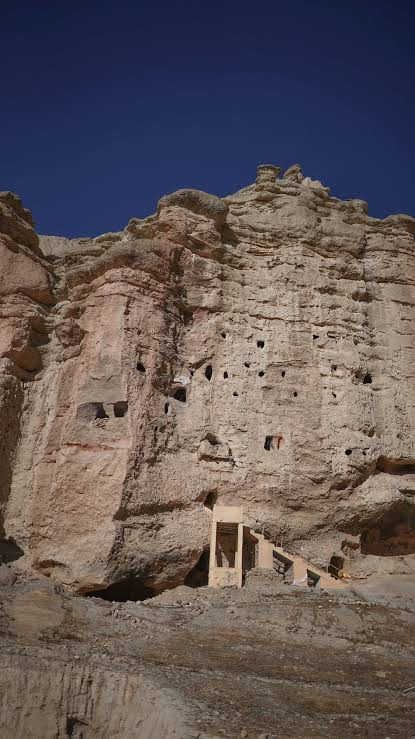
Chhoser, located in Upper Mustang near Lo Manthang, is part of the extraordinary archaeological and historical landscape of the former Kingdom of Lo. The region is known for its dramatic cliffs, cave complexes, religious monuments, and settlements that demonstrate how human communities adapted to the difficult environment of the trans-Himalayan plateau.
The title “Cliff Fortress Ruins” reflects the defensive and strategic character of Mustang's cliff landscapes. Throughout the region, people used natural rock formations and artificial caves for settlement, refuge, storage, and protection during periods of instability.
Chhoser is therefore best understood as part of a larger landscape in which geography itself influenced architecture and political security.
The Geography of Chhoser
Upper Mustang is characterized by:
deeply eroded valleys;
steep cliffs;
high-altitude plateaus;
dry landscapes;
and narrow routes through the mountains.
These geographical features could create natural defensive advantages.
A settlement positioned above a valley could observe approaching travelers.
Cliffs could also provide locations that were difficult for enemies to reach.
In such an environment, architecture and geography often became closely connected.
Caves as Defensive Spaces
Many caves in Mustang were carved into cliffs.
Some were probably used as:
homes;
storage areas;
burial chambers;
meditation retreats;
and refuges.
During periods of conflict, a high cave could provide protection from attack.
Access could potentially be controlled through ladders, narrow paths, or removable wooden structures.
The same cave system could therefore serve both peaceful and defensive purposes at different times.
What Makes a Fortress?
A fortress does not always need massive stone walls.
In mountainous environments, natural geography can become part of the defensive system.
A defensible location may include:
steep slopes;
narrow entrances;
elevated observation points;
restricted access routes;
and protected water or food storage.
Communities could modify these natural features with walls, gates, platforms, or caves.
Mustang and Political Competition
The history of the Himalayan region involved shifting political relationships between local communities, Tibetan powers, and neighboring states.
Control over trade routes could be economically valuable.
Mountain passes were not merely geographical obstacles; they were strategic corridors.
A community capable of controlling a route could influence the movement of:
merchants;
livestock;
armies;
pilgrims;
and valuable goods.
This made fortified settlements important.
Cave Architecture
Creating an artificial cave required significant labor.
Workers had to remove rock using available tools while ensuring that the remaining structure was stable.
Multi-level cave systems could include:
living spaces;
storage chambers;
corridors;
and specialized rooms.
Some Mustang caves are now extremely difficult to access because original routes have collapsed or eroded.
This creates one of archaeology's greatest challenges: reconstructing how ancient people originally entered and used the spaces.
Chhoser and the Kingdom of Lo
Chhoser belonged to the cultural and political landscape surrounding Lo Manthang.
The region's settlements were connected through local routes and shared religious and social traditions.
As the Kingdom of Lo developed, the relationship between the royal capital and surrounding villages became part of a larger political system.
Chhoser therefore cannot be separated from the broader history of Upper Mustang.
Archaeological Preservation
Cliffside sites face several threats.
Natural processes include:
erosion;
earthquakes;
rockfalls;
wind damage;
and water infiltration.
Human threats can include:
looting;
uncontrolled tourism;
construction;
and the removal of artifacts.
Once a cave is disturbed, valuable information about its original use can be lost.
Why Cliff Fortresses Fascinate Archaeologists
Defensive sites provide evidence for how ancient communities understood danger.
The decision to construct or occupy a difficult location required effort.
People may have been responding to:
warfare;
raiding;
political instability;
or competition for resources.
However, archaeologists must avoid assuming that every elevated site was automatically a fortress.
A high location could also have religious, economic, or environmental advantages.
Only detailed study of architecture and archaeological evidence can determine how a specific site was used.
Chhoser as Part of a Cultural Landscape
The greatest importance of Chhoser lies in its relationship to the surrounding landscape.
Cliffs, caves, monasteries, villages, and trade routes together create a complex historical environment.
People did not experience these features separately.
A journey through Upper Mustang might connect:
a village;
agricultural fields;
a religious monument;
a trade route;
and a defensive refuge.
The entire landscape was part of everyday life.
Conclusion
Chhoser represents the remarkable relationship between people and landscape in Upper Mustang.
Its cliffside environment demonstrates how natural geography could influence settlement, security, architecture, and cultural identity.
Whether used for habitation, storage, religious activity, or defense, the caves and ruins associated with this Himalayan landscape preserve evidence of communities that transformed seemingly inaccessible mountains into places where people could live, worship, trade, and survive.