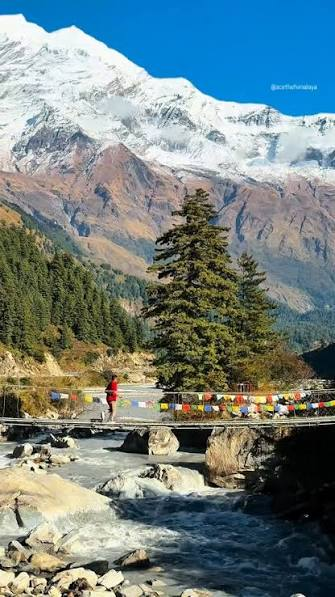
Yara is one of the historic settlements of Upper Mustang, located within the dramatic dry valleys and cliffs of Nepal's trans-Himalayan region. Like other communities in Mustang, Yara developed within a landscape shaped by high altitude, limited agricultural land, mountain trade, and strong cultural connections with Tibet.
The phrase “Hanging Salt Village” captures the dramatic appearance of settlements and cave systems positioned near cliffs and steep landscapes, as well as Mustang's historical association with trans-Himalayan trade. Salt was one of the commodities that moved through the wider Kali Gandaki trade corridor, although Yara itself should be understood as part of a larger network rather than assumed to have been exclusively a salt-trading settlement.
The history of Yara reflects a broader human achievement: the ability of communities to establish permanent settlements in environments that appear, at first glance, almost impossible to inhabit.
The Environment of Upper Mustang
Upper Mustang lies in the rain shadow of the Himalayas.
The region receives far less rainfall than many other parts of Nepal.
Its landscape is characterized by:
dry valleys;
eroded cliffs;
sparse vegetation;
high-altitude plateaus;
and dramatic mountain scenery.
Water is therefore a critical resource.
Where reliable water sources exist, communities can create agricultural land through irrigation.
Agriculture in a Mountain Desert
Farming in Upper Mustang requires careful environmental management.
Communities cannot depend solely on rainfall.
Irrigation systems help direct water from streams and snowmelt toward cultivated fields.
Farmers must coordinate:
the maintenance of channels;
planting schedules;
water distribution;
harvesting;
and food storage.
The limited growing season makes successful agriculture particularly important.
Hardy crops such as barley have historically been well suited to high-altitude environments.
Yara and the Cave Landscape
The region surrounding Yara is part of Mustang's larger landscape of cliffs and artificial caves.
These caves demonstrate the ability of ancient and medieval communities to adapt architecture to their environment.
Depending on the site, caves could provide:
shelter;
storage;
burial space;
religious retreats;
and defensive refuge.
The presence of caves near settlements illustrates how people used both constructed buildings and natural geological features.
Why Build into the Cliffs?
Cliffside spaces offered several advantages.
They could be:
protected from strong winds;
naturally insulated;
difficult to access;
and located above flood-prone areas.
At the same time, building and maintaining access to high caves required significant labor and skill.
The original systems of ladders, walkways, or climbing routes may no longer survive.
Salt and the Mountain Economy
Salt played a crucial role in traditional Himalayan exchange.
Communities on the Tibetan Plateau had access to salt resources, while agricultural regions farther south produced grain and other goods.
This encouraged trade across mountain passes.
Caravans could transport:
salt;
wool;
grain;
dried meat;
animal products;
textiles;
and other materials.
Mustang's location along routes between Tibet and Nepal made the entire region an important participant in these exchange systems.
Life Along the Trade Routes
Trade routes brought more than goods.
They also encouraged the movement of:
languages;
religious ideas;
artistic styles;
technologies;
and people.
A remote village could therefore participate indirectly in events occurring hundreds of kilometers away.
Merchants, pilgrims, herders, and political representatives could all travel through the broader Mustang corridor.
Houses and Settlement Organization
Traditional highland settlements were generally organized around practical environmental needs.
Homes needed protection from:
cold;
wind;
limited fuel resources;
and seasonal weather.
Construction materials often came from the local environment.
Stone, earth, timber, and other available resources could be combined to create durable buildings.
The organization of a village also reflected social relationships.
Families needed access to:
water;
agricultural fields;
grazing areas;
religious institutions;
and routes connecting them to neighboring communities.
Religion and Tibetan Cultural Influence
Upper Mustang developed strong cultural connections with Tibet.
Buddhist monasteries, stupas, prayer walls, and religious monuments became important features of the regional landscape.
Religion shaped:
festivals;
artistic traditions;
burial customs;
social organization;
and relationships between communities.
Even remote settlements were connected to broader religious networks.
Yara and Archaeological Change
Historic villages are not frozen in time.
Over centuries, populations can:
move;
expand;
abandon old houses;
build new structures;
or change economic strategies.
Environmental pressures and political changes can also transform settlements.
Archaeological remains surrounding modern communities may therefore represent several different periods of occupation.
The Challenge of Preservation
The heritage of Mustang faces significant pressures.
Ancient caves and historic settlements can be damaged by:
earthquakes;
erosion;
climate-related changes;
tourism;
road construction;
and the gradual abandonment of traditional buildings.
Preserving these landscapes requires more than protecting individual monuments.
It requires understanding the relationship between villages, agricultural systems, religious sites, and the surrounding environment.
Why Yara Matters
Yara represents the human history of adaptation in the Himalayan highlands.
Its importance lies in its connection to:
high-altitude settlement;
cliffside architecture;
agricultural adaptation;
Tibetan cultural traditions;
and long-distance trade.
The settlement also forms part of the larger archaeological landscape of Upper Mustang, where evidence of human activity extends from prehistoric periods to the medieval Kingdom of Lo and beyond.
Conclusion
Yara's dramatic landscape reflects the extraordinary ability of human communities to create permanent homes in difficult environments.
Through irrigation, agriculture, trade, architecture, and cultural cooperation, the people of Upper Mustang transformed dry mountain valleys into inhabited landscapes.
The history of Yara cannot be separated from the wider history of Mustang's trade routes, cliffside caves, Buddhist traditions, and highland communities.
Its story is ultimately one of adaptation and connection: a mountain settlement shaped by its seemingly remote location yet linked for centuries to the wider worlds of Tibet, Nepal, and the Himalayan trade networks.