Introduction
Located deep within the remote rainforests of southeastern Colombia, Chiribiquete National Park is one of the most extraordinary archaeological and ecological landscapes in the world. Covering more than 4.3 million hectares, it is Colombia's largest national park and a UNESCO World Heritage Site, renowned for its towering sandstone mesas, dense tropical forests, winding rivers, and vast networks of caves and rock shelters. Often referred to as the "Sistine Chapel of the Amazon," Chiribiquete preserves one of the largest and oldest collections of prehistoric rock art ever discovered. Thousands of paintings adorn the walls of cliffs, caves, and rock shelters, with some artworks dating back more than 12,000 years to the end of the last Ice Age. These remarkable paintings provide invaluable evidence of the beliefs, daily life, and environmental knowledge of the Indigenous peoples who inhabited the Amazon for millennia, making Chiribiquete one of South America's most significant archaeological treasures.
The Painted Cave Labyrinth
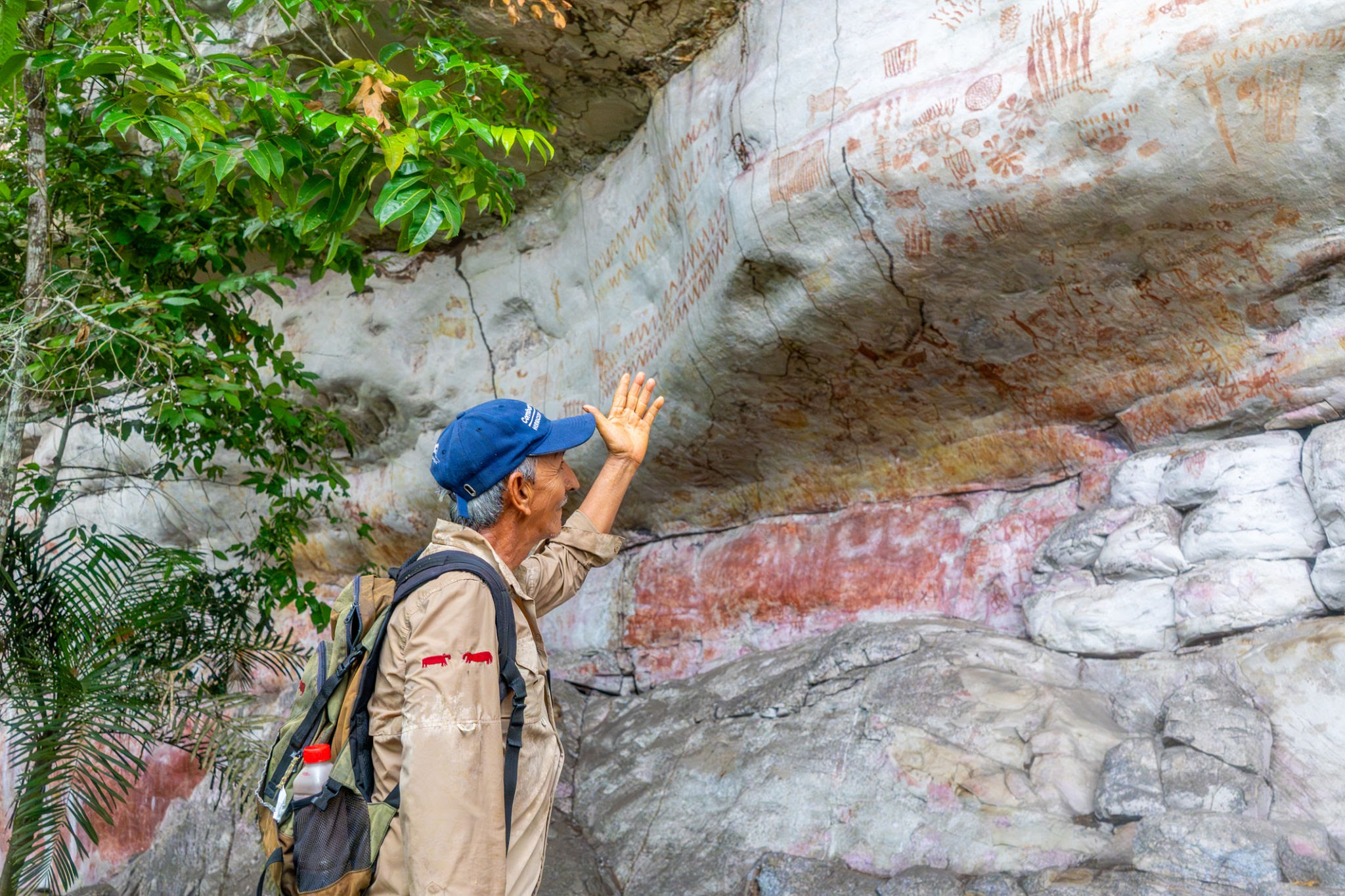
The immense sandstone formations of Chiribiquete, known as tepuis, contain an extensive labyrinth of caves, overhangs, and sheltered rock walls that served as ideal canvases for prehistoric artists. Archaeologists have documented tens of thousands of individual paintings, many of which remain remarkably well preserved because the rock shelters protect them from rain, wind, and direct sunlight. Created using natural red ochre pigments derived from iron-rich minerals, the paintings display an extraordinary variety of subjects that reflect both everyday life and spiritual beliefs.
The artwork depicts humans, jaguars, deer, tapirs, monkeys, birds, fish, turtles, snakes, crocodiles, and countless other animals native to the Amazon rainforest. Hunting scenes show groups of people using bows, spears, and other weapons to pursue game, while ceremonial dances and ritual gatherings reveal the importance of community life and religious practices. Other paintings portray geometric designs, handprints, mythical beings, and symbolic figures that may represent ancestral spirits, cosmological beliefs, or sacred ceremonies. Many images are layered over one another, suggesting that successive generations continued to use the same sacred locations for thousands of years.
Artistic Techniques and Cultural Significance
The artists of Chiribiquete created their paintings primarily with red ochre, a natural pigment rich in iron oxide that has remarkable durability. The pigment was finely ground and mixed with water, plant sap, or animal fats before being carefully applied to the rock surfaces using fingers, brushes made from plant fibers, or simple painting tools. The resulting images have survived for millennia, providing an unparalleled visual record of prehistoric Amazonian culture.
The repeated depiction of the jaguar is especially significant. Throughout many Indigenous Amazonian traditions, the jaguar symbolizes strength, spiritual power, transformation, and the connection between the human and supernatural worlds. Its frequent appearance suggests that Chiribiquete served not only as a habitation area but also as a sacred ceremonial landscape where rituals honoring powerful animal spirits were performed. The paintings therefore represent much more than artistic expression—they preserve religious beliefs, oral traditions, and cosmological knowledge passed down across countless generations.
Archaeological Discoveries
Archaeological investigations have uncovered stone tools, charcoal, hearths, food remains, and other evidence indicating that humans occupied Chiribiquete continuously for thousands of years. Radiocarbon dating suggests that some of the earliest occupations occurred shortly after the first people entered South America, making the site one of the oldest records of human settlement in the Amazon Basin. The abundance of animal imagery has also helped researchers reconstruct ancient ecosystems, showing that many of the species painted on the cave walls continue to inhabit the region today.
Because of its remote location and the presence of isolated Indigenous communities who continue to live without sustained contact with modern society, much of Chiribiquete remains unexplored. Large sections of the park are protected from tourism and development, ensuring the preservation of both its archaeological heritage and its exceptional biodiversity.
Environmental Importance
In addition to its archaeological significance, Chiribiquete is one of the world's most biologically diverse protected areas. Its forests support thousands of species of plants, mammals, birds, reptiles, amphibians, and insects, including many that are endangered or found nowhere else on Earth. The park's dramatic sandstone plateaus create isolated ecosystems where unique species have evolved over millions of years. This combination of outstanding cultural and natural heritage makes Chiribiquete one of the most important conservation areas in the Amazon.
The close relationship between the prehistoric paintings and the surrounding landscape demonstrates that the ancient inhabitants possessed an intimate understanding of their environment. Rather than exploiting the rainforest, they developed sustainable ways of living that respected the balance between humans, animals, rivers, and forests. Their artwork reflects a worldview in which nature and spirituality were deeply interconnected.
Conclusion
Chiribiquete National Park stands as one of the greatest archaeological discoveries in the Amazon, preserving an immense labyrinth of painted caves that documents more than 12,000 years of human history. Its thousands of red ochre paintings depict wildlife, hunting scenes, ceremonies, mythical beings, and sacred symbols that offer unparalleled insight into the lives, beliefs, and artistic traditions of the region's earliest inhabitants. Combined with its extraordinary biodiversity and largely untouched rainforest ecosystems, Chiribiquete represents a rare fusion of cultural and natural heritage. Often called the "Sistine Chapel of the Ancient Amazon," the site has fundamentally expanded our understanding of prehistoric South America, demonstrating that the Amazon was home to sophisticated Indigenous cultures whose artistic achievements, environmental knowledge, and spiritual traditions continue to inspire archaeologists and historians around the world.