Introduction
Situated on a bluff overlooking the Mississippi River near Memphis, Tennessee, Chucalissa was an important Mississippian village occupied between approximately 1000 and 1500 CE. The name Chucalissa, meaning "abandoned house" in the Choctaw language, was assigned to the site in modern times. Covering nearly 40 acres (16 hectares), the settlement contained platform mounds, residential neighborhoods, ceremonial plazas, and workshops where skilled artisans produced distinctive shell-tempered pottery, one of the defining technologies of the Mississippian world. Today, the site is preserved as the C.H. Nash Museum at Chucalissa, providing valuable insight into prehistoric life in the Mississippi Valley.
Settlement and Monumental Architecture
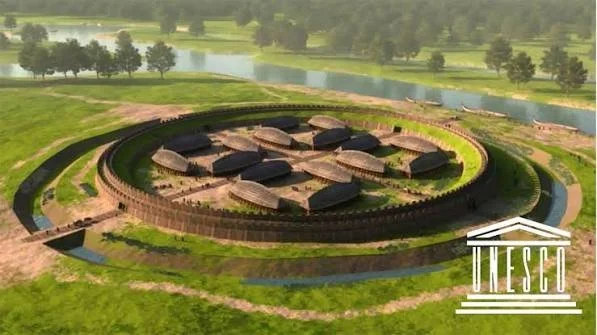
The village was centered around a broad ceremonial plaza surrounded by earthen platform mounds supporting temples, council houses, and elite residences. Ordinary families lived in rectangular houses constructed from wooden poles woven with cane and covered in clay plaster. The carefully organized layout reflects the hierarchical social structure characteristic of Mississippian communities.
The mounds were built through repeated additions of compacted earth transported in woven baskets. Elevated public buildings protected important structures from flooding while emphasizing the authority of political and religious leaders.
Shell-Tempered Pottery Technology
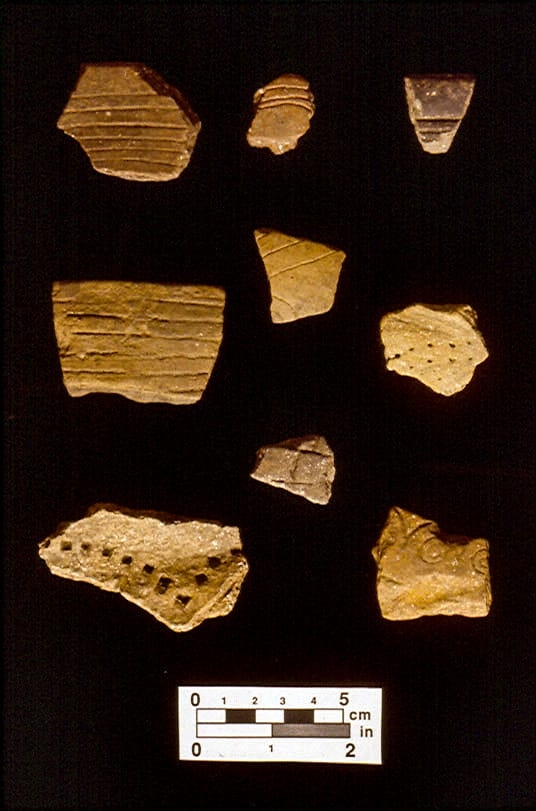
One of Chucalissa's most significant archaeological discoveries is its extensive production of shell-tempered pottery. Potters crushed freshwater mussel shells into fine particles and mixed them with clay before shaping vessels by hand. During firing, the shell temper strengthened the pottery, making it lighter, more durable, and more resistant to cracking than earlier ceramic traditions.
Artisans produced cooking pots, storage jars, serving bowls, ceremonial vessels, and decorated containers featuring incised geometric designs, animal motifs, and symbolic patterns. These ceramics were widely traded throughout the Mississippi Valley and became one of the defining characteristics of Mississippian culture.
Daily Life and Economy
The inhabitants relied on intensive maize agriculture supplemented by beans, squash, sunflower cultivation, hunting, fishing, and gathering wild resources. The nearby Mississippi River provided abundant fish, freshwater mussels, and transportation routes connecting Chucalissa with neighboring communities.
Craft specialists manufactured pottery, stone tools, shell ornaments, bone implements, and woven textiles. Trade networks brought exotic materials such as marine shell, copper, and high-quality stone from distant regions, demonstrating Chucalissa's participation in extensive regional commerce.
Archaeological Importance
Excavations have uncovered house floors, storage pits, hearths, pottery kilns, food remains, ceremonial artifacts, and burial features that provide detailed evidence of Mississippian daily life. Chucalissa is particularly valuable because its well-preserved shell-tempered ceramics have allowed archaeologists to better understand prehistoric manufacturing techniques and regional trade.
Conclusion
Chucalissa represents one of Tennessee's finest examples of a Mississippian farming village, combining monumental earthworks with advanced ceramic technology. Its platform mounds, organized community layout, and mastery of shell-tempered pottery illustrate the technological innovation, agricultural prosperity, and artistic achievements of prehistoric Native American societies in the Mississippi Valley.