Introduction
Long before states developed elaborate bureaucracies, communities needed ways to manage goods, verify transactions, and maintain trust between people who did not necessarily know one another personally. Markets and exchange centers created practical problems: How could a trader show that a container had not been opened? How could a community distinguish one shipment from another? How could people recognize responsibility for goods in the absence of written contracts?
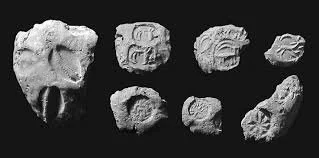
Clay sealings offer an important way to investigate these questions. These small objects were often created when a seal was pressed into wet clay attached to a container, cord, door, or other item. Their impressions could provide evidence of authority, ownership, control, or the closure of goods.
The study of sealings from peripheral markets can help researchers understand administrative practices before fully developed states emerged. However, not every clay sealing represents a market transaction, and the precise role of an object must be established through its archaeological context.
What Is a Clay Sealing?
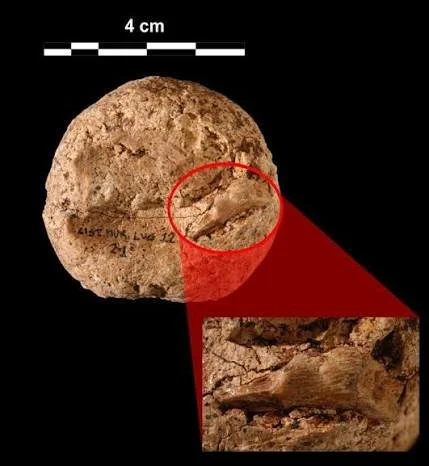
A clay sealing is a piece of clay used to secure or mark something. In many ancient systems, a lump of wet clay was pressed over a cord, fastening, container opening, or door closure. A stamp or cylinder seal could then be impressed into the clay.
Once dried, the sealing preserved the impression. If someone broke the fastening or opened the container, the sealing could be damaged, revealing that access had occurred.
The system did not make theft impossible. Instead, it helped make unauthorized access more visible and could identify the person or institution responsible for a shipment or storage area.
Sealings could also be used for identification or administrative tracking even when their main function was not physical security.
Seals Before Widespread Writing
Seal imagery could communicate information without requiring a long written text. Designs might include geometric patterns, animals, human figures, symbols, or scenes whose meanings depended on cultural convention.
In some ancient societies, seal impressions became part of increasingly complex administrative systems. They could be associated with individuals, households, officials, institutions, or commercial activities.
However, interpreting a seal is not always straightforward. A repeated motif may indicate a workshop or shared visual tradition rather than one specific individual. A seal might also be inherited, reused, or transferred between owners.
The relationship between a seal design and the person who used it must therefore be investigated rather than assumed.
Peripheral Markets and Exchange Networks
The term "peripheral market" can refer to exchange locations outside major political centers or administrative capitals. Such places may have connected villages, pastoral groups, craft producers, and traveling merchants.
These markets could operate through personal relationships, customary rules, and repeated transactions. Clay sealings may have helped participants manage goods moving between communities.
A small settlement located far from a royal center could still be connected to a wider economic network. It might receive raw materials, distribute local products, or act as a meeting point between people with different languages and traditions.
However, archaeologists must establish that a site functioned as a market through multiple indicators, such as storage facilities, diverse goods, craft production, or patterns of repeated exchange.
What Sealings Can Tell Us About Administration
Sealings may provide evidence of organized procedures. If similar impressions occur repeatedly in a particular context, they could indicate the use of shared conventions for controlling access to goods.
The placement of sealings is particularly important. Sealings found near storage rooms, containers, or administrative spaces may suggest that they were used to manage stored materials. Those found in refuse deposits might have been discarded after the associated containers were opened.
A large collection of sealings could indicate substantial administrative activity, but the number alone does not prove the existence of a state bureaucracy. A community-based institution, household network, or local authority might also have used systematic controls.
Clay Sealings and the Development of Record Keeping
Record keeping does not begin only when people write sentences on tablets. Communities can preserve information through objects, tokens, repeated symbols, standardized containers, and recognizable impressions.
Clay sealings formed part of this broader history of information management. They could help track who controlled goods, whether a closure remained intact, or which authority was associated with a transaction.
In some regions, sealing practices existed alongside other forms of accounting. Over time, systems of marking and counting could interact with increasingly formal administrative methods.
However, this development did not follow one universal sequence. Different societies created different solutions according to their economic needs and available technologies.
Archaeological Context and Interpretation
Sealings can be displaced from their original locations. A broken sealing might enter a floor deposit, a rubbish pit, or construction fill long after it was first used.
Researchers therefore examine the surrounding artifacts, stratigraphy, building phases, and evidence of storage or production. Residue analysis and microscopic study may sometimes help identify the material or fastening associated with a sealing.
Impressions can also be compared across collections. Repeated designs may indicate shared practices or networks, although identical motifs do not necessarily prove that objects came from the same workshop.
The strongest interpretation combines the physical properties of the sealing with the broader archaeological setting.
Trade, Trust, and Social Relationships
Markets depend on trust, but trust does not always arise from formal contracts. Reputation, kinship, shared religious practices, personal guarantees, and repeated interactions can all support exchange.
Sealings added a material form of verification. They could help identify goods or reveal whether a container had been opened, reducing uncertainty in transactions that involved storage or transportation.
They did not eliminate the need for social relationships. A seal impression was meaningful only because people recognized or trusted the conventions behind it.
This combination of material control and social trust is an important theme in the study of early economic life.
The Limits of Pre-State Interpretation
The term "pre-state" can be useful, but it should not imply that societies without states lacked complex organization. Communities may have maintained elaborate trading networks, craft specialization, religious institutions, and shared rules without centralized government.
Likewise, the presence of sealings does not automatically mean that a society was approaching statehood. Administrative practices can exist in many different political arrangements.
Researchers should examine local evidence rather than assuming that all communities followed a linear path from simple exchange to centralized bureaucracy.
Conclusion
Clay sealings provide valuable evidence for how ancient communities controlled access to goods, identified responsibility, and organized transactions. Their impressions can preserve traces of authority and economic practice even when written records are absent or limited.
At peripheral markets, sealings may reveal connections between local producers and wider exchange networks. They can also demonstrate that record keeping was not exclusively a written activity: physical objects and recognizable marks could help preserve information and build trust.
However, the interpretation of sealings depends on context. A sealing is not automatically proof of a market, a state bureaucracy, or a formal accounting system. When examined alongside storage facilities, artifacts, settlement patterns, and other evidence, these small clay objects can illuminate the practical foundations of administration in early complex societies.