• MAIN PAGE
  • LATEST NEWS
    • Lost Cities
    • Archaeology's Greatest Finds
    • Underwater Discoveries
    • Greatest Inventions
    • Studies
    • Blog
  • PHILOSOPHY
  • HISTORY
  • RELIGIONS
    • Africa
    • Anatolia
    • Arabian Peninsula
    • Balkan Region
    • China - East Asia
    • Europe
    • Eurasian Steppe
    • Levant
    • Mesopotamia
    • Oceania - SE Asia
    • Pre-Columbian Civilizations of America
    • Iranian Plateau - Central Asia
    • Indus Valley - South Asia
    • Japan
    • The Archaeologist Editor Group
    • Scientific Studies
    • Aegean Prehistory
    • Historical Period
    • Byzantine Middle Ages
    • Predynastic Period
    • Dynastic Period
    • Greco-Roman Egypt
  • Rome
  • PALEONTOLOGY
  • About us
Menu

The Archaeologist

  • MAIN PAGE
  • LATEST NEWS
  • DISCOVERIES
    • Lost Cities
    • Archaeology's Greatest Finds
    • Underwater Discoveries
    • Greatest Inventions
    • Studies
    • Blog
  • PHILOSOPHY
  • HISTORY
  • RELIGIONS
  • World Civilizations
    • Africa
    • Anatolia
    • Arabian Peninsula
    • Balkan Region
    • China - East Asia
    • Europe
    • Eurasian Steppe
    • Levant
    • Mesopotamia
    • Oceania - SE Asia
    • Pre-Columbian Civilizations of America
    • Iranian Plateau - Central Asia
    • Indus Valley - South Asia
    • Japan
    • The Archaeologist Editor Group
    • Scientific Studies
  • GREECE
    • Aegean Prehistory
    • Historical Period
    • Byzantine Middle Ages
  • Egypt
    • Predynastic Period
    • Dynastic Period
    • Greco-Roman Egypt
  • Rome
  • PALEONTOLOGY
  • About us

Colossal Statues of Ancient Pharoah Stand Again in Luxor After 30 Years of Work

December 19, 2025

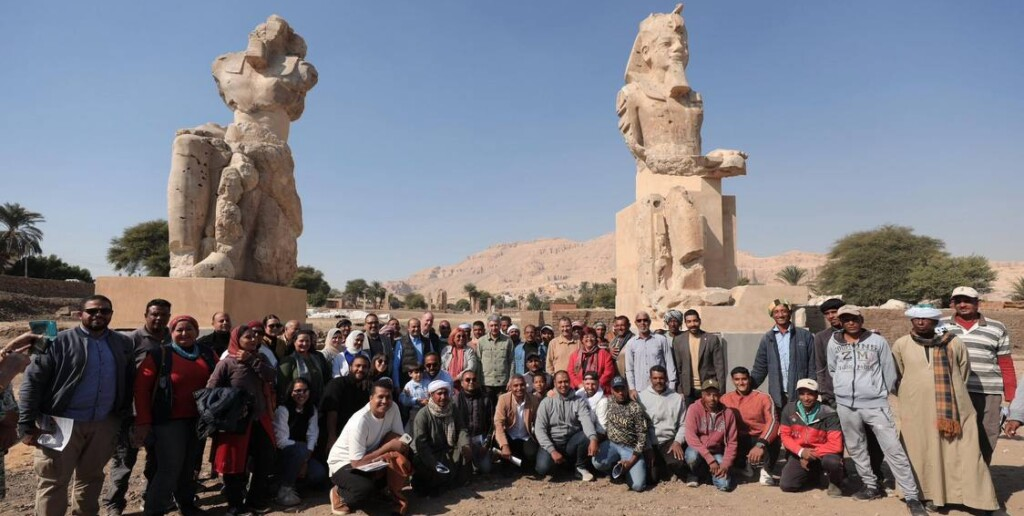
On Sunday, Egyptian authorities unveiled the completed restoration works on two colossal alabaster statues of a notable Egyptian king.

Located in Luxor, and standing over 30 feet tall, the two statues were destroyed in an earthquake 1,200 years ago, making their reconstitution an awfully long time coming.
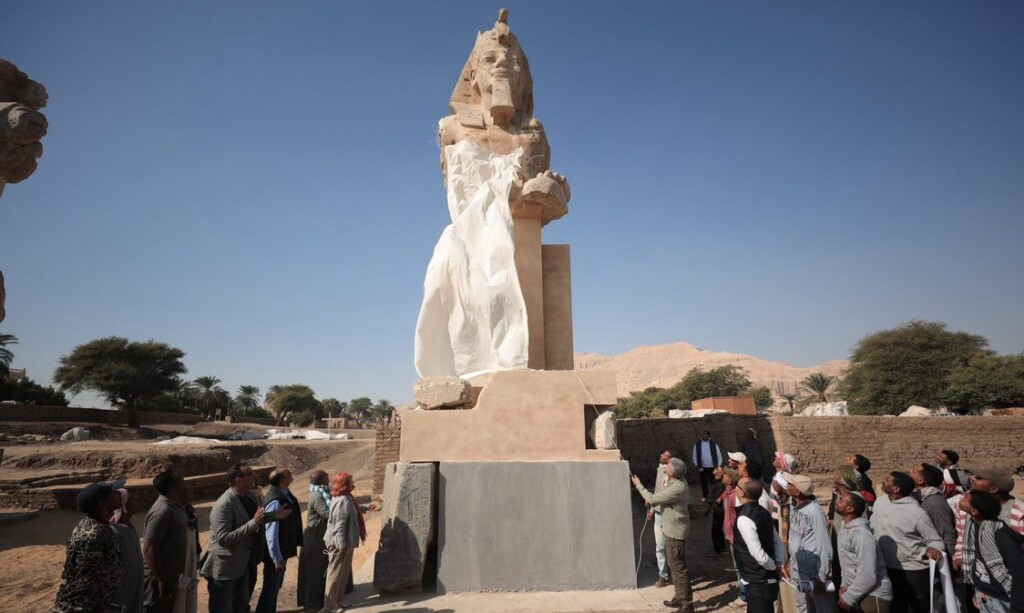
King Amenhotep III, whose reign is dated roughly between 1388 BCE and 1349 BCE, oversaw one of the most prosperous and influential periods in ancient Egyptian history. As the ninth pharaoh of the Eighteenth Dynasty, he was revered not only as a ruler but also as a living god during his lifetime.

On the west bank of the Nile stood his vast mortuary temple, once watched over by two monumental statues known as the Colossi of Memnon. Carved from Egyptian alabaster quarried at Hatnub in Middle Egypt, these towering figures portray Amenhotep III facing east, adorned with the nemes headdress, a crown associated with both royal authority and divine status.

According to Africa News, an Egyptian-German archaeological mission led by German Egyptologist Hourig Sourouzian began work at the temple site in the late 1990s. The team focused on assessing whether the scattered alabaster fragments could be reassembled to restore the statues to their original form.

This long-term effort led to the identification, conservation, recording, reinstallation, and elevation of numerous statues that once belonged to the temple, along with several architectural features though the Colossi themselves remained excluded from these restorations.
← The Castle to host 2025 Solstice WatchLasers turn back time on Rome’s Column of Marcus Aurelius →
Featured
image_2025-12-19_225650954.png
Dec 19, 2025
Geological Surveys in Mongolia Uncover 3,000-Year-Old Nomadic Khirgisuur Burial Mounds
Dec 19, 2025
Read More →
Dec 19, 2025
image_2025-12-19_225350450.png
Dec 19, 2025
A trove of precious material
Dec 19, 2025
Read More →
Dec 19, 2025
image_2025-12-19_222925951.png
Dec 19, 2025
From Macedon to the Alps: Two of Switzerland’s Oldest Celtic Gold Coins Discovered in Arisdorf
Dec 19, 2025
Read More →
Dec 19, 2025
image_2025-12-19_221610560.png
Dec 19, 2025
Memorial award honouring York historian Florence E. Wright
Dec 19, 2025
Read More →
Dec 19, 2025
image_2025-12-19_221219427.png
Dec 19, 2025
Archaeologists Found Evidence of a 7,000-Year-Old Sunken City
Dec 19, 2025
Read More →
Dec 19, 2025
image_2025-12-19_220516520.png
Dec 19, 2025
If Mount Vesuvius Erupted in August, Why Were Pompeii Victims Wearing Heavy Wool Garments?
Dec 19, 2025
Read More →
Dec 19, 2025
read more

Powered by The archaeologist