Introduction
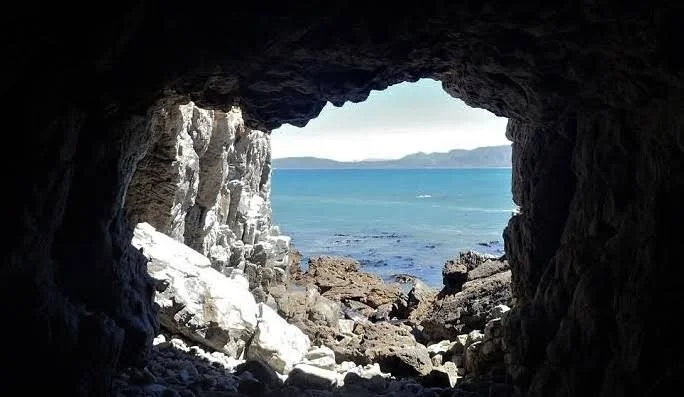
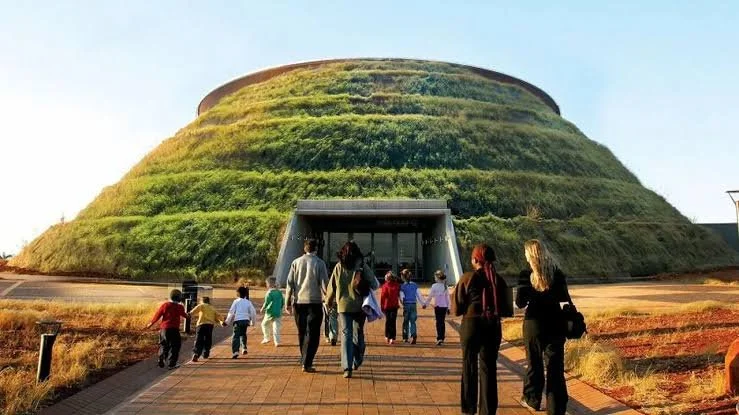
South Africa’s Cradle of Humankind is one of the world’s most important regions for research into human evolution. Located mainly in Gauteng and the adjoining North West Province, the landscape contains numerous fossil-bearing caves and archaeological localities that preserve evidence of hominins, ancient animals, and changing environments.
Its international importance is reflected in its designation as a UNESCO World Heritage Site. The area’s scientific value comes from the combination of geological preservation, fossil diversity, and discoveries that have helped researchers reconstruct the evolutionary history of the human family.
The phrase “2026 New Finds” raises an important distinction between the continuing work of scientific research and the announcement of a specific discovery. New research, renewed analysis, and revised interpretations can all change what scientists know about a site. However, a date in a title should not be taken as proof that a major new fossil discovery occurred in that year.
A responsible account of the Cradle of Humankind in 2026 must distinguish between established discoveries, continuing research priorities, and new findings that have been formally documented and published.
Why the Cradle of Humankind Is Important
The Cradle of Humankind preserves a rich record of hominin evolution across different periods. Fossil sites in the region have produced remains attributed to several groups, including Australopithecus, Paranthropus, and early members of the genus Homo.
These fossils help researchers investigate changes in skull shape, teeth, locomotion, and body structure. They also demonstrate that the human family tree contains multiple branches rather than a single line of direct ancestors.
The region is equally important for its non-hominin fossils. Ancient carnivores, herbivores, and smaller mammals provide evidence about the ecosystems in which hominins lived. By comparing fossil assemblages from different deposits, researchers can investigate changes in vegetation, climate, and animal communities.
The World Heritage designation reflects the international significance of this fossil record. It does not mean that every cave is equally well understood or that every fossil has been fully analysed. Archaeological knowledge develops through ongoing fieldwork, laboratory research, and the reassessment of earlier collections.
How New Finds Are Made
New discoveries in the Cradle of Humankind may emerge in several ways. Excavation can reveal fossils that have never been exposed, while improved analytical methods can provide new information about specimens collected decades earlier.
Researchers may also identify previously overlooked fragments within museum collections. A small bone fragment can become significant when detailed imaging or anatomical comparison reveals that it belongs to a species or body region not previously represented at a site.
Other discoveries concern the geological context rather than the fossil itself. Mapping sediment layers, analysing cave deposits, or revising dates can change how scientists interpret the sequence of events represented at a locality.
In many cases, the most important advance is not a spectacular new fossil but a more accurate understanding of an existing discovery. Revised chronology, better anatomical comparisons, and clearer evidence about how deposits formed can substantially alter scientific interpretations.
What Counts as a Verified Discovery in 2026?
A claim about a new discovery should be evaluated by asking several questions. Was the fossil or artefact recovered from a documented location? Has its geological context been recorded? Is there a clear description of the specimen and the methods used to study it? Has the research been published or otherwise formally documented by a credible scientific institution?
These questions are particularly important when discussing human origins. An isolated bone fragment cannot be assigned confidently to a species without comparative analysis. Similarly, a claim about an ancient tool, hearth, or burial requires evidence that establishes its context and age.
As of October 2026, the broader research landscape continues to evolve, but a title alone cannot establish that a particular major discovery was made during the year. Any article describing a specific 2026 find should name the locality, the material recovered, the researchers or institution involved, and the publication or official announcement supporting the claim.
Without that documentation, it is more accurate to discuss current research directions than to invent a discovery.
New Technologies and the Study of Old Fossils
Modern technologies have expanded the methods available to researchers. High-resolution imaging can reveal internal structures in fossils without destroying them. Three-dimensional models allow scientists to compare anatomical features and share specimens with researchers who cannot access the original material.
Geochemical analysis can provide information about the environment in which an animal lived or the processes that altered its remains. Improved dating techniques can refine the chronology of fossil-bearing deposits, while digital mapping can help reconstruct complex cave systems.
These approaches are especially useful because fossil caves are difficult environments to study. Deposits may be fragmented, mixed, or inaccessible, and some fossils are too fragile for repeated handling.
Technology does not remove the need for careful interpretation. A digital reconstruction depends on the quality of the original data, and a scientific conclusion remains subject to uncertainty even when advanced instruments are used.
The Importance of Revisiting Earlier Discoveries
Some major advances come from re-examining fossils that have been held in collections for many years. Older excavations may have used methods that differed from current standards, and the original records may not provide the spatial detail that modern researchers would ideally collect.
Reassessment can identify errors in species identification, clarify the relationship between specimens, or establish more reliable dates. It can also reveal the limitations of earlier interpretations.
Such work is not a rejection of previous archaeology. It is a normal part of science, in which new evidence and improved methods allow researchers to refine their conclusions.
For the Cradle of Humankind, this approach is especially important because the region has a long history of excavation. Its existing collections remain valuable sources of evidence, even when no new fossil is discovered.
Conservation and the Future of Research
The Cradle of Humankind’s scientific value depends on protecting its fossil-bearing landscapes. Excavation removes material from its original context, so researchers must document deposits carefully and preserve the resulting collections.
Development, erosion, uncontrolled access, and damage to cave systems can threaten archaeological evidence. Conservation therefore requires collaboration among scientists, heritage authorities, landowners, local communities, and educational institutions.
Public communication is equally important. Discoveries can attract international attention, but sensational descriptions may create inaccurate impressions about what a fossil proves. Clear explanations of uncertainty help audiences understand why the scientific process can involve debate and revision.
Conclusion
The Cradle of Humankind remains a major centre for investigating human evolution, ancient biodiversity, and the environmental history of southern Africa. New discoveries may come from excavation, technological advances, revised dating, or the reanalysis of existing collections.
The phrase “2026 New Finds” should be connected to specific, verifiable research rather than treated as evidence that a particular discovery occurred. A careful account of the region’s latest developments should identify the relevant site, describe the evidence, and explain how it changes or refines existing interpretations.
The continuing importance of the Cradle of Humankind lies in the scientific questions it allows researchers to investigate. Every well-documented fossil, revised date, and improved interpretation contributes to a more complete understanding of the long and branching history of the human family.