Introduction
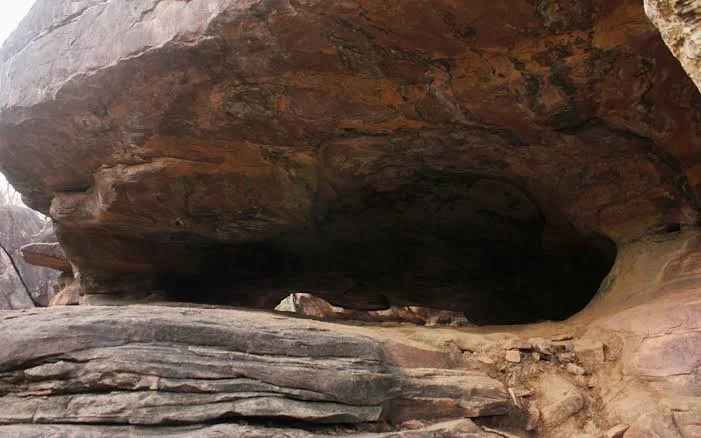
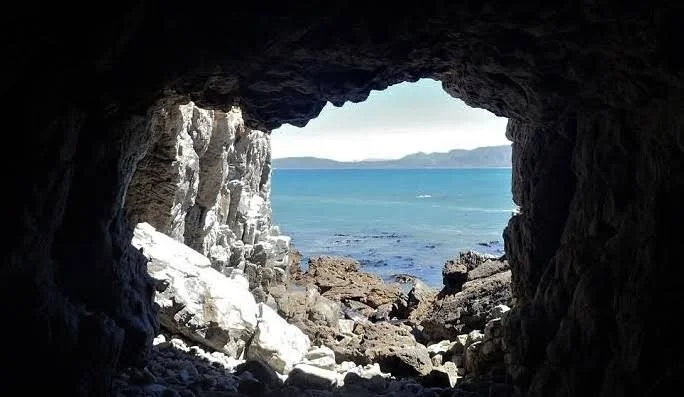
The Magaliesberg mountain range in South Africa is a landscape of steep ridges, rocky shelters, valleys, and caves that has attracted human communities for thousands of years. Its natural shelters form part of a broader archaeological landscape in which rock art, stone tools, and other material traces preserve evidence of the region’s past.
The San, Indigenous hunter-gatherer peoples with deep historical connections to southern Africa, are especially important to the study of the region’s rock art traditions. San rock paintings and engravings are found at numerous locations across southern Africa, and they provide valuable evidence of artistic expression, spiritual traditions, relationships with animals, and the ways people understood their surroundings.
The title “Magaliesberg Caves: South Africa's San Rock Art” refers to the wider cultural and archaeological importance of the region. However, not every rock shelter in the Magaliesberg contains verified San paintings, and individual artworks must be documented and assessed before their age, cultural association, or meaning can be established.
The Magaliesberg Landscape
The Magaliesberg is an ancient mountain range characterised by resistant quartzite ridges and surrounding valleys. Weathering and erosion have shaped its cliffs, crevices, and sheltered rock faces over geological time.
These formations created places where people could shelter from rain, wind, and intense sunlight. Shelters near water, travel routes, and sources of food could have been useful stopping points for mobile communities. The archaeological significance of a shelter, however, depends on the evidence found there rather than its physical appearance alone.
Rock surfaces provide a different kind of archaeological record from excavated deposits. Paintings and engravings can remain visible for centuries or millennia, but their preservation varies according to the rock type, exposure to moisture, biological growth, and human activity.
Researchers document artworks through photography, detailed mapping, and examination of pigments or engraved surfaces. They must also consider whether the art has been altered by weathering or later human activity.
San Rock Art Traditions
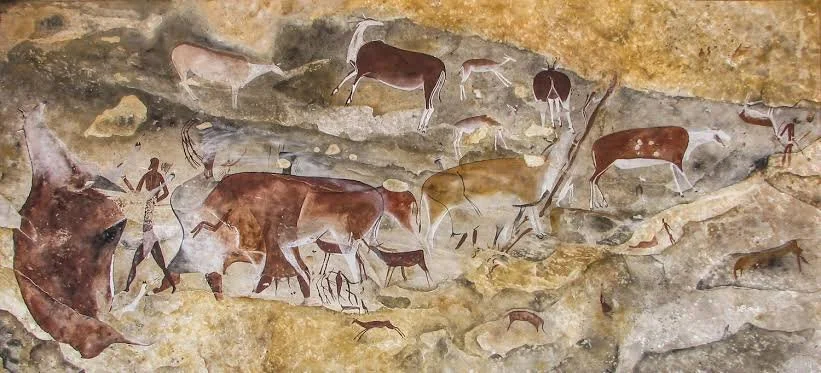
San rock art is among the most important bodies of Indigenous artistic evidence in southern Africa. Paintings often depict animals, human figures, and combinations of people and animals engaged in unusual activities. Engravings may include animal outlines, tracks, geometric forms, and other designs.
The images are not simply illustrations of everyday life. Research on San rock art has shown that some paintings are connected to spiritual beliefs, ritual practices, healing, and altered states of consciousness. Ethnographic research, particularly accounts recorded from San communities, has helped scholars understand some of these relationships.
However, interpretations cannot be applied uniformly to every image. Rock art traditions varied between communities and across time, and an image may have had different meanings in different settings. Researchers must avoid assuming that every animal figure represents a hunting scene or that every unusual human figure depicts a supernatural being.
The most responsible interpretations combine the artwork’s visual characteristics with archaeological context, regional comparisons, and Indigenous knowledge where available.
Pigments and Artistic Techniques
Prehistoric artists used mineral and organic materials to create images on rock surfaces. Red and yellow ochres, which contain iron-bearing minerals, were widely used in southern African rock painting. White pigments could be derived from mineral sources, while dark pigments could include charcoal or other mineral materials.
The exact composition of a pigment depends on local availability and the choices made by the artist. Scientists can analyse pigment samples to investigate their mineral content, although sampling must be carefully controlled to avoid damaging the artwork.
Artists also had to work with the properties of the rock surface. Rough or weathered surfaces could affect the application of pigment, while sheltered locations could provide better conditions for preserving an image.
The technical skill visible in many San paintings demonstrates detailed observation of animals and human movement. Some images capture distinctive body shapes, posture, and the relationships between figures, revealing artistic traditions developed through knowledge and practice.
Rock Art, Animals, and the Spiritual World
Animals occupy a prominent place in many San rock art traditions. Antelope, eland, and other species appear frequently in southern African paintings, while some images combine human and animal characteristics.
These depictions have been interpreted in relation to hunting, social life, ritual transformation, and spiritual beliefs. The eland, for example, has held important symbolic roles in several documented San traditions. Yet the significance of a particular animal depends on the cultural and historical context of the artwork.
The connection between rock art and spiritual practice is especially important because it challenges interpretations that treat ancient art only as decoration. An image could form part of a meaningful place within a landscape, connected to ceremonies, community memory, or relationships between people and the natural world.
At the same time, researchers must not assume that the meaning of an artwork can be recovered completely from its appearance. The original artist may have understood the image through cultural knowledge that is not directly preserved in the rock.
Dating and Identifying Rock Art
Determining the age of rock art can be difficult. Some pigments contain materials that can be analysed, but many paintings cannot be dated directly without taking samples that may damage the image. Researchers may instead use indirect evidence, including the relationship between paintings and archaeological deposits, pigment characteristics, stylistic comparisons, and changes in the surrounding landscape.
These methods often provide broad age estimates rather than exact dates. The age of a rock shelter itself does not establish the age of its paintings, because people may have visited the same location repeatedly over thousands of years.
Cultural attribution also requires caution. Although San communities created many important rock art traditions, southern African rock art includes works produced by different peoples across long periods. Archaeologists must evaluate each site individually rather than automatically assigning every painting to a single cultural group.
Preservation and Indigenous Heritage
Rock art is vulnerable to both natural weathering and human damage. Touching painted surfaces can introduce oils and contaminants, while graffiti, uncontrolled tourism, and poorly managed development can destroy irreplaceable evidence.
Conservation involves recording the condition of artworks, controlling access where necessary, managing vegetation and water-related damage, and educating visitors about the significance of the sites.
Respect for Indigenous heritage is equally important. San communities are not simply subjects of archaeological research; they are living peoples with cultural identities, histories, and contemporary concerns. Interpretation and conservation should acknowledge their perspectives and avoid presenting ancient traditions as if they were entirely disconnected from present-day communities.
Conclusion
The Magaliesberg’s caves and rocky shelters form part of a wider landscape of archaeological and cultural significance. San rock art provides insight into the artistic skills, environmental knowledge, and spiritual traditions of Indigenous southern African communities.
Not every shelter in the mountain range contains verified San art, and the age and meaning of individual images must be established through careful research. Nevertheless, the wider rock art record demonstrates that these landscapes were places of human activity, expression, and cultural meaning.
Protecting the art and interpreting it responsibly can help future generations appreciate the depth of southern Africa’s Indigenous heritage and the importance of preserving archaeological evidence in its original setting.