Introduction
The archaeological landscapes surrounding Crow Canyon in southwestern Colorado offer an important window into the wider settlement world of the Mesa Verde region.
The term "outlier" can be useful when discussing archaeological communities that exist beyond a major regional center or display architectural and cultural connections with larger traditions. However, Crow Canyon should not be imagined as an isolated settlement detached from Mesa Verde.
Instead, it formed part of a densely interconnected landscape of villages, field houses, agricultural installations, ceremonial structures, and smaller settlements.
The broader Mesa Verde region was home to ancestral Pueblo communities whose architecture and material culture developed over centuries.
Crow Canyon's archaeology helps reveal how these communities organized themselves beyond the famous cliff dwellings of Mesa Verde National Park.
The Mesa Verde World
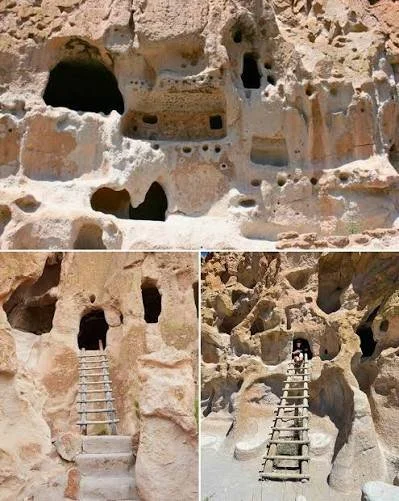
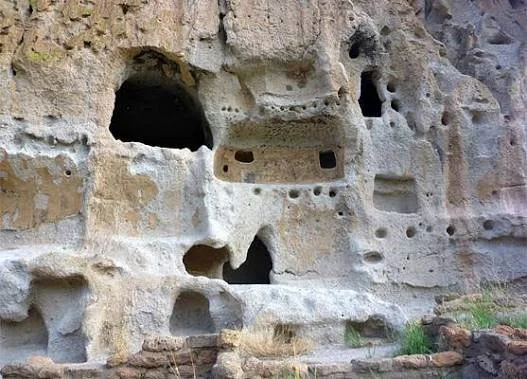
Mesa Verde is often associated with spectacular cliff dwellings.
But those structures represent only a portion of the archaeological record.
The surrounding region contained hundreds and thousands of additional sites.
People lived on mesa tops, in canyon rims, near agricultural fields, and in smaller hamlets.
This broader settlement system is essential to understanding ancestral Pueblo society.
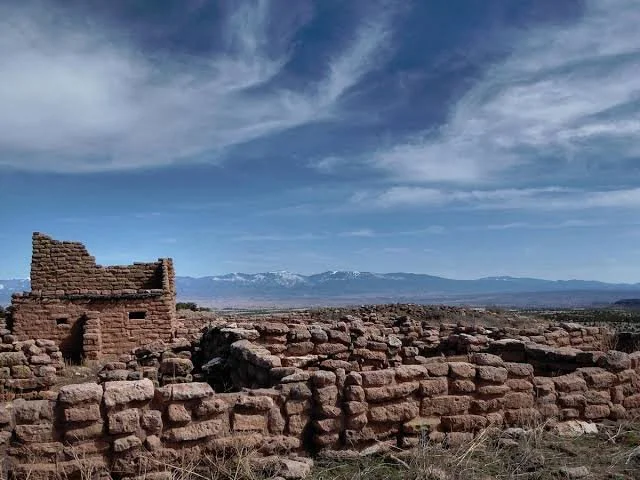
Crow Canyon Archaeological Center has conducted extensive research in southwestern Colorado to investigate these communities. Its projects have included Sand Canyon Pueblo, Castle Rock Pueblo, Yellow Jacket Pueblo, Woods Canyon Pueblo, and other sites.
Crow Canyon Archaeological Research
The Crow Canyon Archaeological Center has played a major role in studying the region.
Its research has focused especially on the period between approximately A.D. 1000 and 1300.
Researchers combine excavation, survey, environmental reconstruction, artifact analysis, architectural mapping, and public archaeology.
This approach is important because the region cannot be understood through one site.
Settlement archaeology examines relationships among communities.
The Pueblo III Period
Many of the most dramatic Mesa Verde communities date to the Pueblo III period, approximately A.D. 1150–1300.
During this period, populations increasingly aggregated into larger settlements.
Villages sometimes contained:
multiple kivas
dense room blocks
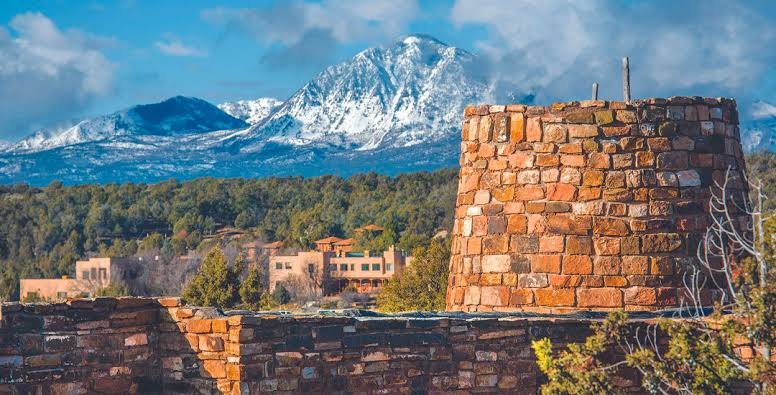
towers
plazas
defensive walls
storage areas
agricultural features
The architecture suggests increasing social complexity.
But the precise causes remain debated.
Possible factors include:
population growth
environmental stress
conflict
social reorganization
changing trade relationships
migration
religious developments
No single explanation accounts for every settlement.
Sand Canyon Pueblo
Sand Canyon Pueblo provides an important comparison.
Crow Canyon Archaeological Center describes it as a late-thirteenth-century village that became a major focus of archaeological investigation. The Sand Canyon Archaeological Project examined settlement in the central Mesa Verde region between 1983 and 1993.
The research demonstrated the importance of studying entire settlements rather than only spectacular architectural features.
Excavations examined:
architecture
ceramics
animal remains
plant remains
human remains
tools
settlement organization
This multidisciplinary approach helps reconstruct daily life.
Castle Rock Pueblo
Castle Rock Pueblo provides particularly dramatic evidence.
Crow Canyon research indicates that the village was occupied from approximately the 1260s until the mid-1280s.
The site included at least:
16 kivas
40 surface rooms
nine possible towers
a D-shaped enclosure
possible plazas
retaining walls
village-enclosing walls
The settlement was built around a prominent sandstone butte.
Its location may have provided defensive advantages.
Archaeological evidence indicates that the settlement ended abruptly, possibly as the result of violent conflict.
This is important because it provides evidence that violence was one factor in the final centuries of occupation in the region.
Yellow Jacket Pueblo
Yellow Jacket Pueblo is another major site.
Crow Canyon identifies it as the largest known prehistoric site in the Mesa Verde region.
It appears to have functioned as a major community center surrounded by smaller settlements.
Its occupation extended from the mid-A.D. 1000s into the late 1200s.
The site's scale demonstrates that Mesa Verde society consisted of complex networks rather than isolated households.
Woods Canyon Pueblo
Woods Canyon provides another perspective.
The site contains structures along canyon rims and beneath cliff overhangs.
Crow Canyon's database describes multi-story rooms, kivas, towers, retaining walls, check dams, and other features. The site was occupied from the mid-1100s into the late 1200s.
Such architecture demonstrates the integration of domestic, ceremonial, agricultural, and defensive elements.
What Makes an "Outlier"?
The concept of an archaeological outlier is complicated.
In some Southwestern contexts, "outlier" refers to a community that shares architectural or cultural characteristics with a regional center while lying outside its immediate core area.
However, archaeological researchers increasingly emphasize networks rather than simple centers and peripheries.
A community outside a major center may have had considerable independence.
It could participate in regional exchange while maintaining its own political organization.
Therefore, calling a settlement an "outlier" does not necessarily mean it was subordinate.
Agriculture
Agriculture formed the economic foundation of these communities.
Maize was especially important.
Farmers also cultivated beans and squash.
Agricultural features included:
fields
check dams
terraces
reservoirs
soil-management structures
These systems demonstrate extensive environmental knowledge.
Food Storage
Food storage was critical.
Dry crops could be stored for months or longer.
Storage reduced vulnerability to poor harvests.
It also allowed communities to support people who performed non-agricultural activities such as construction, pottery production, tool manufacture, or ceremonial work.
Ceramics
Pottery provides some of the most valuable evidence for archaeological chronology.
Mesa Verde ceramics include distinctive decorated styles.
Sherds can reveal:
chronology
cooking
storage
trade
household activity
regional connections
A pottery fragment found in a specific archaeological layer can help date that context.
Human Remains
Human remains can provide evidence about:
age
sex
diet
disease
injury
physical activity
trauma
migration
However, archaeological work involving human remains requires particular ethical care.
Modern descendant communities have important interests in the treatment and interpretation of ancestral remains.
The End of the Mesa Verde Settlement
By the late thirteenth century, ancestral Pueblo populations in the Mesa Verde region underwent major relocation.
Many communities were abandoned.
Archaeologists debate the relative importance of drought, environmental change, conflict, population pressure, social transformation, and broader migration.
The evidence indicates that people moved rather than simply disappearing.
Many descendants of ancestral Pueblo communities live in Pueblo communities elsewhere in the Southwest.
Archaeological Methods
Crow Canyon research demonstrates how modern archaeology combines multiple methods.
Researchers may use:
systematic survey
excavation
ceramic analysis
faunal analysis
archaeobotany
dendrochronology
remote sensing
GIS
architectural analysis
The result is a much more detailed reconstruction than excavation alone could produce.
Conclusion
Crow Canyon's importance lies in its connection to the wider Mesa Verde world.
The archaeology demonstrates that ancestral Pueblo society consisted of extensive networks of communities rather than isolated cliff dwellings.
Villages such as Sand Canyon, Castle Rock, Yellow Jacket, and Woods Canyon reveal different aspects of settlement organization.
Some communities grew large.
Others remained smaller.
Some were heavily enclosed.
Others were more open.
Agriculture connected them.
Trade connected them.
Shared architectural traditions connected them.
And eventually, large-scale migration transformed the entire region.
Crow Canyon and the broader archaeological landscape therefore provide a valuable reminder that Mesa Verde was not simply a collection of spectacular ruins.
It was a living social world composed of thousands of people and hundreds of interconnected communities.