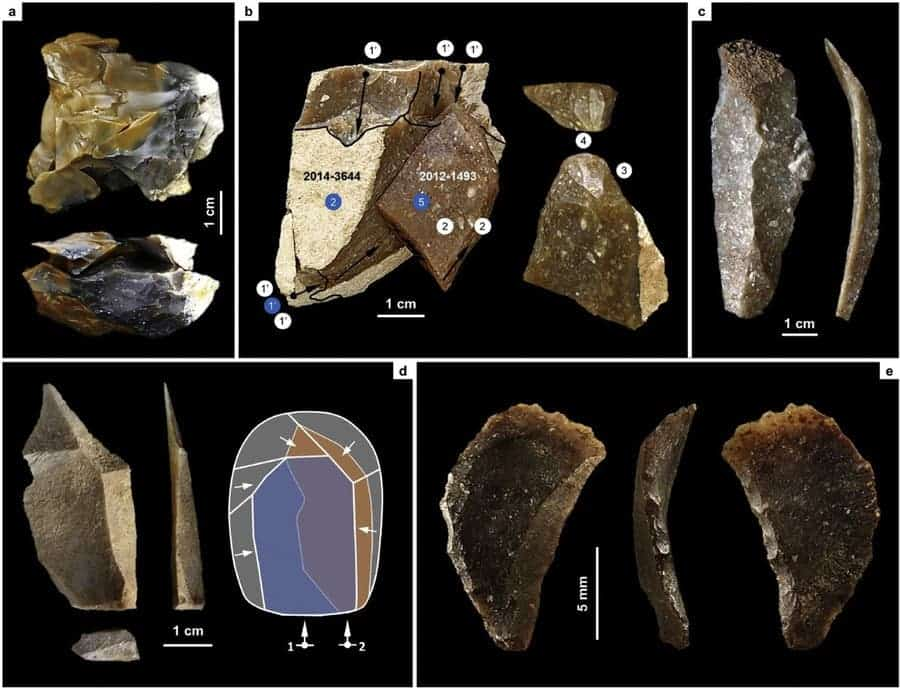
Cueva de Antón is an important prehistoric site in southeastern Spain associated with the Mousterian, a Middle Paleolithic stone-tool tradition strongly connected with Neanderthal populations in Europe.
The site provides evidence for the technological abilities of prehistoric hunter-gatherers who lived long before agriculture, cities, writing, or metalworking.
The stone tools associated with the Mousterian tradition demonstrate that Neanderthals possessed detailed knowledge of raw materials and sophisticated techniques for producing useful implements.
Cueva de Antón is particularly valuable because it forms part of the wider archaeological landscape of southeastern Iberia, a region that has produced important evidence for Neanderthal life and behavior.
What Is the Mousterian?
The Mousterian is an archaeological term used to describe a range of Middle Paleolithic stone-tool industries found across parts of Europe, western Asia, and North Africa.
In Europe, the Mousterian is most closely associated with Neanderthals.
However, it is important to understand that the term describes a technological tradition rather than a biological species.
A Mousterian stone tool is identified according to its manufacturing techniques and archaeological context.
Mousterian toolkits commonly included:
scrapers,
points,
cutting flakes,
denticulated tools,
and other modified stone implements.
The Technology Behind Mousterian Tools
Stone tools were not created randomly.
Producing a useful tool required planning.
A prehistoric craftsperson first needed to select an appropriate type of stone.
Depending on the local environment, suitable materials could include:
flint,
chert,
quartzite,
and other workable stones.
The material then needed to be struck in controlled ways to produce sharp flakes.
The Levallois Technique
One of the most famous stone-working methods associated with the Middle Paleolithic is the Levallois technique.
This method involved carefully preparing a stone core before removing a predetermined flake.
The final flake could be shaped and used as a tool.
The technique demonstrates planning because the desired result influenced how the core was prepared before the final strike.
A toolmaker needed to understand:
the shape of the stone,
the direction of force,
the location of striking platforms,
and the expected form of the resulting flake.
This was a highly skilled technological process.
Types of Mousterian Tools
Mousterian toolkits were diverse.
Different tools could be used for different activities.
Scrapers
Scrapers were often created by retouching the edge of a stone flake.
They could be used for:
processing animal hides,
working wood,
cleaning meat from bones,
and other tasks requiring a durable edge.
Points
Stone points could potentially be used in hunting equipment or as cutting implements.
Some points may have been attached to wooden shafts to create spears.
Cutting Flakes
Sharp stone flakes could function like prehistoric knives.
They could be used to cut:
meat,
plant materials,
hides,
and other substances.
Life at a Middle Paleolithic Cave Site
A cave such as Cueva de Antón could provide shelter from weather and a protected location for activities.
However, prehistoric cave occupation was often temporary.
Hunter-gatherers moved across landscapes according to the availability of resources.
A group may have occupied a cave for:
a short hunting episode,
seasonal activity,
tool production,
food processing,
or temporary shelter.
The archaeological remains left behind provide clues about what occurred during those visits.
Stone Tools as Evidence of Daily Life
A stone tool is not simply an object.
Its edges may preserve microscopic traces of use.
Modern archaeologists can study these marks to determine how a tool may have been used.
Microscopic wear analysis can sometimes reveal whether an edge was used to work:
animal hide,
wood,
bone,
or other materials.
This allows researchers to move beyond identifying tools and begin reconstructing prehistoric activities.
Neanderthals as Skilled Toolmakers
The Mousterian evidence associated with Neanderthals demonstrates considerable technological ability.
Neanderthals understood:
the physical properties of stone,
how to select raw materials,
how to plan sequences of actions,
and how to maintain useful tools.
They also transported stone materials across landscapes in some circumstances.
This indicates that tool production was connected to mobility and planning.
Cueva de Antón and the Iberian Neanderthals
Southeastern Spain was an important region during the Middle Paleolithic.
The Iberian Peninsula contained diverse environments, including:
mountains,
river valleys,
coastal areas,
and open landscapes.
Neanderthal groups adapted to these different environments.
The archaeological sites of Iberia demonstrate that Neanderthals were capable of surviving under changing climatic conditions.
Hunting and Animal Processing
Stone tools were essential for obtaining and processing food.
After an animal was killed, sharp flakes could be used to:
remove meat,
separate joints,
process hides,
and extract useful materials.
Animal remains from archaeological sites can sometimes preserve cut marks created by stone tools.
These marks provide direct evidence of prehistoric butchery.
The Importance of Raw Material Sources
The location of useful stone influenced prehistoric movement.
A group might obtain raw materials near a campsite or transport them from another location.
By studying the geological origin of stone artifacts, archaeologists can sometimes reconstruct patterns of mobility.
This reveals that prehistoric people had detailed knowledge of their landscapes.
They knew where useful resources could be found.
Mousterian Technology and Human Intelligence
The production of Mousterian tools demonstrates several important cognitive abilities.
A toolmaker needed to:
Recognize suitable raw materials.
Plan a sequence of actions.
Prepare the stone.
Control striking force.
Modify the resulting flake.
Maintain or replace the tool when necessary.
These processes demonstrate planning and learned technical knowledge.
The ability to produce tools was also social.
Skills needed to be transmitted between individuals and generations.
Why Cueva de Antón Matters
Cueva de Antón contributes to the study of Neanderthal technology and Middle Paleolithic life in Iberia.
Its archaeological evidence demonstrates that prehistoric hunter-gatherers used sophisticated stone-working methods to adapt to their environment.
The Mousterian tools provide direct evidence of daily activities that would otherwise be invisible.
Through stone artifacts, archaeologists can reconstruct aspects of:
hunting,
food preparation,
hide processing,
mobility,
and technological knowledge.
Conclusion
Cueva de Antón represents an important part of Spain's Middle Paleolithic archaeological heritage.
Its Mousterian tools demonstrate the technological sophistication of Neanderthal populations and challenge simplistic portrayals of them as primitive or incapable.
Every carefully prepared stone flake represents a sequence of decisions and learned skills.
The tools of Cueva de Antón therefore provide a lasting record of prehistoric intelligence and adaptation.
Long before metal tools or written technology existed, Neanderthal communities were already transforming natural stone into specialized instruments capable of helping them survive in a complex and changing world.