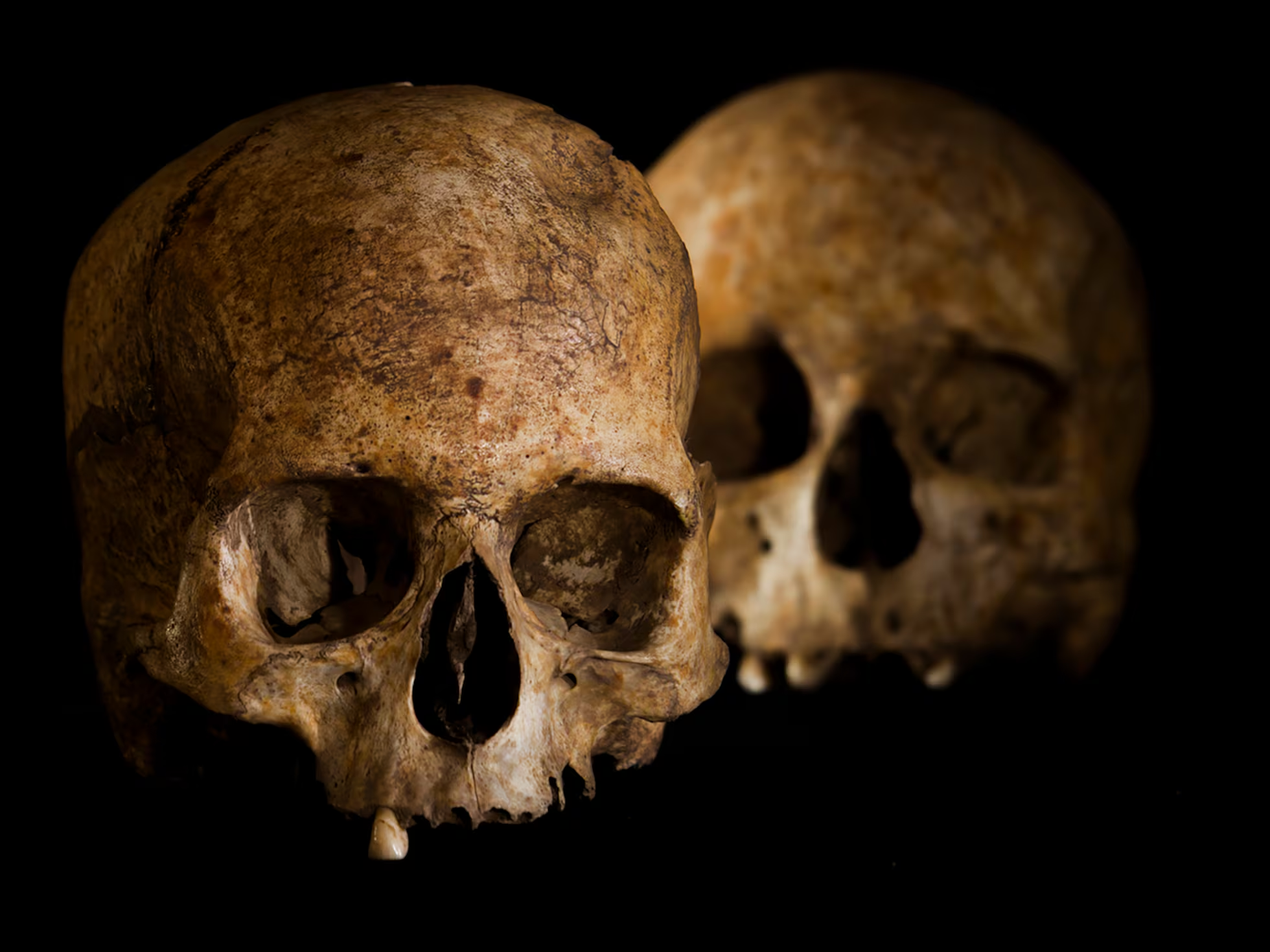
Cueva Horá, located in southern Spain, is associated with evidence from the Upper Paleolithic and forms part of the broader archaeological record of prehistoric communities in the Iberian Peninsula. The title “Spain's Gravettian Burials” highlights the importance of examining how Upper Paleolithic populations treated their dead and what archaeological burial evidence can reveal about social and symbolic behavior.
The Gravettian, generally dated to approximately 33,000 to 24,000 years ago in Europe, was one of the major cultural traditions of the Upper Paleolithic. Gravettian communities were Homo sapiens hunter-gatherers who lived during a period of major climatic and environmental change.
Across Europe, Gravettian archaeological sites have produced evidence of sophisticated technologies, artistic traditions, personal ornaments, and, at some locations, carefully treated human burials.
Burials associated with this period provide some of the most direct evidence for prehistoric attitudes toward death, identity, and social relationships.
Understanding the Gravettian Period
The Gravettian developed after earlier Upper Paleolithic traditions and before the Solutrean and Magdalenian periods in western Europe.
Gravettian populations were widespread across large parts of Europe.
They occupied environments ranging from:
the plains of central Europe,
river valleys,
mountain regions,
Mediterranean landscapes,
and areas affected by Ice Age conditions.
Despite these environmental differences, Gravettian archaeology shares certain broad technological characteristics.
Stone tools often included narrow blades and distinctive projectile points.
Bone, antler, and ivory were also used for tools and artistic objects.
The Importance of Burials in Archaeology
Human burials are particularly valuable because they can provide information about both biological individuals and cultural practices.
A skeleton can potentially reveal information about:
age,
health,
injury,
physical activity,
diet,
and biological relationships.
The burial context can reveal additional information.
Archaeologists examine:
the position of the body,
the presence of pigments,
associated objects,
grave structures,
and evidence of deliberate preparation.
A deliberately arranged burial may indicate that the treatment of the dead followed cultural traditions.
What Makes a Burial Deliberate?
Not every ancient human skeleton represents a formal burial.
A body may have been naturally covered by sediment, moved by water, or deposited through another process.
To identify intentional burial, archaeologists look for evidence such as:
an organized body position,
a grave pit,
consistent orientation,
associated artifacts,
red ochre,
or other deliberate modifications.
Interpretation requires caution because thousands of years of geological activity can disturb the original context.
The Role of Red Ochre
Red ochre is frequently associated with Upper Paleolithic burials.
The mineral pigment may have been sprinkled over bodies or placed within graves.
Why prehistoric people used red ochre is not fully understood.
Possible interpretations include associations with:
transformation,
identity,
death,
ancestry,
ritual,
or symbolic beliefs.
However, archaeologists cannot assume that ochre had one universal meaning.
Its significance may have varied between communities.
The repeated appearance of ochre nevertheless demonstrates that color could play an important role in prehistoric treatment of the dead.
Grave Goods and Personal Identity
Some Upper Paleolithic burials across Europe contain objects placed with the deceased.
These may include:
beads,
animal teeth,
ivory objects,
stone tools,
ornaments,
and other materials.
The presence of such objects suggests deliberate selection.
These materials may have represented personal identity or social relationships.
However, the presence of an object does not automatically mean that the deceased held high status.
A grave may reflect the beliefs and actions of the people conducting the burial rather than the individual's position during life.
Gravettian Communities and Social Complexity
The Gravettian archaeological record demonstrates that Upper Paleolithic hunter-gatherers had complex social worlds.
They created:
sophisticated stone tools,
personal ornaments,
figurative art,
symbolic objects,
and, in some cases, carefully prepared burials.
These activities required knowledge and cooperation.
A burial could involve multiple members of a community.
The preparation of a body, collection of pigments, and placement of objects all required time and effort.
Caves and the Treatment of the Dead
Caves could serve many functions in prehistoric societies.
They might be used for:
temporary shelter,
food processing,
tool production,
artistic activity,
storage,
or the placement of the dead.
The use of a cave as a burial location may have held practical or symbolic significance.
A protected underground space could preserve human remains, but the choice of location may also have reflected cultural traditions.
The exact meaning of prehistoric cave burials is difficult to reconstruct because the people responsible left no written explanations.
Upper Paleolithic Southern Spain
Southern Spain provided an important range of environments for Upper Paleolithic communities.
The region included:
mountain landscapes,
caves,
river systems,
coastal areas,
and access to diverse animal and plant resources.
Hunter-gatherers adapted their activities according to local conditions.
They were highly mobile and possessed detailed knowledge of seasonal changes.
Caves such as Cueva Horá formed part of a much larger network of places used across the landscape.
Burials as Evidence of Social Memory
The deliberate treatment of the dead suggests that prehistoric people maintained some form of social relationship with deceased individuals.
A burial transforms a dead body into something culturally organized.
The position of the body, the application of pigment, and the placement of objects can all represent deliberate choices.
Such practices may have helped communities preserve memory or reinforce shared traditions.
The Difficulty of Interpreting Prehistoric Death
It is tempting to interpret every ancient burial as evidence of religion or a belief in an afterlife.
However, archaeology cannot directly prove such beliefs.
A deliberate burial demonstrates care and cultural behavior, but the specific ideas behind the action may remain unknown.
The people who buried an individual could have acted for many reasons.
Scientific interpretation must therefore distinguish between:
what the archaeological evidence demonstrates and what modern researchers believe may be possible.
This distinction is particularly important when studying Paleolithic societies.
Gravettian Burials Across Europe
The Gravettian period has produced some of Europe's most extraordinary prehistoric burials.
Sites in different regions have revealed individuals buried with:
elaborate ornaments,
thousands of beads,
animal remains,
tools,
and red ochre.
These discoveries demonstrate that some Upper Paleolithic communities invested substantial resources in the treatment of the dead.
They also reveal significant variation.
Not every individual received the same treatment.
This may reflect differences in:
age,
social identity,
cultural traditions,
circumstances of death,
or other factors that are now impossible to fully reconstruct.
Why Burial Evidence Is So Important
Burials provide a rare opportunity to study prehistoric individuals as people rather than simply as toolmakers or hunters.
A skeleton represents someone who:
lived within a community,
experienced a particular environment,
ate certain foods,
suffered injuries or illnesses,
and was ultimately treated by others after death.
This makes prehistoric burials uniquely powerful archaeological evidence.
Cueva Horá and the Study of Upper Paleolithic Life
Evidence associated with Cueva Horá contributes to the broader study of Upper Paleolithic occupation in Spain.
The site's significance lies within a larger archaeological context that includes other caves, open-air settlements, artistic sites, and burial locations.
Together, these sites demonstrate that prehistoric Iberia was home to diverse communities with sophisticated technological and symbolic traditions.
The Legacy of Gravettian Burial Traditions
The Gravettian period represents an important stage in the development of human cultural complexity.
By this time, Homo sapiens in Europe were already producing art, ornaments, specialized technologies, and elaborate forms of social behavior.
Burial practices demonstrate another dimension of this complexity.
The dead were not always abandoned to natural processes.
In some cases, they were deliberately positioned, colored, decorated, or accompanied by objects.
These actions demonstrate that death had social significance.
Conclusion
Cueva Horá and the broader archaeological evidence associated with Gravettian burial traditions provide an important perspective on Upper Paleolithic life in Spain.
Burials allow archaeologists to investigate not only how prehistoric people lived but also how communities responded to death.
The treatment of the dead may have involved deliberate positioning, pigments, ornaments, and carefully selected objects. Although the precise beliefs behind these practices can no longer be known with certainty, the archaeological evidence demonstrates that Gravettian communities possessed complex social and symbolic traditions.
The people of the Upper Paleolithic were not simply hunters struggling against an Ice Age environment. They were also members of communities with memories, relationships, cultural knowledge, artistic traditions, and meaningful ways of responding to death.