Introduction
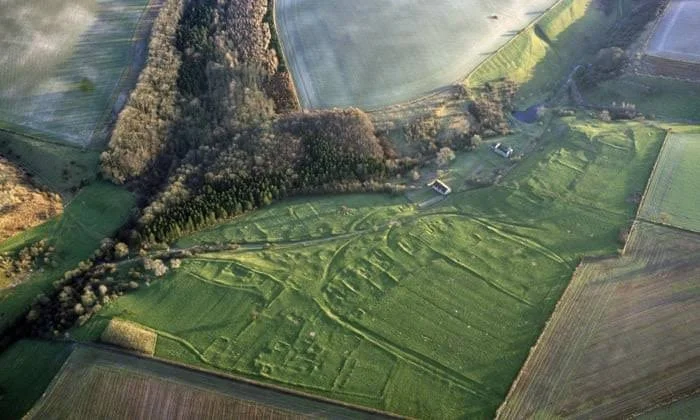
Medieval villages were not always continuously occupied. Communities could abandon settlements because of changing economic conditions, environmental pressures, disease, political upheaval, or the relocation of agricultural activity. Some deserted settlements later experienced renewed occupation during periods of warfare, when people sought shelter, reused buildings, or established temporary defensive positions.
The archaeology of reuse investigates how people adapted existing structures rather than constructing entirely new settlements. When a deserted village was reoccupied during war, its earlier buildings, wells, walls, roads, and fields could become valuable resources.
However, a village that contains evidence of several occupation phases was not necessarily reoccupied specifically because of warfare. Researchers must distinguish wartime reuse from ordinary settlement changes, seasonal activity, and later agricultural use.
Why Villages Were Abandoned
Medieval settlement abandonment could result from many overlapping causes. Changes in land ownership, declining agricultural productivity, population movement, epidemics, conflict, and shifts in trade could all contribute.
In some regions, villages became deserted gradually as households moved away. In others, destruction or forced displacement may have caused more abrupt abandonment.
The archaeological record rarely preserves the entire process. A village that appears deserted in a later document may still have been used occasionally for grazing, storage, or seasonal work.
The term "deserted village" should therefore be understood as a description of a settlement's changing population rather than proof that nobody ever returned to the site.
Why Reoccupy an Abandoned Settlement?
During conflict, familiar buildings and established routes could offer immediate advantages. People fleeing nearby fighting might shelter in standing houses, churches, barns, or other structures.
A deserted village could also provide access to wells, cultivated land, building materials, and defensive positions. In some cases, people might repair damaged structures rather than build new ones.
Yet an abandoned settlement was not always a safe refuge. It might lack food, functioning wells, or defensible approaches. Its location could also make it vulnerable to attack.
The decision to reoccupy a village depended on the nature of the conflict, the condition of the buildings, and the resources available to the people returning.
Archaeological Signs of Reuse
Researchers look for evidence that structures were used during a later phase after the original settlement had declined or been abandoned.
Possible indicators include repaired walls, altered doorways, new hearths, changed floor levels, reused roof materials, and deposits that postdate the original occupation.
A later hearth built inside an older room could indicate renewed domestic use. A blocked entrance or reinforced wall might reflect an attempt to adapt the building to new circumstances.
However, these features are not uniquely associated with warfare. Repairs can result from ordinary maintenance, and a room may have been reused for storage or agricultural work.
The interpretation requires a secure sequence of occupation and evidence linking the later phase to a period of conflict.
Dating the Reoccupation
Establishing the sequence of occupation is essential. Archaeologists may compare pottery, coins, building techniques, radiocarbon dates, and stratigraphic relationships.
A building can remain standing long after its original occupants leave. A later group might use it decades or centuries afterward, meaning that the structure's construction date cannot establish when it was reoccupied.
Researchers also need to distinguish between the date of a conflict and the date of an archaeological deposit. An object associated with a war may have been deposited later, while evidence of destruction may relate to a different event.
Multiple dating methods help reduce these uncertainties.
Evidence of Conflict
Warfare can leave distinctive traces, including weapon fragments, projectiles, damaged fortifications, burned buildings, hurriedly buried valuables, and human remains showing traumatic injuries.
Yet none of these indicators should be interpreted automatically. Weapons can be lost during hunting or ordinary activities, while fire may result from accidental destruction.
Human skeletal injuries require careful analysis to distinguish interpersonal violence from accidents and other causes. Even when violence is established, its exact historical context may remain uncertain.
A strong argument for wartime reoccupation combines evidence of later habitation with independent indications of conflict during the same period.
Adapting Buildings for Defense
People reusing an abandoned village might alter buildings to improve security. Narrow entrances, blocked openings, repaired walls, or the use of elevated structures could provide practical advantages.
Existing walls might also serve as barriers, while streets and alleys could influence movement through the settlement.
However, defensive interpretations should be tested against alternatives. A blocked doorway might reflect a change in building use, and a reinforced wall could be a response to structural damage rather than an attack.
Researchers should consider the wider settlement plan and compare it with known defensive arrangements from the same region and period.
Reuse of Building Materials
Abandoned settlements could serve as sources of stone, timber, roof tiles, metal fittings, and other materials. People might remove components from one building to repair another.
This process can make the archaeological record difficult to interpret. A structure may appear incomplete because its materials were deliberately salvaged rather than because it collapsed during a violent event.
Reused materials may also be transported away from the village, leaving only foundations or scattered debris.
Evidence of salvage can therefore reveal how people responded to scarcity and changed settlement needs.
Daily Life During Reoccupation
Wartime reoccupation did not necessarily involve continuous fighting. People might have returned to cultivate fields, protect livestock, store food, or shelter during periods of danger.
Household objects, cooking remains, animal bones, and repaired tools can reveal whether a later occupation involved ordinary domestic life.
The presence of weapons does not mean that every resident was a combatant. Medieval communities included children, older people, craftspeople, farmers, and others whose activities continued even during periods of conflict.
Archaeological interpretation should recognize the range of experiences within a reoccupied settlement.
Landscape and Resource Access
The location of a village could influence whether it was attractive for reuse. Access to water, fertile land, roads, woodland, and elevated ground could provide important advantages.
A settlement near a strategic crossing might be useful for controlling movement, while a remote village might offer shelter away from major routes.
However, present-day geography may differ from the medieval landscape. Rivers can shift, roads can disappear, and vegetation can change the visibility and accessibility of a site.
Environmental reconstruction can help researchers understand why a settlement was abandoned and why it might later have been occupied again.
Written Records and Archaeology
Historical documents may describe village abandonment, military movement, taxation, property transfers, or population displacement. These records can help establish the broader circumstances of a reoccupation.
However, written sources may reflect the interests of landlords, officials, or religious institutions rather than the experiences of ordinary residents.
Archaeology can complement these accounts by examining how buildings were modified and how daily activities changed.
When documents and physical evidence disagree, the discrepancy can reveal gaps in the historical record rather than necessarily indicating that one source is entirely incorrect.
Conclusion
Deserted medieval villages reoccupied during war offer a valuable opportunity to study resilience, adaptation, and the reuse of existing infrastructure during periods of uncertainty. Their buildings and landscapes could provide shelter, defensive advantages, and access to resources without requiring the construction of a new settlement.
However, proving wartime reoccupation requires more than identifying several phases of use. Researchers must establish a reliable chronology, demonstrate that the settlement was previously abandoned or substantially depopulated, and connect the later occupation with independent evidence of conflict.
Through careful analysis of architecture, artifacts, environmental conditions, and historical records, archaeologists can reconstruct how communities responded to danger and made practical use of inherited landscapes. These villages show that abandonment was not always the final stage in a settlement's history: places could acquire new purposes as political and social circumstances changed.