Introduction
Diepkloof Rock Shelter, located in South Africa's Western Cape, is one of the most important Middle Stone Age sites for understanding the development of symbolic communication and everyday technology.
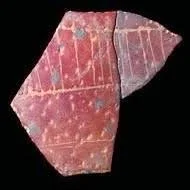
The site is particularly famous for engraved ostrich eggshell fragments.
Researchers have recovered hundreds of engraved pieces, including approximately 408 documented fragments in one major study.
The title's reference to "containers" is especially important because ostrich eggshells were not merely decorative materials. Hollow eggs could be transformed into useful vessels capable of storing and transporting liquids.
Ostrich Eggs in the Middle Stone Age
Ostrich eggs are large and durable.
After the contents are removed, the shell can function as a container.
A hole can be made in the shell.
The opening can then be used to access the interior.
In some contexts, the shell could be sealed or modified.
This created a lightweight portable container.
Why Containers Matter
Portable containers are enormously useful to mobile hunter-gatherers.
Water can be collected.
Liquid foods can be transported.
Resources can be stored.
A container allows people to move beyond immediate water sources.
This changes the geography of mobility.
Engraved Shell
Diepkloof's engraved ostrich eggshell is important because many fragments contain repeated geometric designs.
The marks are not random scratches.
They display organized patterns.
The patterns changed through time.
This suggests cultural traditions.
Symbolic Communication
Researchers have interpreted the repeated geometric motifs as possible evidence of symbolic communication.
However, the exact meaning remains unknown.
The markings may have communicated group identity.
They may have helped distinguish one container from another.
They may have carried social information.
Or they may have had several functions simultaneously.
Function and Symbolism
A major archaeological insight from Diepkloof is that functional and symbolic behavior do not have to be separate.
An object can be useful and meaningful.
A decorated container can still be a container.
The markings may have enhanced social information while the vessel remained a practical technological tool.
Chronology
The engraved eggshell tradition is associated particularly with Howiesons Poort deposits dating to approximately 60,000 years ago.
This places the behavior deep within the Middle Stone Age.
Technological Skill
Manufacturing ostrich eggshell containers required considerable skill.
The shell had to be opened without destroying it.
Edges needed to be managed.
Fragments could be modified.
A completed vessel needed to survive repeated handling.
This indicates knowledge of material properties.
Mobility
The existence of portable containers suggests adaptation to environments in which water and resources were unevenly distributed.
Hunter-gatherers often moved between locations.
Carrying water increased their flexibility.
Technology therefore affected settlement and movement.
Archaeological Preservation
Ostrich eggshell is unusually durable.
It survives better than many organic materials.
This makes it particularly valuable archaeologically.
At Diepkloof, the shell fragments preserve evidence that would otherwise be lost.
Social Identity
Repeated decorative patterns may have functioned as social identifiers.
If different groups used different designs, markings could communicate affiliation.
This interpretation remains hypothetical.
Archaeologists therefore study patterns statistically and compare them across time and space.
Conclusion
Diepkloof Rock Shelter demonstrates that Middle Stone Age technology was both practical and socially meaningful.
Ostrich eggshell provided lightweight containers, while engraved designs may have communicated information about identity or social relationships.
The hundreds of engraved fragments reveal a population capable of standardizing designs and maintaining cultural traditions over time.