Introduction
Sibudu Cave, located in KwaZulu-Natal, is one of the most important Middle Stone Age archaeological sites in southern Africa.
The cave is famous for evidence of plant bedding, fire management, adhesives, bone tools, personal ornaments, and advanced stone technologies.
The site is particularly important because organic remains provide a rare glimpse into daily life.
Stone tools are abundant at archaeological sites, but the softer materials humans used—grass, leaves, wood, fibers, and bedding—usually disappear.
Sibudu preserves some of these materials.
The Cave Environment
Sibudu occupies a rock shelter overlooking a river valley.
Its elevated position provided protection while maintaining access to water and surrounding resources.
The surrounding vegetation supported a diverse ecological system.
This made the location suitable for repeated occupation.
Ancient Bedding
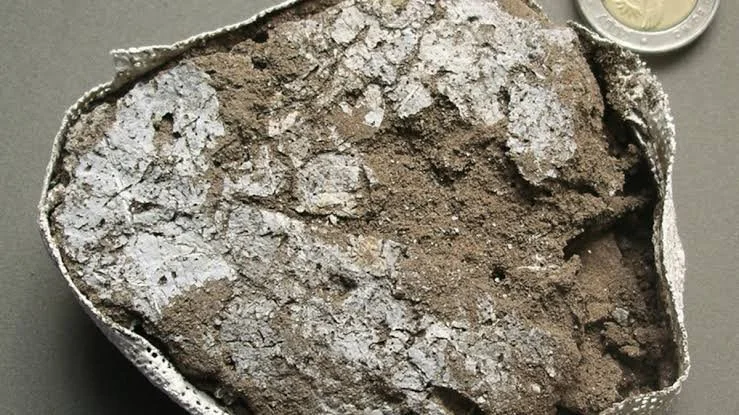
One of Sibudu's most famous discoveries involves layers of plant material interpreted as bedding.
People appear to have intentionally collected grasses and leaves and placed them inside the shelter.
The material was repeatedly replaced and reorganized.
This suggests deliberate management of living space.
Why Bedding Matters
Bedding may appear mundane.
Yet it tells us a great deal about human behavior.
Creating bedding requires:
collecting plant materials;
transporting them;
arranging them;
maintaining the sleeping area;
replacing old material.
This implies repeated organization of domestic space.
Fire
Fire was also central to life at Sibudu.
Hearths and burned plant remains demonstrate controlled fire use.
Fire could provide:
warmth;
light;
cooking;
protection;
insect control;
material processing.
Its presence alongside bedding suggests that the cave functioned as a residential environment rather than merely a temporary hunting location.
Insect Repellent
Some researchers have proposed that particular aromatic plants in bedding may have helped repel insects.
The possibility is significant because it suggests environmental knowledge.
People were not simply collecting plants for food.
They were selecting species for practical properties.
Stone Technology
Sibudu preserves sophisticated Middle Stone Age lithic technologies.
Different tool forms appear in different layers.
The site has contributed significantly to understanding technological innovation before the emergence of Later Stone Age industries.
Bone Tools
Bone tools are particularly important.
Stone is abundant in archaeological contexts, but bone tools demonstrate technological flexibility.
The manufacture of bone points requires knowledge of shaping, grinding, and modification.
Bow-and-Arrow Technology
Sibudu has also contributed to debates about early projectile technology.
Evidence from Middle Stone Age layers includes small stone segments and bone points that have been interpreted as consistent with bow-and-arrow technology.
A Cambridge review notes evidence from Sibudu for bone-point and segment technologies around 72,000–77,000 years ago, with later evidence associated with a Howiesons Poort layer around 61,700 years ago.
This is significant because it pushes complex projectile technology deep into the Middle Stone Age.
Adhesive Technology
Sibudu also preserves evidence relevant to compound adhesives.
An adhesive is especially important because it requires combining materials.
A person may need resin, ochre, plant gum, or another substance.
The mixture may require heating or controlled preparation.
This is technological chemistry in a prehistoric context.
Personal Ornaments
Ornaments provide another dimension.
Beads and decorative objects can communicate identity.
They may also have served as social markers.
Again, archaeology cannot always determine exact meanings.
But repeated ornament traditions demonstrate social communication.
The Household
Perhaps Sibudu's greatest contribution is that it reveals prehistoric life at a household scale.
People slept there.
They worked there.
They processed plants.
They made tools.
They controlled fires.
They prepared food.
They discarded waste.
The site therefore resembles an archaeological snapshot of domestic life.
Conclusion
Sibudu Cave demonstrates that Middle Stone Age humans possessed sophisticated knowledge of plants, fire, materials, and domestic organization.
The ancient bedding is particularly significant because it provides evidence for deliberate modification of living space.
Combined with bone tools, projectile technology, adhesives, ornaments, and fire use, the site shows that humans tens of thousands of years ago were already organizing their environments in complex ways.