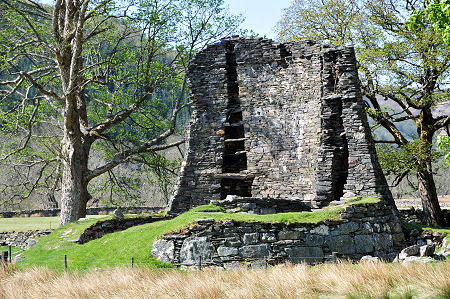
Dun Telve is one of the most impressive surviving brochs in mainland Scotland. Located near Glenelg in the western Highlands, the monument represents the remarkable architectural tradition of Iron Age Scotland, when communities constructed enormous circular dry-stone towers without mortar.
Together with nearby Dun Troddan, Dun Telve forms one of the most important concentrations of broch architecture on the Scottish mainland.
A Monument of Iron Age Scotland
Dun Telve is generally dated to the Iron Age, although the exact chronology of broch construction remains debated.
The broch is built from massive stone blocks arranged into two concentric walls.
This double-wall construction is one of the defining characteristics of Scottish brochs.
The builders created a hollow wall containing internal spaces, stairways, and chambers.
The Double-Walled Structure
The phrase “double-walled” describes the architectural arrangement of the broch.
The outer wall and inner wall were connected by carefully constructed stonework.
This created a thick structural shell capable of supporting substantial height.
The wall also incorporated internal features that could be used for:
movement;
storage;
protection;
and possibly accommodation.
Engineering Without Mortar
Dun Telve demonstrates the sophistication of prehistoric dry-stone construction.
Instead of cement or mortar, builders relied on:
carefully selected stones;
weight;
friction;
interlocking blocks;
and precise placement.
Large stones at the base created a stable foundation.
Smaller stones could then be used to fill gaps and strengthen the wall.
Why Build Such a Tower?
The exact purpose of brochs remains one of the major questions in Scottish archaeology.
Earlier interpretations frequently described them as defensive towers.
Modern archaeological scholarship generally favors a more complex understanding.
Brochs may have served simultaneously as:
elite residences;
defensive structures;
symbols of authority;
community gathering places;
storage facilities;
and centers of local political power.
The Landscape of Glenelg
Dun Telve occupies a commanding position within Glenelg.
The surrounding landscape contains mountains, valleys, and coastal routes.
Its location would have provided excellent visibility.
This would have been valuable for observing movement through the surrounding territory.
Dun Telve and Dun Troddan
The proximity of Dun Troddan is especially significant.
The two brochs are only a short distance apart.
Their coexistence raises interesting questions about Iron Age society.
They may have belonged to related communities, competing groups, or different social units operating within the same territory.
Later History
Like many prehistoric monuments, Dun Telve remained visible long after its original occupation.
Later communities could reuse or reinterpret ancient structures.
The survival of the tower is therefore important not only for Iron Age archaeology but also for understanding the changing relationship between Highland communities and their prehistoric past.
Archaeological Significance
Dun Telve provides evidence for:
prehistoric engineering;
dry-stone architecture;
social hierarchy;
settlement organization;
and Iron Age landscape use.
Its substantial survival makes it particularly valuable for reconstructing how brochs were built.
Conclusion
Dun Telve: Glenelg's Double-Walled Broch is a remarkable example of prehistoric Scottish engineering.
Its massive circular walls and internal construction demonstrate that Iron Age communities possessed considerable architectural knowledge.
Although the precise function of Dun Telve remains uncertain, the monument clearly represented an important investment in both construction and social identity.