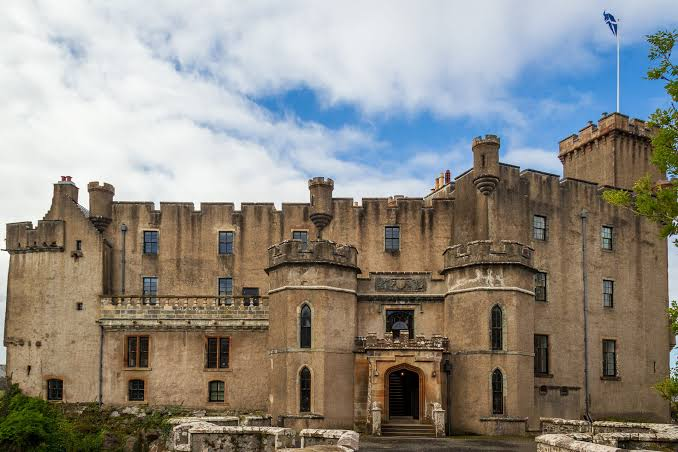
Dunvegan Castle stands on the Isle of Skye and has served as the ancestral seat of the chiefs of Clan MacLeod for approximately eight centuries.
It is one of the most important surviving Highland castles and is particularly valuable because its architecture preserves evidence of repeated construction and modification from the medieval period through the nineteenth century.
A Castle of Eight Centuries
Dunvegan's history extends back to the medieval period.
The castle was continuously associated with the MacLeod chiefs.
The present structure is not a single building from one period. Instead, it consists of multiple phases of construction.
The castle authority identifies at least ten major building periods ranging from the 1200s to the 1850s.
The MacLeods
Clan MacLeod became one of the major Highland and Hebridean clans.
Their authority depended upon:
land ownership;
kinship;
military power;
maritime connections;
and relationships with the Scottish Crown.
Dunvegan served as the physical center of this authority.
A Natural Fortress
The castle occupies a dramatic rocky position overlooking Loch Dunvegan.
The landscape provided natural defensive advantages.
The castle's location also allowed the MacLeods to maintain access to maritime routes.
Architecture Through Time
Dunvegan's present appearance reflects centuries of rebuilding.
Medieval defensive structures were gradually supplemented by more comfortable residential spaces.
By the eighteenth and nineteenth centuries, elite expectations had changed.
Castles increasingly needed to function as residences as well as fortifications.
Victorian Transformation
During the nineteenth century, significant remodeling gave Dunvegan its distinctive romantic appearance.
Defensive-looking architectural features were incorporated into the later design.
This demonstrates how nineteenth-century Highland architecture often deliberately emphasized medieval imagery.
The Fairy Flag
One of the castle's most famous treasures is the Fairy Flag.
According to MacLeod tradition, the flag possesses supernatural properties and could provide protection to the clan under particular circumstances.
Whether understood as folklore, cultural heritage, or historical tradition, the Fairy Flag illustrates the role of legendary objects in maintaining clan identity.
The Castle Collection
Dunvegan preserves numerous historical objects.
The collections include:
portraits;
weapons;
ceremonial objects;
documents;
clan heirlooms;
and objects associated with Highland history.
Famous Visitors
Dunvegan has attracted numerous visitors over the centuries.
Among those associated with the castle are literary and political figures who traveled through the Highlands.
The Gardens
The castle's gardens reflect later transformations in elite Highland estates.
Formal gardens, woodland planting, and landscaped grounds became important aspects of aristocratic identity.
Conclusion
Dunvegan Castle: Skye's Clan MacLeod Seat is more than a medieval fortress.
It is a living record of approximately eight centuries of MacLeod history.
Its architecture demonstrates changing military, residential, and aesthetic priorities, while its collections and legends preserve the cultural memory of one of Scotland's most famous Highland clans.