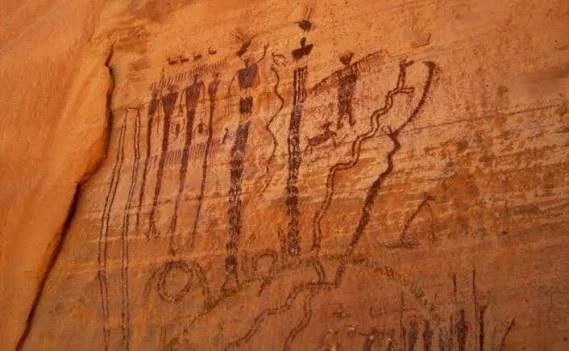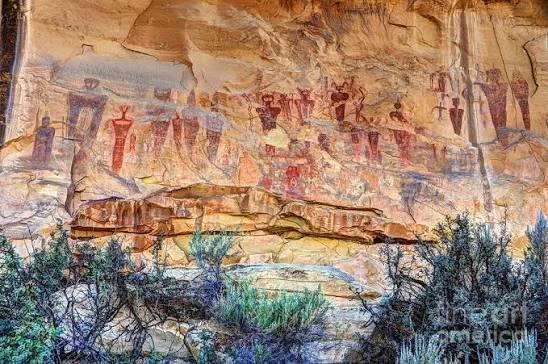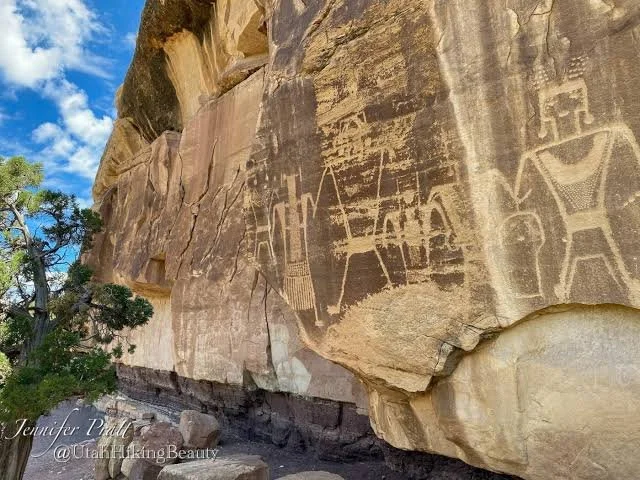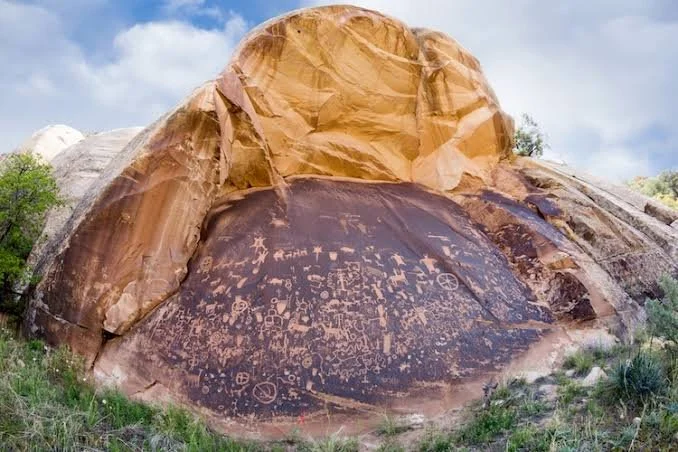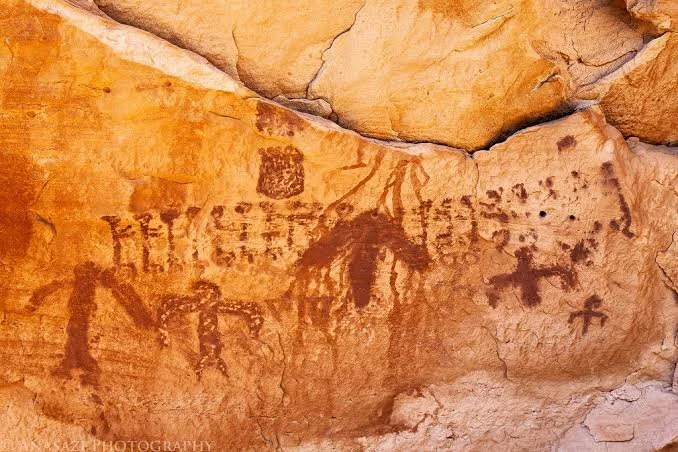
The Dzungarian region of northern Xinjiang contains an extensive archaeological landscape shaped by mountains, grasslands, deserts, and ancient migration routes. Among its most fascinating remains are petroglyphs—images carved, pecked, or engraved directly into rock surfaces.
These ancient images provide evidence of how prehistoric and early historic communities represented animals, hunting, human activity, and symbolic ideas.
Many petroglyph traditions in Inner Asia span long periods, from the Bronze Age into later historical eras. For this reason, individual images must be carefully dated according to style, archaeological context, and comparison with other evidence.
What Is a Petroglyph?
A petroglyph is an image created by modifying a rock surface.
Ancient artists could produce these images through techniques such as:
pecking,
carving,
incising,
and abrading.
Unlike paintings, petroglyphs do not depend on pigments.
Instead, the image is created by physically altering the stone.
Over time, the newly exposed surface may weather differently from the surrounding rock.
Hunting Scenes
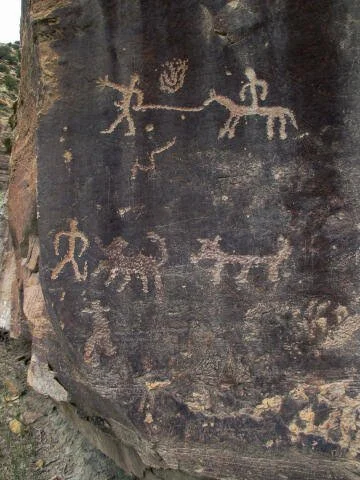
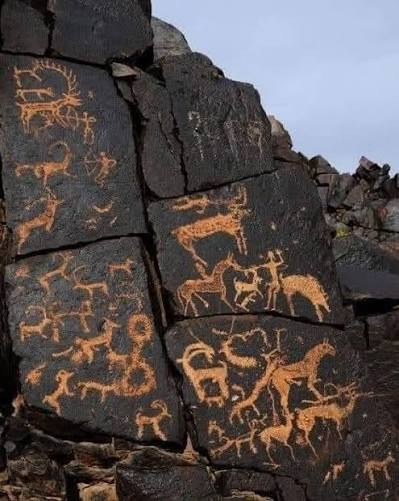
One of the most common subjects in Eurasian rock art is hunting.
Images may show:
human figures,
deer,
wild sheep,
goats,
horses,
and other animals.
Some scenes appear to represent groups of hunters pursuing animals.
These images provide important evidence about the relationship between prehistoric people and the natural environment.
The Importance of Animals
Animals were essential to Bronze Age communities.
Wild animals provided:
meat,
hides,
bones,
and other resources.
At the same time, animals could have symbolic importance.
A carved deer may represent a hunted animal, but it may also have been connected with stories, beliefs, or group traditions.
Archaeologists cannot always determine which interpretation is correct.
Bronze Age Technology
The Bronze Age was characterized by the growing use of metal technologies involving copper alloys.
However, the adoption of bronze did not eliminate older technologies.
Stone, bone, wood, and other materials continued to be important.
Communities could combine different technological systems depending on their needs and available resources.
Rock Art as Communication
Petroglyphs were created in visible landscapes.
A rock face could become a location where communities repeatedly added images over generations.
This means that rock art may have functioned as a form of communication.
Possible purposes include:
recording important activities,
marking landscapes,
expressing identity,
transmitting stories,
or participating in ritual practices.
No single explanation applies to every image.
The Landscape of Dzungaria
Dzungaria occupies an important geographical position between Central Asia and eastern Eurasia.
The region includes mountain corridors and open areas that facilitated the movement of:
people,
animals,
technologies,
and cultural traditions.
This made the region an important zone of interaction.
The petroglyphs form part of this larger history.
Dating Rock Art
Dating petroglyphs can be difficult.
Unlike organic materials, carved rock cannot always be directly dated.
Researchers may use:
stylistic comparison,
superimposition,
archaeological context,
weathering patterns,
and associated artifacts.
An image placed on top of another can provide relative chronological information.
However, assigning an exact date is often challenging.
Why Hunting Was More Than Survival
For prehistoric communities, hunting required cooperation and detailed environmental knowledge.
Hunters needed to understand:
animal behavior,
seasonal movement,
terrain,
weather,
and the capabilities of weapons.
The representation of hunting scenes may therefore have celebrated an important social activity.
Hunting could also involve teaching younger individuals and strengthening cooperation within a group.
Rock Art and Cultural Memory
A petroglyph can survive for centuries or millennia.
Later communities may encounter images created by people whose language and identity have disappeared.
The rock surface therefore becomes a form of cultural archive.
Different generations may add new images beside older ones.
Over time, the landscape accumulates layers of human memory.
Why Dzungaria's Petroglyphs Matter
The rock art of Dzungaria provides evidence for prehistoric societies that left few written records.
Through these images, archaeologists can study:
animals,
hunting,
artistic traditions,
technology,
and landscape use.
The petroglyphs demonstrate that prehistoric people were actively representing their experiences and surroundings.
Conclusion
The petroglyphs of Dzungaria preserve traces of ancient communities that lived and traveled through the landscapes of northern Xinjiang.
Their images of hunters and animals provide evidence of practical survival, artistic expression, and possible symbolic traditions.
Although the precise meaning of many carvings may never be known, the rock art remains a powerful record of how prehistoric people understood and represented their world.