Introduction
Waste management has been a persistent challenge wherever people have lived in dense settlements. As towns and cities grew, residents generated ash, broken pottery, food remains, animal waste, discarded tools, and other refuse. The accumulation of these materials could create unpleasant smells, attract pests, obstruct movement, and affect water quality.
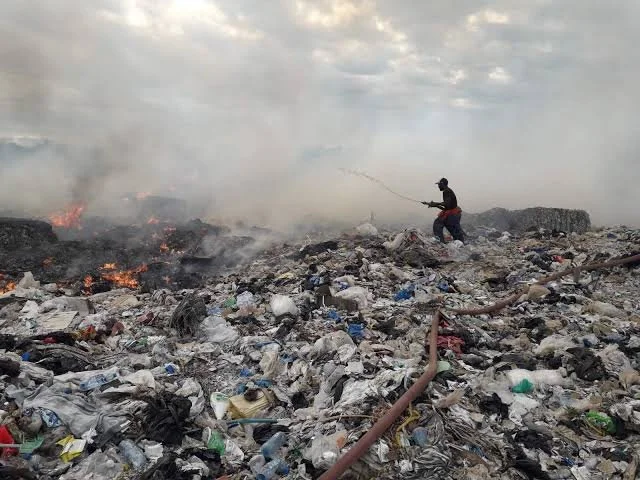
One possible response was the use of controlled fires to reduce certain kinds of waste. Archaeological deposits containing burned refuse can therefore provide clues about how urban communities handled discarded materials. However, burnt rubbish does not automatically demonstrate a formal municipal disposal system. Fires can result from domestic activity, industrial work, accidental burning, conflict, or the later reuse of waste deposits.
Understanding early urban waste fires requires researchers to distinguish routine disposal from other sources of burning.
The Growth of Urban Waste
Urbanization concentrates people and economic activities in relatively small areas. Houses, workshops, markets, kitchens, animal enclosures, and public spaces all generate waste.
The types of refuse vary according to local practices and available resources. Food scraps may be fed to animals or composted. Ash may be reused in construction or discarded. Broken pottery may enter fill deposits, while metal objects may be repaired or recycled.
Waste was therefore not necessarily treated as useless material. Many communities reused items whenever practical, and disposal practices changed according to the value and condition of different materials.
As settlements expanded, the distance between waste-producing activities and disposal areas could become increasingly important.
Why Burn Waste?
Burning can reduce the volume of certain combustible materials. It may also destroy some organic matter and make selected types of refuse easier to transport or bury.
However, not all waste burns effectively. Wet food remains, soil, stone, ceramics, and metals behave differently under heat. Burning can also produce smoke and harmful gases, especially when refuse contains mixed materials.
Ancient communities may have burned waste for several reasons: to clear a household area, dispose of organic refuse, reduce fuel or garden debris, prepare a surface, or reuse an existing fire pit.
The presence of burned refuse should therefore be examined within its setting rather than assigned a single explanation.
Recognizing Waste Fires Archaeologically
Archaeologists look for evidence of heat exposure and the materials associated with it. Burned layers may contain charcoal, ash, reddened soil, heat-altered stones, and fragments of objects affected by high temperatures.
The distribution of these materials is important. A concentrated ash deposit may indicate repeated burning at a specific location. A thin burned layer across a large area could instead represent a destructive fire or a widespread burning event.
Researchers also examine the contents of the deposit. Food remains, broken household objects, animal bones, pottery fragments, and other refuse may help establish whether the material was discarded before or after burning.
Even so, an assemblage of mixed rubbish may have been moved from another location, so its original context must be investigated carefully.
Domestic Hearths or Waste-Burning Areas?
One of the main interpretive challenges is distinguishing a waste fire from an ordinary cooking or heating hearth.
A domestic hearth may contain charcoal, ash, animal bones, and broken pottery because these materials were used nearby or later swept into the fire area. A waste-burning location might contain a wider variety of discarded objects, but this difference is not universal.
The size of a feature is not decisive either. A large fire could have been used for cooking, craft production, or another activity, while small fires might have been used to burn rubbish repeatedly.
Micromorphology, residue analysis, spatial mapping, and the study of heat alteration can help distinguish these possibilities.
Organized Disposal and Urban Planning
The phrase "organized refuse disposal" implies a degree of planning or repeated coordination. Archaeologists may investigate whether waste was directed to designated spaces, removed from residential areas, or burned according to a recurring pattern.
Evidence might include repeated deposits in the same location, standardized pits, access routes, drainage arrangements, or written regulations describing waste handling.
A city with designated dumping areas may have had a more organized system than one in which refuse was deposited wherever space was available. However, even designated areas do not necessarily indicate centralized government management. Neighborhood groups, householders, private contractors, or individual property owners could have organized disposal.
The nature of the organization must be established from the evidence.
Waste, Sanitation, and Public Health
Waste management can influence the quality of urban living conditions. Accumulated organic refuse may attract pests, produce odors, and contaminate nearby water sources. Smoke from repeated burning may also affect air quality.
Ancient communities did not need modern germ theory to recognize that some waste practices were unpleasant or dangerous. Their responses could develop through practical experience, customary rules, religious concerns, or administrative decisions.
Nevertheless, archaeological evidence for waste fires cannot independently establish disease rates or the effectiveness of a sanitation system. Public health interpretations require additional evidence, including settlement density, water infrastructure, human remains, environmental conditions, and historical documentation where available.
Industrial Fires and Accidental Burning
Burned deposits can also arise from industrial activities. Metalworking, pottery production, lime burning, and other crafts require high temperatures and may leave substantial ash or charcoal deposits.
A workshop containing burned waste might be misidentified as a refuse site if researchers overlook the production evidence. Similarly, an accidental urban fire could destroy houses and leave large quantities of burned household goods.
The distinction depends on patterns of heat exposure, the architecture of the feature, associated tools, material residues, and the distribution of burned remains.
Recycling and the Afterlife of Refuse
Some materials were valuable enough to be recovered rather than discarded permanently. Metal could be melted down, pottery fragments could be reused as building material, and ash could be incorporated into other processes.
A burned refuse deposit might therefore represent only one stage in a longer sequence of reuse and disposal.
Archaeologists can investigate these processes by examining repair marks, recycling debris, material selection, and the relationship between waste deposits and nearby workshops.
This perspective challenges the assumption that ancient people followed a simple linear pattern from consumption to disposal. In many cases, materials circulated through several uses before entering the archaeological record.
Dating and Environmental Analysis
Dating waste fires requires secure context. Charcoal may be suitable for radiocarbon dating, but it can produce misleading results if old wood was burned or older material was redeposited.
Researchers may compare several dates with pottery styles, building phases, and stratigraphic relationships. Soil chemistry and microscopic analysis can also reveal whether burning occurred once or repeatedly.
Environmental evidence may indicate what was burned, although distinguishing different fuel sources can be difficult. A mixture of wood charcoal and organic debris may reflect multiple activities rather than a single organized event.