Introduction
Located near the modern community of Blanding in southeastern Utah, Edge of the Cedars is an important archaeological site and museum complex preserving evidence of Ancestral Puebloan life in the Four Corners region.
The name reflects the site's position near the edge of a woodland environment dominated historically by juniper and pinyon trees.
For archaeologists, Edge of the Cedars provides valuable evidence concerning settlement, architecture, agriculture, craft production, food preparation, and ceremonial life.
Unlike monumental sites whose significance is immediately apparent through enormous architecture, Edge of the Cedars is particularly valuable because it reveals the details of ordinary community life.
The Ancestral Puebloan World
The Ancestral Puebloans occupied a large area encompassing modern Utah, Colorado, Arizona, and New Mexico.
Their communities varied considerably.
Some consisted of small farmsteads.
Others developed into large settlements with multiple rooms and ceremonial structures.
Edge of the Cedars belongs to this diverse cultural landscape.
The archaeological record demonstrates that communities in this region adapted their architecture and subsistence strategies to local environmental conditions.
Architecture
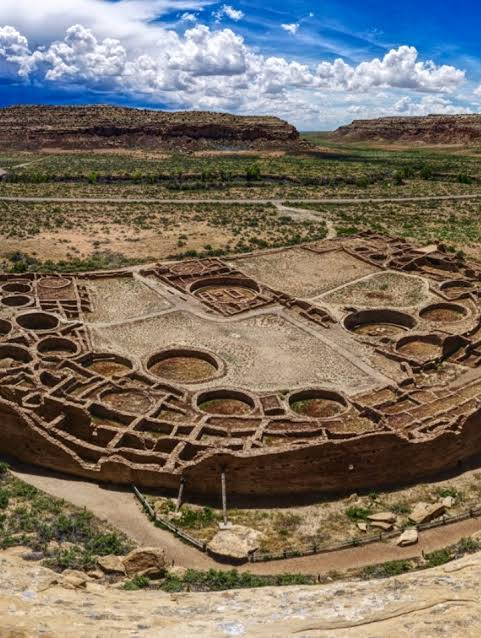
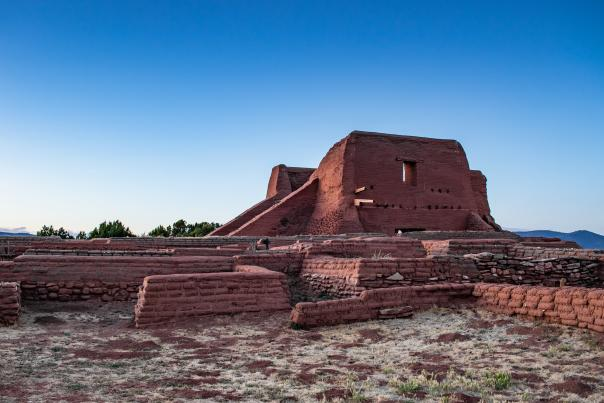
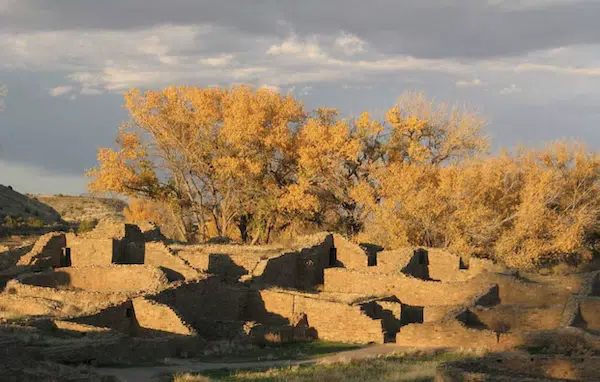
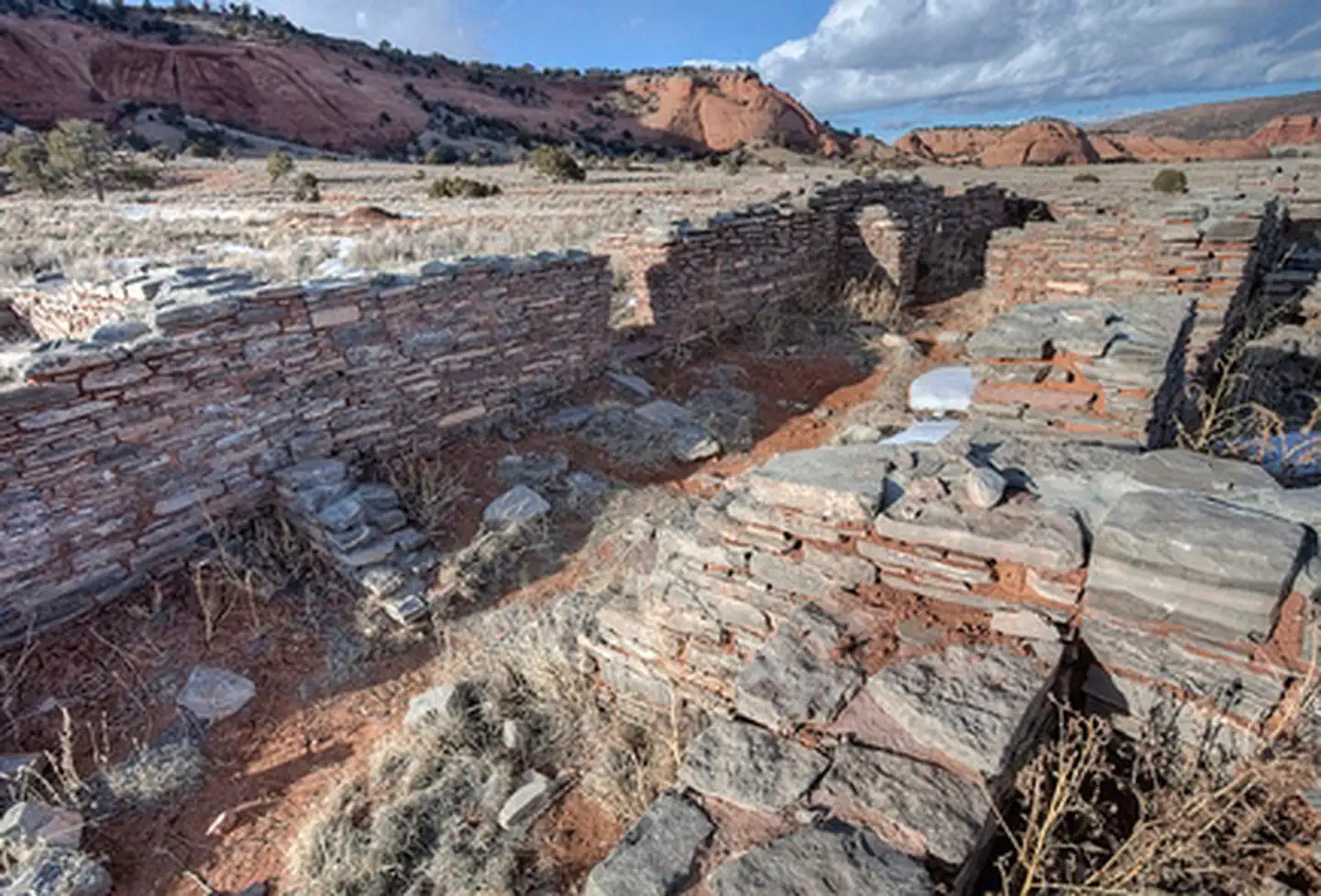
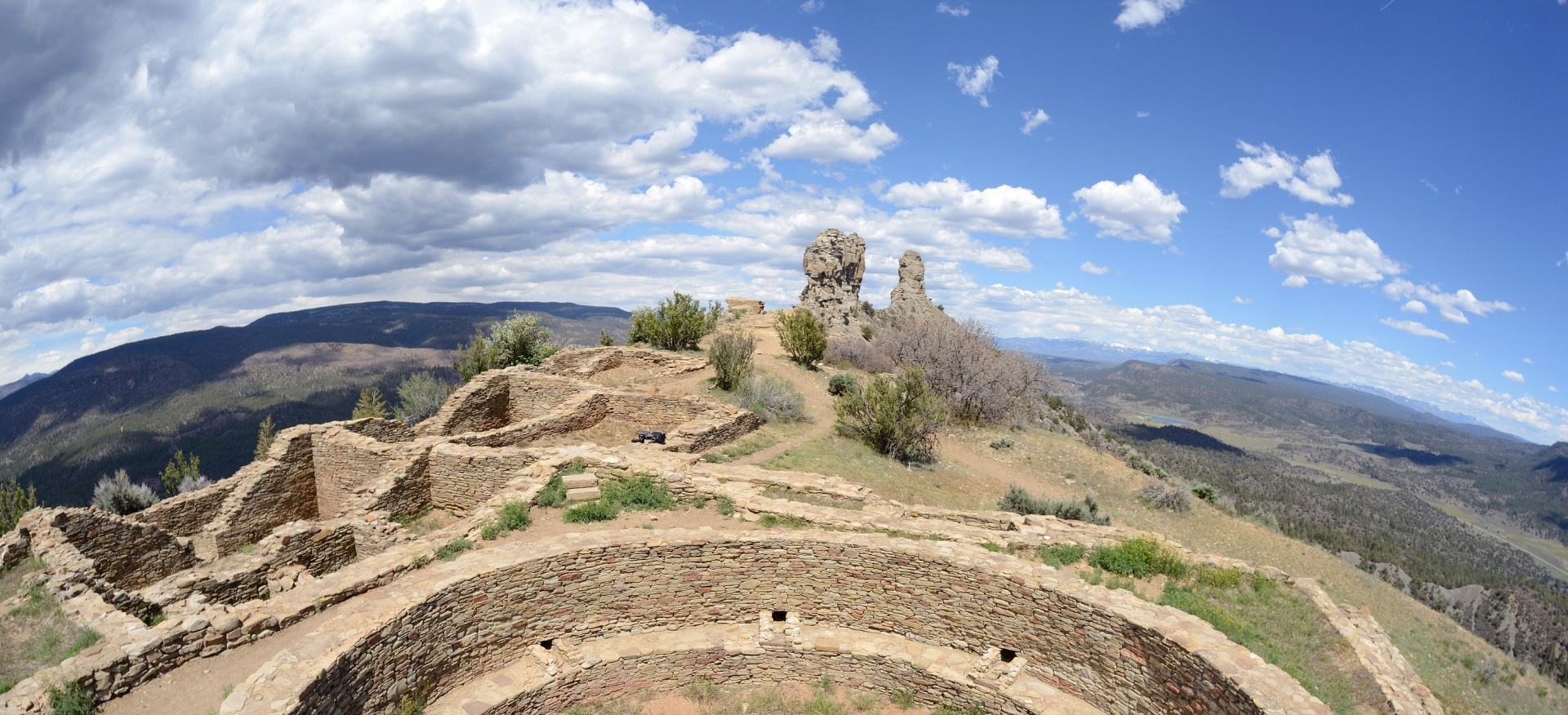
The site contains remains of ancient structures constructed primarily from stone and other locally available materials.
Buildings could include:
residential rooms;
storage areas;
work spaces;
courtyards;
and ceremonial structures.
Architecture provides archaeologists with information about household organization.
The placement of rooms can reveal how people cooked, stored food, manufactured objects, and interacted socially.
The Kiva
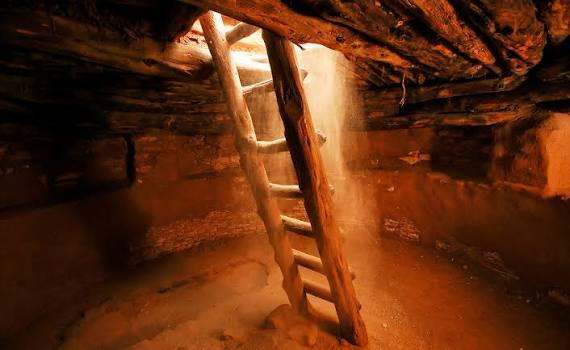
One of the most important features associated with Ancestral Puebloan communities is the kiva.
Kivas were generally circular or oval subterranean structures.
They were often entered through a ladder descending from an opening in the roof.
Inside, archaeologists may find features such as:
benches;
hearths;
ventilation systems;
deflectors;
and ceremonial installations.
The precise function of kivas varied.
They could have served as spaces for communal ceremonies, religious activities, meetings, and social gatherings.
Their presence demonstrates that Ancestral Puebloan architecture included deliberately specialized communal spaces.
Agriculture
The inhabitants depended heavily on agriculture.
Maize formed the foundation of the food system.
Beans and squash provided additional nutrients and helped create a diversified agricultural economy.
Farmers also gathered wild plants and hunted animals.
Agriculture required adaptation to a relatively dry environment.
Rainfall could be unpredictable, and growing seasons were affected by elevation.
Farmers therefore developed strategies involving:
selecting favorable planting locations;
conserving moisture;
managing soil;
and diversifying food sources.
Pinyon and Juniper Resources
The surrounding landscape provided valuable wild resources.
Pinyon pine trees produced edible nuts.
Juniper provided wood, fuel, construction materials, and other resources.
Wild plants could supplement cultivated foods.
This demonstrates that Ancestral Puebloan subsistence was not based exclusively on agriculture.
Instead, communities developed flexible economies combining farming, hunting, gathering, and exchange.
Material Culture
Archaeological materials from Edge of the Cedars include pottery, stone tools, ornaments, food-processing equipment, and other artifacts.
Each object provides evidence about human behavior.
Grinding stones, for example, reveal food-processing activities.
Projectile points provide evidence of hunting.
Pottery can provide information about cooking, storage, artistic traditions, and regional exchange.
Small objects can therefore be as archaeologically valuable as monumental buildings.
Pottery and Cultural Identity
Pottery was especially important.
Ancestral Puebloan pottery was produced in many regional styles.
Differences in surface treatment, decoration, vessel form, and manufacturing technique can help archaeologists identify cultural and chronological relationships.
Pottery could also function as more than a utilitarian object.
Decorated vessels expressed artistic traditions and possibly social or symbolic identities.
Trade Networks
Edge of the Cedars was not isolated.
Artifacts demonstrate connections between communities across the Southwest.
Materials could travel over long distances through exchange networks.
Shell ornaments from distant coastal areas are particularly important evidence of long-distance interaction.
Such objects demonstrate that communities living hundreds of kilometers apart could participate in shared economic and social networks.
Changing Communities
Ancestral Puebloan settlements did not remain static.
Communities expanded, reorganized, migrated, and sometimes abandoned particular settlements.
These changes could be caused by environmental conditions, demographic pressure, political relationships, resource availability, or social transformation.
Archaeological sites should therefore be understood as snapshots within much longer histories.
Indigenous Continuity
Modern archaeological terminology can sometimes create the impression that Ancestral Puebloans were a completely separate ancient people.
In reality, modern Pueblo peoples maintain cultural relationships with ancestral landscapes.
Archaeological research increasingly emphasizes Indigenous perspectives and consultation.
Sites such as Edge of the Cedars are therefore not simply scientific laboratories.
They are part of a cultural landscape connected to living communities.
Archaeology and Preservation
Preserving archaeological sites requires preventing erosion, looting, uncontrolled excavation, and physical damage.
Artifacts removed from their original context lose important information.
For example, a pottery vessel found in a burial, household, storage room, or ceremonial structure may tell different stories depending on its archaeological context.
This is why responsible archaeology documents not merely what objects exist but where and how they were found.
Conclusion
Edge of the Cedars provides an important window into the lives of Ancestral Puebloan communities in southeastern Utah.
Its importance comes not solely from impressive architecture but from the broader archaeological picture it provides.
The site reveals how people farmed, prepared food, built houses, participated in ceremonies, produced pottery, exchanged goods, and adapted to a demanding environment.
It demonstrates that ancient Southwestern societies were sophisticated communities whose lives depended upon detailed environmental knowledge and extensive social relationships.
Edge of the Cedars ultimately reminds us that archaeology is not simply the study of ruins.
It is the study of people—and the everyday decisions through which those people created communities that endured for generations.