Introduction
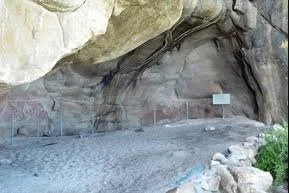
Elands Bay Cave, situated on South Africa’s Western Cape coast, is an important archaeological site for understanding the long history of human occupation in the region. Its deposits preserve evidence associated with both the Middle Stone Age and the Later Stone Age, making it valuable for studying technological change, subsistence, and environmental adaptation.
The title “South Africa's 2,000-Year Sequence” highlights one possible chronological component of the site, but the cave’s archaeological record extends well beyond the last two thousand years. Published research describes deposits containing archaeological materials from the Middle Stone Age through the Later Stone Age. The surviving sedimentary sequence has also been affected by site formation and erosion, making careful interpretation essential.
The cave therefore offers an opportunity to examine how archaeological sequences are constructed and why the age of a site must be distinguished from the age of a particular layer or artefact.
The Coastal Setting
Elands Bay Cave is a rock shelter formed in quartzite on the Western Cape coast. Its location placed it within a landscape of marine resources, coastal dunes, river systems, and inland environments.
The cave’s position made it a potential shelter for people engaged in a range of activities. Coastal communities could gather shellfish and hunt marine or terrestrial animals, while the surrounding region offered plant resources and routes connecting the shore to inland areas.
The landscape changed over time as sea levels fluctuated and coastal processes altered the shoreline. These changes affected the accessibility of marine resources and the distance people needed to travel between different habitats.
Understanding the site therefore requires a reconstruction of the ancient environment rather than relying solely on the modern landscape.
A Long Archaeological Sequence
Elands Bay Cave is important because it preserves evidence of occupation during more than one archaeological period. The Middle Stone Age and Later Stone Age represent broad classifications based on differences in material culture, technology, and chronology.
The Middle Stone Age is associated with a range of stone-tool technologies, including prepared-core methods and carefully shaped flakes and points. The Later Stone Age includes later technological traditions, with substantial variation across time and region.
The presence of material from both periods does not mean that the cave was occupied continuously. There may have been long intervals when people did not use the shelter, and the surviving deposits may preserve only some episodes of activity.
Researchers use stratigraphy, radiocarbon dating where appropriate, and other chronological methods to establish the order and age of the deposits. They also investigate whether sediment layers have been disturbed by natural or human processes.
The Importance of Site Formation
Archaeological evidence is shaped by the processes that bring material into a site and preserve it. At Elands Bay Cave, sediment may have accumulated through windblown sand, erosion, and material falling from the surrounding rock. Human activities introduced stone tools, food remains, and other traces of occupation.
Over time, these deposits could be compacted, disturbed, or partially removed. The current archaeological sequence may therefore differ from the original accumulation.
A geoarchaeological study of Elands Bay Cave investigated the formation of its deposits in conjunction with renewed excavations conducted between 2010 and 2012. The research noted that earlier deposits had once reached approximately three metres in thickness, while only a portion of that sequence remained. Ground-penetrating radar was used to investigate the sedimentary infill.
This work demonstrates that archaeology is not only about identifying artefacts. Understanding how sediments formed is necessary to determine what those artefacts can reliably tell us about the past.
Stone Tools and Changing Technologies
Stone tools provide one of the main sources of evidence at Elands Bay Cave. Their shapes, manufacturing sequences, and raw materials can reveal how people produced implements and adapted their technology to different tasks.
Researchers study the scars left by stone removal, the selection of raw materials, and microscopic traces of use. These observations help distinguish between artefacts produced through different manufacturing techniques and investigate how tools may have been used.
However, technological categories should not be interpreted as direct labels for specific ethnic groups. Similar tools can be made by different communities, and technological practices can change through contact, innovation, or local adaptation.
A change in tool types may therefore indicate a shift in activity or technological preference rather than the arrival of an entirely new population.
Subsistence and the Use of Coastal Resources
Animal remains from Elands Bay Cave provide evidence about hunting, food processing, and the use of marine and terrestrial environments. Shellfish and other marine remains can show that people exploited coastal resources, while terrestrial bones provide information about hunting and the surrounding animal community.
Researchers examine cut marks, burning, fragmentation, and the distribution of species to determine how the remains entered the deposits. They also consider whether animals were brought to the cave by people, predators, or natural processes.
The relationship between coastal and inland resources is important. Communities may have moved seasonally between habitats or maintained access to different resources through wider social networks.
Such interpretations depend on the combined evidence of food remains, stone tools, chronology, and environmental reconstruction. A single shell or bone rarely provides a complete picture of subsistence.
What Does the 2,000-Year Reference Mean?
A two-thousand-year period can be useful when discussing relatively recent archaeological evidence, but it should not be treated as the full chronology of Elands Bay Cave.
To describe a specific two-thousand-year sequence accurately, an article must identify the relevant layers, the dates that support the sequence, and the archaeological materials associated with it. Otherwise, the phrase risks implying that all the cave’s deposits belong to a much narrower period than the evidence indicates.
The broader record of Elands Bay Cave extends from the Middle Stone Age into the Later Stone Age, and the surviving deposits have a complex formation history. The distinction between a site's full archaeological sequence and a particular period within it is fundamental to sound archaeological interpretation.
Research and Conservation
Elands Bay Cave demonstrates why archaeological sites require careful preservation and documentation. Excavation can reveal important evidence, but it also permanently changes the context in which artefacts are found.
Ground-penetrating radar and other non-invasive methods can help researchers identify sediment structures before excavation. Detailed recording, controlled sampling, and secure curation allow future researchers to re-examine the evidence with improved methods.
Coastal erosion and human disturbance can threaten the survival of deposits. Conservation therefore helps preserve both the physical site and the information contained within it.
Conclusion
Elands Bay Cave is a significant archaeological locality for investigating the Middle and Later Stone Ages in South Africa’s Western Cape. Its deposits provide evidence of stone-tool technology, coastal resource use, and changes in human occupation over a long period.
The reference to a 2,000-year sequence should be understood as a specific chronological claim rather than a description of the entire site. Research into the cave’s formation has shown that erosion and other processes altered the original deposits, making stratigraphic analysis essential. By combining archaeology, geology, dating, and environmental research, scientists can use Elands Bay Cave to reconstruct changing patterns of human activity and understand how coastal communities adapted to a dynamic landscape.