Introduction
Located near Natchez, Mississippi, Emerald Mound is one of the largest prehistoric earthworks ever constructed in the United States and the second-largest platform mound in North America after Monks Mound at Cahokia. Built primarily between 1200 and 1730 CE, the mound served as a major ceremonial and political center for the Natchez people, descendants of the Mississippian cultural tradition. Covering approximately 8 acres (3.2 hectares) and rising nearly 35 feet (11 meters) above the surrounding landscape, Emerald Mound was the location of temples, elite residences, and sacred ceremonies that reinforced the authority of Natchez rulers. Its immense scale reflects centuries of organized labor, sophisticated engineering, and religious significance.
Construction and Architecture
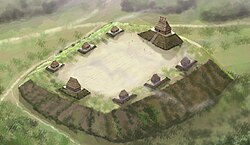
Unlike many platform mounds that consist of a single elevated platform, Emerald Mound was constructed by enlarging a natural hill and reshaping it into a massive ceremonial terrace. Builders transported enormous quantities of clay and earth, depositing them in carefully compacted layers to create a stable platform capable of supporting numerous wooden buildings.
Along the summit, smaller secondary mounds were built to elevate temples, council houses, and the residences of hereditary chiefs above the main platform. Broad ramps and stairways connected these sacred buildings to the plaza below, allowing ceremonial processions to ascend during important religious festivals.
The careful shaping of the mound demonstrates advanced engineering knowledge, including effective drainage systems and soil compaction techniques that preserved the structure despite centuries of weathering.
Political and Religious Importance
Emerald Mound functioned as the ceremonial heart of the Natchez chiefdom. The summit housed temples where sacred fires were maintained continuously by priests, reflecting beliefs in the divine authority of the ruling elite. The Natchez Great Sun, regarded as both a political leader and a sacred figure, likely presided over important ceremonies conducted atop the mound.
The surrounding plaza hosted seasonal festivals, diplomatic meetings, public feasts, dances, and religious rituals attended by communities from throughout the region. These gatherings reinforced social unity while strengthening the political authority of Natchez leaders.
Ancestor worship, agricultural ceremonies, and solar symbolism played central roles in the religious life centered at Emerald Mound, continuing traditions inherited from earlier Mississippian societies.
Economy and Society
The Natchez cultivated large fields of maize, beans, squash, and sunflowers, taking advantage of the fertile soils of the Mississippi River Valley. Agricultural surpluses supported skilled artisans, priests, warriors, and political leaders who lived near the ceremonial center.
Trade connected Emerald Mound with neighboring communities throughout the Southeast. Archaeologists have discovered pottery, stone tools, shell ornaments, copper artifacts, and ceremonial objects that illustrate extensive regional exchange and participation in the broader Mississippian cultural network.
Archaeological Importance
Excavations at Emerald Mound have uncovered house remains, ceremonial structures, pottery, stone tools, food remains, and evidence of repeated construction phases. These discoveries provide valuable information about the evolution of Natchez society during the centuries immediately preceding European contact.
Because the Natchez were among the few Mississippian descendants encountered and documented by early French explorers, Emerald Mound also serves as an important link between archaeological evidence and historical accounts describing Indigenous political and religious traditions.
Conclusion
Emerald Mound stands as one of North America's greatest prehistoric monuments, representing the political power, religious traditions, and engineering achievements of the Natchez people. Its enormous platform, ceremonial buildings, and sacred plazas illustrate the continuation of Mississippian culture into the early historic period, preserving an extraordinary example of Indigenous monumental architecture in the Lower Mississippi Valley.