Introduction
Located near Greenville, Mississippi, the Winterville Mounds formed one of the most important ceremonial centers of the Mississippian Civilization between approximately 1000 and 1450 CE. Positioned within the fertile Mississippi Delta, the site served primarily as a religious and political complex rather than a densely populated city. Covering more than 40 acres (16 hectares), Winterville originally contained at least 23 earthen mounds surrounding expansive ceremonial plazas. These earthworks supported temples, elite residences, and council buildings, making Winterville one of the principal ceremonial centers of the lower Mississippi Valley.
Monumental Earthworks
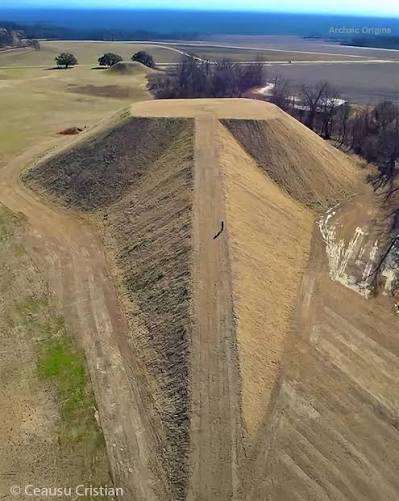
The largest mound at Winterville rises approximately 55 feet (17 meters) above the surrounding plain, making it one of the tallest prehistoric platform mounds in Mississippi. Builders transported countless basket loads of earth to construct flat-topped platforms capable of supporting large wooden structures.
The mounds were arranged around broad open plazas that served as gathering places for ceremonies, public meetings, athletic contests, and seasonal festivals. Carefully planned pathways connected the mounds, allowing processions to move between sacred buildings during important religious events.
The repeated enlargement of the mounds over several centuries reflects the continued importance of Winterville as a regional ceremonial center.
Religious Functions
Unlike many Mississippian settlements that combined residential and ceremonial functions, Winterville appears to have been occupied mainly during religious festivals and major public gatherings. Temples atop the mounds housed priests who conducted rituals honoring agricultural deities, ancestors, and supernatural beings believed to control the natural world.
The central plazas provided space for communal feasts, ritual dances, diplomatic meetings, and ceremonies that strengthened alliances among neighboring communities. Religious leaders likely used these events to reinforce social order and maintain political influence across the surrounding region.
Artifacts associated with the Southeastern Ceremonial Complex, including engraved shell ornaments, decorated pottery, ceremonial stone pipes, and symbolic artwork, indicate that Winterville participated in the broader Mississippian religious tradition.
Agriculture and Regional Influence
Although relatively few people lived permanently at Winterville, nearby farming villages supplied food and labor for the ceremonial center. Residents cultivated maize, beans, squash, and other crops while hunting, fishing, and gathering resources from the rich wetlands of the Mississippi Delta.
Trade connected Winterville with other Mississippian centers throughout the Southeast, facilitating the exchange of raw materials, ceremonial goods, artistic styles, and religious ideas. These interactions helped maintain Winterville's importance as a regional spiritual center for centuries.
Archaeological Importance
Archaeological investigations have uncovered evidence of temples, plazas, pottery workshops, ceremonial artifacts, food remains, and multiple construction phases. These discoveries demonstrate that Winterville was one of the most significant ceremonial complexes in the Mississippi Delta and contributed to the spread of Mississippian religious traditions throughout the region.
Today, the site is preserved as Winterville Mounds Archaeological Park, where ongoing research continues to reveal new information about the political, religious, and cultural life of Mississippian societies.
Conclusion
Winterville Mounds represents one of the most important ceremonial landscapes of the Mississippian Civilization, showcasing monumental platform mounds, sacred temples, expansive plazas, and sophisticated earthwork engineering. Its role as a regional religious center demonstrates the deep spiritual traditions, political organization, and architectural achievements of Indigenous societies in the Mississippi Delta, preserving an enduring legacy of one of North America's most remarkable prehistoric civilizations.