Introduction
Nestled in a secluded, mist-shrouded valley at the foot of Mount Tomaros in the rugged highlands of Epirus, northwestern Greece, lies Dodona—the oldest and most mystically revered oracular sanctuary in the ancient Hellenic world. Long before the stone temples of Delphi rose to international prominence, ancient pilgrims journeyed to Dodona to consult a sacred, primordial oak tree believed to be the terrestrial dwelling place of Zeus Naios and his divine consort, Dione. The priests and priestesses, known respectively as the barefoot, ground-sleeping Selli and the Pleiades, interpreted the divine will through the rustling of the oak leaves, the flight of sacred doves, and the eerie, resonant chiming of bronze cauldrons suspended around the sacred precinct.
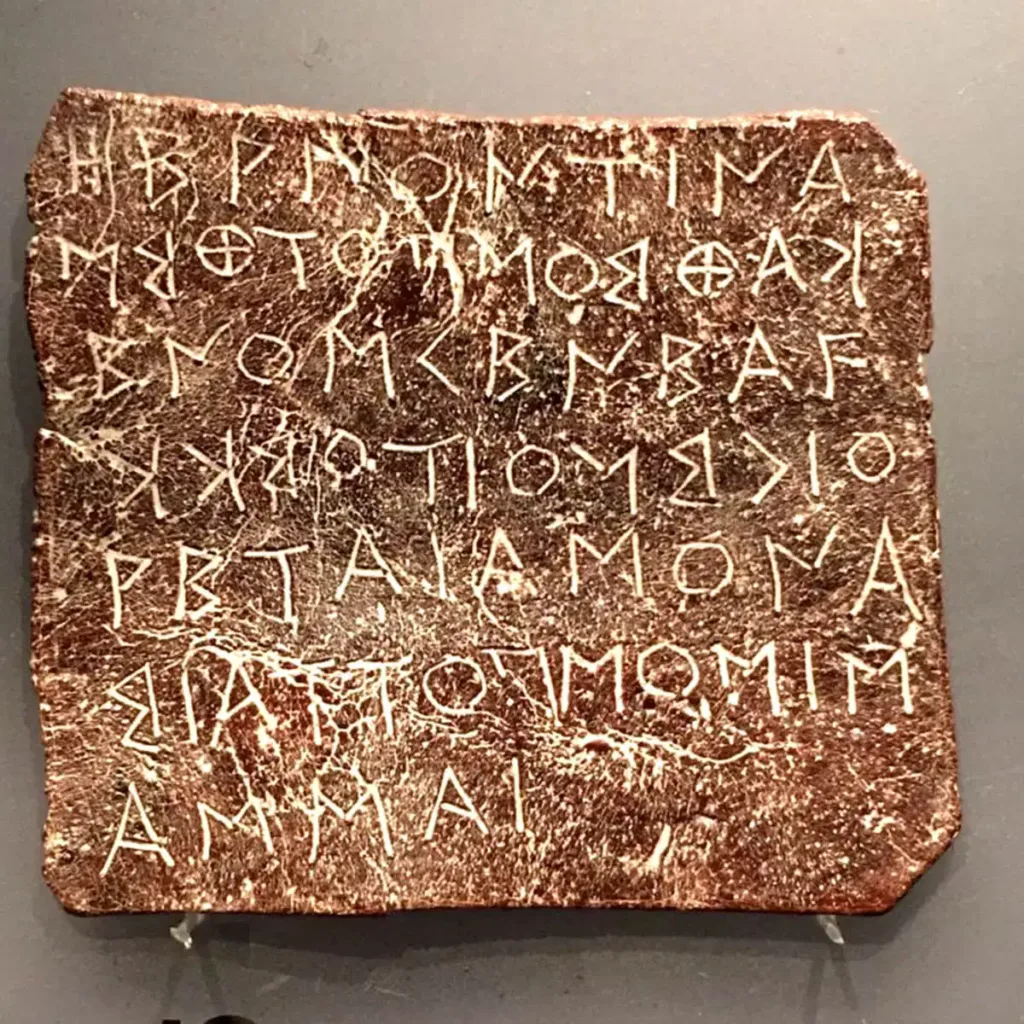
While historical accounts detailed these sensory rituals, the most intimate, human evidence of the oracle’s daily operation comes from thousands of small, folded lead strips upon which ordinary people scratched their deepest anxieties. However, a major discovery in 2026 completely transformed this landscape, as archaeologists unearthing a previously sealed subterranean votive deposit discovered a sensational cache of inscribed bronze tablets, opening a pristine, unprecedented window into the political and genetic history of the ancient Epirote tribes.
The 2026 Epigraphic and Archaeogenetic Revelations
While the previously known lead tablets primarily preserved the private, everyday worries of common pilgrims—such as inquiries about stolen property, marriage compatibility, or the manumission of slaves—the bronze tablets discovered in 2026 represented highly formal, official state consultations. Because bronze was a far more expensive, durable material than lead, these newly uncovered texts were commissioned exclusively by the ruling elites of the Epirote League and the royal Molossian dynasty. The inscriptions, written in various distinct northwest Greek dialects, detail critical geopolitical crises, ranging from urgent military alliances against the expanding power of Macedonia to direct diplomatic appeals to the gods during the chaotic Roman encroachments of the 2nd century BCE.
Parallel to this spectacular epigraphic find, researchers successfully coupled the archaeological analysis of the tablets with paleogenomic sequencing of human remains excavated from elite tombs near the Dodona precinct. The genetic results provided an extraordinary look at the isolation and preservation of the ancient Epirote population.
The DNA demonstrated that the mountain-dwelling tribes of Epirus maintained a highly distinct, conservative genetic profile that carried significantly less foreign admixture than the highly cosmopolitan maritime city-states of southern Greece. These individuals displayed an intense biological continuity with the local Bronze Age populations of the Ionian coast, carrying high frequencies of Paleo-Balkan paternal haplogroups like J2b2-L283. The 2026 discovery proved that Dodona was not just a Pan-Hellenic spiritual center, but a vital geopolitical anchor where a fiercely independent, genetically continuous population of mountain clans sought divine validation to protect their ancestral lands from imperial destruction.
Conclusion
The remarkable 2026 discovery of the bronze oracular tablets at Dodona marks a monumental milestone in the study of ancient Mediterranean religion and statecraft. By preserving the formal, high-stakes inquiries of the Epirote kingdoms alongside the conservative genetic signatures of the people who guarded the sacred oak, these artifacts bridge the gap between spiritual devotion and hard political reality.
They prove that in times of existential crisis, the elite leaders of antiquity cast aside purely rational strategy and turned to the ancient, rustling leaves of Mount Tomaros for guidance. Ultimately, the combined epigraphic and archaeogenetic unmasking of Dodona ensures that the voices of Epirus are no longer lost to time, revealing a deeply pious, resilient civilization whose spiritual heart helped define the classical world.