Introduction
In the open grasslands of northeastern New Mexico, the ruins of Fort Union stretch across a broad valley beside the old Santa Fe Trail.
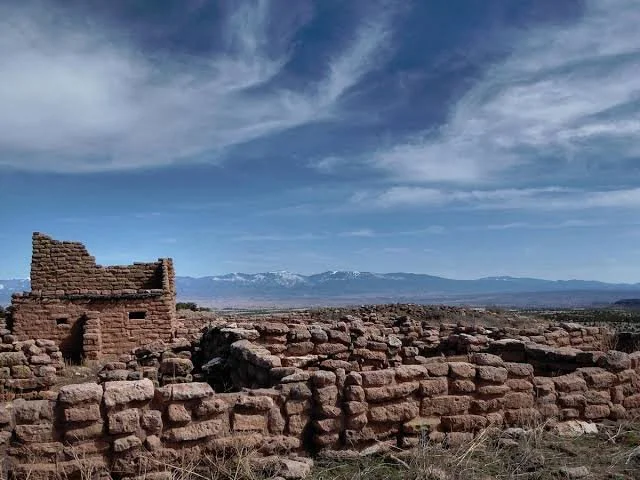
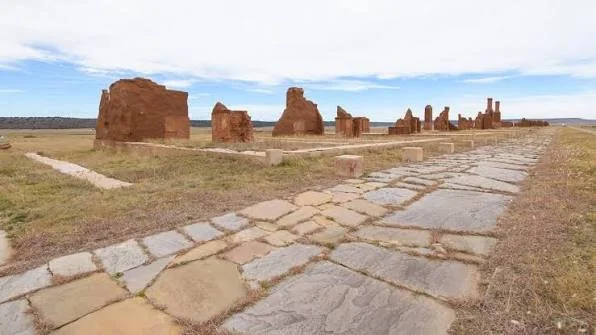
Today, visitors see adobe walls, foundations, earthworks, roads, wagon ruts, and scattered structural remains.
In the nineteenth century, however, this was one of the largest and most important military installations in the American Southwest.
Fort Union was established in 1851 and remained active until 1891. During those four decades, it functioned as a military post, supply depot, transportation center, arsenal, and instrument of federal expansion.
Its history is inseparable from the Santa Fe Trail.
The fort existed partly because the trail had become a major commercial corridor connecting the United States with New Mexico.
The Santa Fe Trail
The Santa Fe Trail developed into an international commercial highway during the early nineteenth century.
After Mexican independence from Spain in 1821, trade between Missouri and Santa Fe expanded rapidly.
Merchants transported manufactured goods westward.
New Mexican traders transported silver, livestock, furs, and other products eastward.
The trail crossed hundreds of miles of difficult terrain.
It also passed through lands occupied and used by Indigenous peoples.
The expansion of commerce therefore transformed relationships among merchants, governments, settlers, and Native nations.
Why Fort Union Was Built
By 1851, the United States had acquired extensive territories in the Southwest following the Mexican-American War.
The federal government wanted greater military control over these territories.
Lieutenant Colonel Edwin V. Sumner established Fort Union near the junction of the Mountain and Cimarron branches of the Santa Fe Trail.
The location was strategically chosen.
The fort could support traffic on multiple branches of the trail.
It could also serve as a base for military operations throughout the region.
Three Forts
Fort Union was not one structure.
Three successive forts occupied the area.
The first Fort Union operated from 1851 to 1861.
The second, often called the Star Fort, was constructed during 1861–1862.
The third and largest fort was developed beginning in 1862 and remained in operation until 1891.
This sequence reflects changing military requirements.
The fort expanded as the United States increased its military presence in the Southwest.
The First Fort
The first fort was relatively modest.
Its construction reflected the urgency of establishing a military presence near the trail.
Buildings were largely functional.
Soldiers needed:
barracks
officers' quarters
storage
workshops
stables
administrative spaces
The fort was also exposed to the region's climate.
Cold winters, wind, dust, and limited local resources made military life difficult.
The Civil War
The Civil War dramatically changed Fort Union's strategic role.
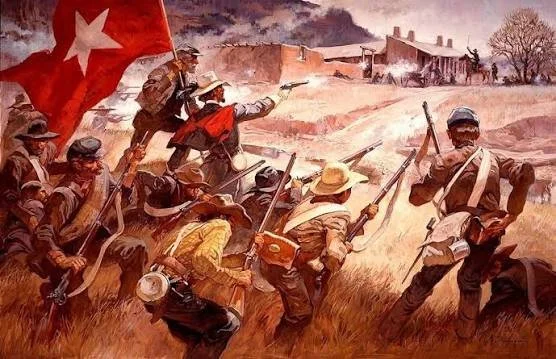
In 1862, Confederate forces invaded New Mexico Territory.
Their objective included capturing Fort Union and gaining control over the Santa Fe Trail and potentially the Colorado gold fields.
Fort Union became a major defensive target.
The Confederates never captured it.
Their defeat at Glorieta Pass and the destruction of their supply train prevented their advance.
The Star Fort
The second Fort Union was designed as a defensive fortification during this period of heightened threat.
Its star-shaped design reflected contemporary European and American military engineering.
The angular bastions allowed defenders to cover approaches with overlapping fields of fire.
The Star Fort was short-lived.
After the Confederate threat diminished, the military developed the larger third fort.
The Third Fort
The third Fort Union became the largest.
It included numerous buildings and specialized facilities.
The National Park Service's historic documentation identifies 56 structures associated with the Third Fort, occupying approximately 100 acres.
The complex included:
barracks
officers' quarters
warehouses
workshops
hospital facilities
administrative buildings
an arsenal
corrals
supply facilities
The depot itself became larger than the military post.
This is an important distinction.
Fort Union was not simply a place where soldiers lived.
It was an enormous logistical operation.
The Military Supply Depot
The Southwest was geographically enormous.
Military posts were scattered across New Mexico, Arizona, Colorado, Texas, and surrounding territories.
They required constant supplies.
Food, clothing, ammunition, weapons, tools, construction materials, and animal feed had to move through the region.
Fort Union became the central supply hub.
The National Park Service describes it as the largest military supply depot in the Southwest.
This made transportation central to the fort's existence.
Wagon Trains
Wagon trains arrived carrying supplies from the east.
The Santa Fe Trail could become crowded with freight traffic.
The National Park Service notes that wagon convoys commonly traveled in groups for protection and that military freight increased substantially during the Civil War.
The fort's wagon-related archaeology remains visible today.
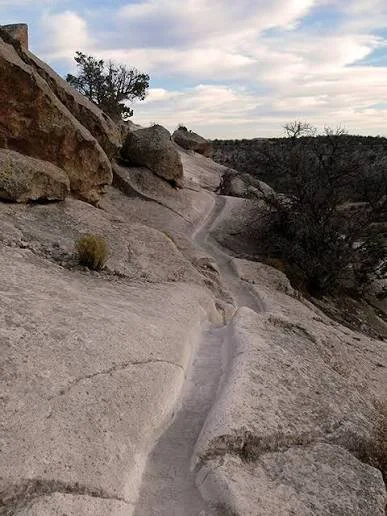
Deep parallel depressions in the ground preserve portions of the Santa Fe Trail's historic ruts.
These ruts are physical evidence of thousands of wagon journeys.
Fort Union and Indigenous Peoples
The history of Fort Union cannot be separated from Indigenous history.
The region was used by Apache, Comanche, Kiowa, Ute, and other Native peoples.
The expansion of American military and commercial infrastructure altered existing territorial relationships.
The U.S. Army conducted campaigns against Indigenous nations and also attempted to protect commercial routes.
This history is complex.
The fort could be described from the perspective of military logistics, but Indigenous communities experienced the expansion of federal power in fundamentally different ways.
A Tool of Federal Expansion
Fort Union represented more than military defense.
It was part of the broader process through which the United States extended political and economic control across the Southwest.
Soldiers protected wagon trains.
Military escorts accompanied travelers.
Supplies moved through the region.
Federal institutions expanded.
The fort therefore became an instrument through which national power reached distant territories.
The National Park Service describes Fort Union as an "agent of change" in the New Mexico Territory and Southwest.
Architecture
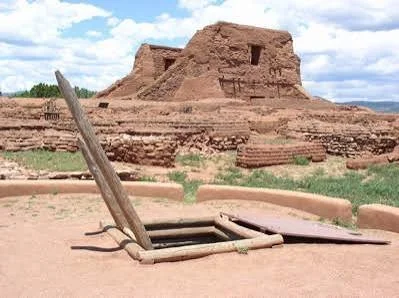
The fort's architecture reflected local materials and regional construction traditions.
Adobe was extensively used.
Adobe walls could be constructed efficiently from locally available earth.
However, they required constant maintenance.
Water erosion and weather could damage walls.
The surviving ruins therefore represent only a fraction of the original structures.
The Third Fort's remains are particularly important because they preserve the layout of an enormous nineteenth-century military complex.
The Santa Fe Trail and Cultural Exchange
The trail connected communities.
People from different backgrounds encountered one another along its route.
Merchants from Missouri interacted with Hispanic New Mexican traders.
Military personnel encountered Indigenous communities.
Mexican and American commercial systems became increasingly interconnected.
The National Park Service notes that Anglo-American traders sometimes married into New Mexican families, demonstrating that the trail created social relationships as well as economic ones.
The Railroad Changes Everything
Fort Union's importance declined after the arrival of the railroad.
The Atchison, Topeka and Santa Fe Railway reached the region in the late nineteenth century.
The railroad bypassed the fort in 1879.
As rail transportation expanded, the Santa Fe Trail's role diminished.
The fort's supply function declined.
The military post remained for another decade, but its strategic importance was increasingly reduced.
Fort Union was abandoned in 1891.
Archaeology
Archaeologists can reconstruct Fort Union's history through:
building foundations
adobe fragments
ceramics
glass
military buttons
ammunition
animal bones
tools
architectural hardware
roads
wagon ruts
These materials reveal everyday life.
A military fort was not simply officers and soldiers.
It also included cooks, laborers, teamsters, merchants, craftsmen, medical personnel, families, and civilian employees.
Preservation
Adobe ruins are vulnerable.
Rain can dissolve exposed surfaces.
Wind can erode walls.
Plants can grow through foundations.
Temperature fluctuations contribute to cracking.
Preservation therefore requires stabilization and careful monitoring.
The goal is not to rebuild the fort into a modern-looking replica.
Instead, conservation seeks to preserve surviving historic material and archaeological information.
Conclusion
Fort Union was one of the most important military and logistical centers of the nineteenth-century American Southwest.
Its importance came from geography.
The fort stood where major branches of the Santa Fe Trail met.
It protected commerce.
It supplied distant military posts.
It participated in campaigns against Indigenous nations.
It became a key defensive installation during the Civil War.
And eventually, it declined because the railroad transformed transportation.
Today, its ruins and wagon ruts preserve a remarkably tangible record of that transformation.
Fort Union is therefore not simply an old military fort.
It is a physical record of how transportation, commerce, military power, Indigenous resistance, and American territorial expansion reshaped the Southwest.