Archaeologists working in northwestern Switzerland have uncovered an exceptional find: two rare Celtic gold coins that are more than 2,200 years old. The discovery was made near the village of Arisdorf in the canton of Basel-Landschaft and is considered one of the most significant Celtic coin finds in the country in recent years.
These artifacts rank among the oldest Celtic coins ever found in Switzerland and provide valuable new information about early monetary systems, ritual behavior, and Celtic society in Central Europe.
Rare Discovery in a Well-Documented Area
The coins were found by two volunteer researchers collaborating with Archäologie Baselland, the region’s official archaeological service. The discovery site is a forested area known as Bärenfels, close to Arisdorf, which has already yielded important archaeological evidence in recent years.
In 2023, archaeologists uncovered a hoard of 34 Celtic silver coins at the same location, dated to approximately 80–70 BC. Building on that discovery, a follow-up survey was carried out in spring 2025. During systematic fieldwork conducted by volunteers Wolfgang Niederberger and Daniel Mona, along with other team members, the group unexpectedly uncovered two gold Celtic coins—a complete stater and a quarter stater.
Among the Oldest Coins Found in Switzerland
Specialists have dated the newly discovered gold coins to the middle and late 3rd century BC, making them some of the earliest known Celtic coins in Switzerland. Current research indicates that fewer than two dozen similar coins from this early period have been identified across the country.
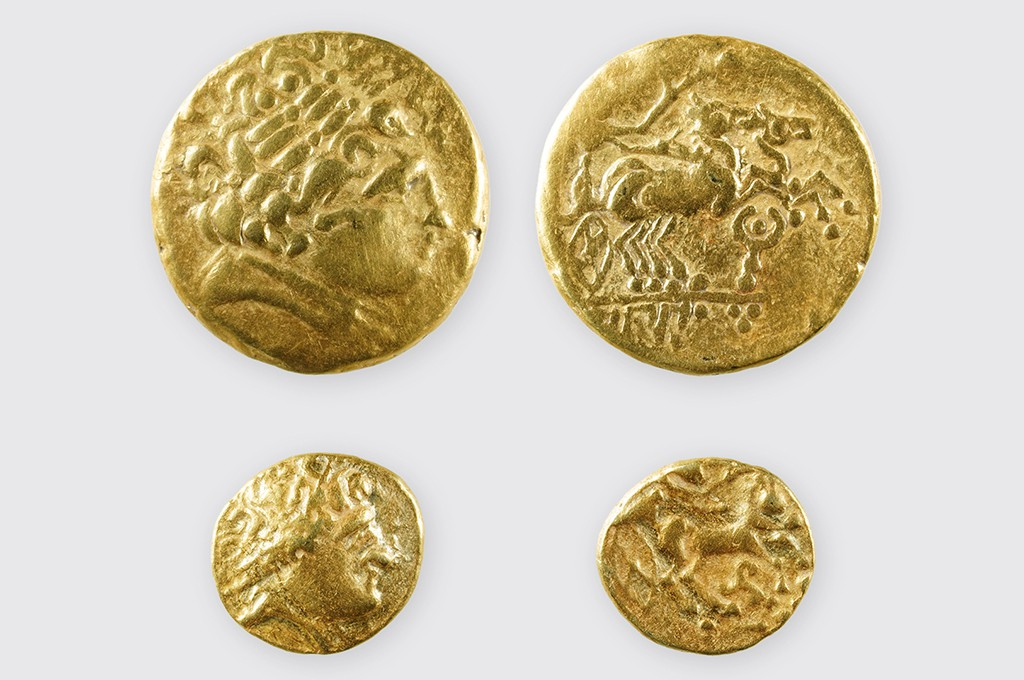
Michael Nick, a coin expert from the Inventory of Swiss Coin Finds (IFS), identified the artifacts as extremely rare examples. The larger coin, weighing 7.8 grams, belongs to the Gamshurst type, while the smaller coin, weighing 1.86 grams, has been classified as a Montmorot type.
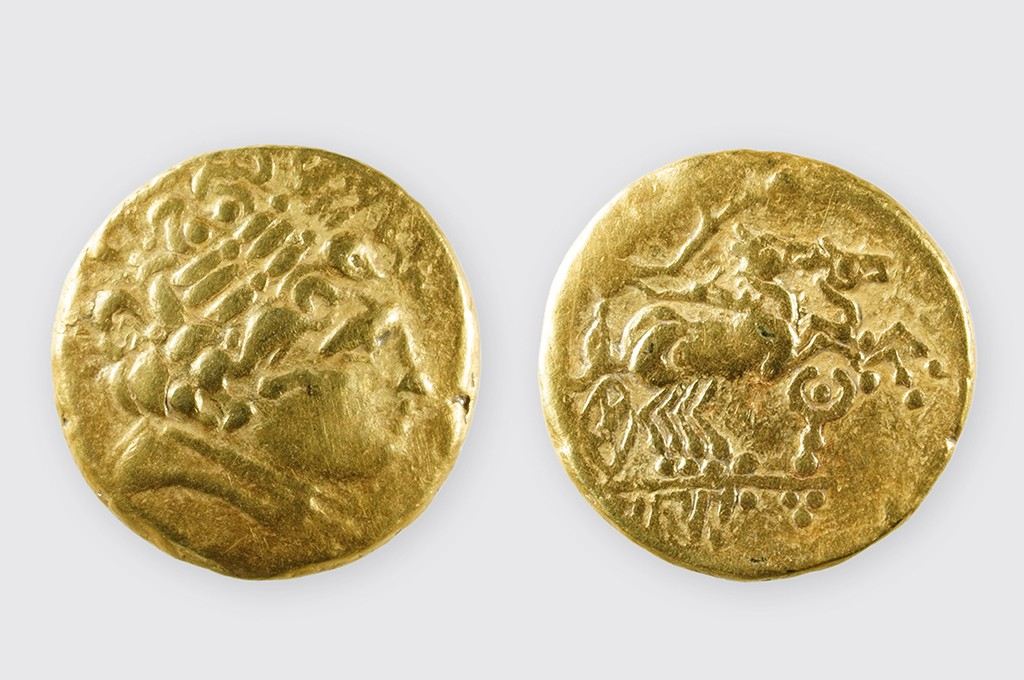
The stater weighs 7.8 g and features the head of the Greek god Apollo on the obverse and a horse-drawn chariot (biga) on the reverse.
Archaeologists in northwestern Switzerland have uncovered two rare Celtic gold coins over 2,200 years old near Arisdorf in Basel-Landschaft.
The coins, among the oldest found in Switzerland, shed light on early Celtic currency, rituals, and culture.
Found by volunteers Wolfgang Niederberger and Daniel Mona with Archäologie Baselland, the discovery took place in the archaeologically significant Bärenfels area, where a 34-coin silver hoard was found in 2023.
Dated to the mid-to-late 3rd century BC, the coins—a 7.8-gram Gamshurst-type stater and a 1.86-gram Montmorot-type quarter stater—are extremely rare.
Historians link early Celtic coinage to mercenaries in the Mediterranean who brought the idea of coins home. By the mid-3rd century BC, Celts began minting gold coins inspired by Philip II of Macedon, adapting Apollo and chariot motifs into Celtic designs.
The Arisdorf coins likely weren’t for everyday trade but served as elite payments, gifts, dowries, or ritual offerings, often deposited in graves, wetlands, or sacred sites like Bärenfels Moor.
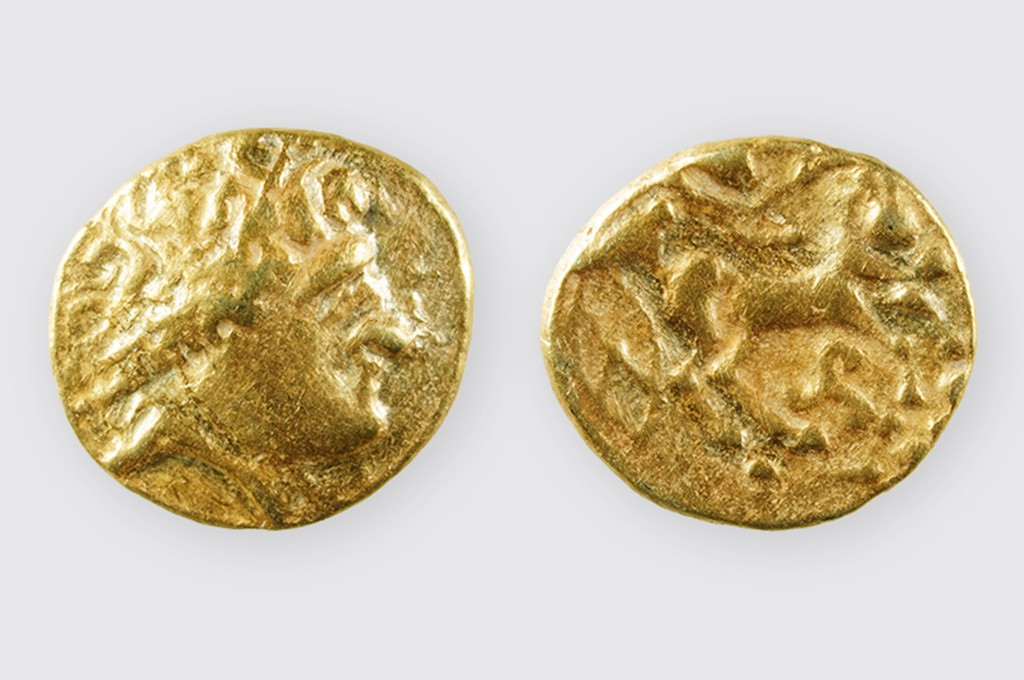
The quarter stater (weight: 1.86 g) also depicts the head of Apollo and a horse-drawn chariot.
Archäologie Baselland and the Historical Museum Basel have decided to exhibit the rare gold coins in the ongoing “Treasure Finds” display starting March 2026.
The coins will be shown alongside the previously discovered silver coins from the same site in a dedicated showcase at the Barfüsserkirche in Basel, giving the public a unique view into Switzerland’s ancient Celtic heritage.
The Arisdorf gold coins not only add to Switzerland’s archaeological record but also underscore the vital contribution of volunteer researchers, while offering new insights into early Celtic society, religious practices, and the origins of currency in the region.