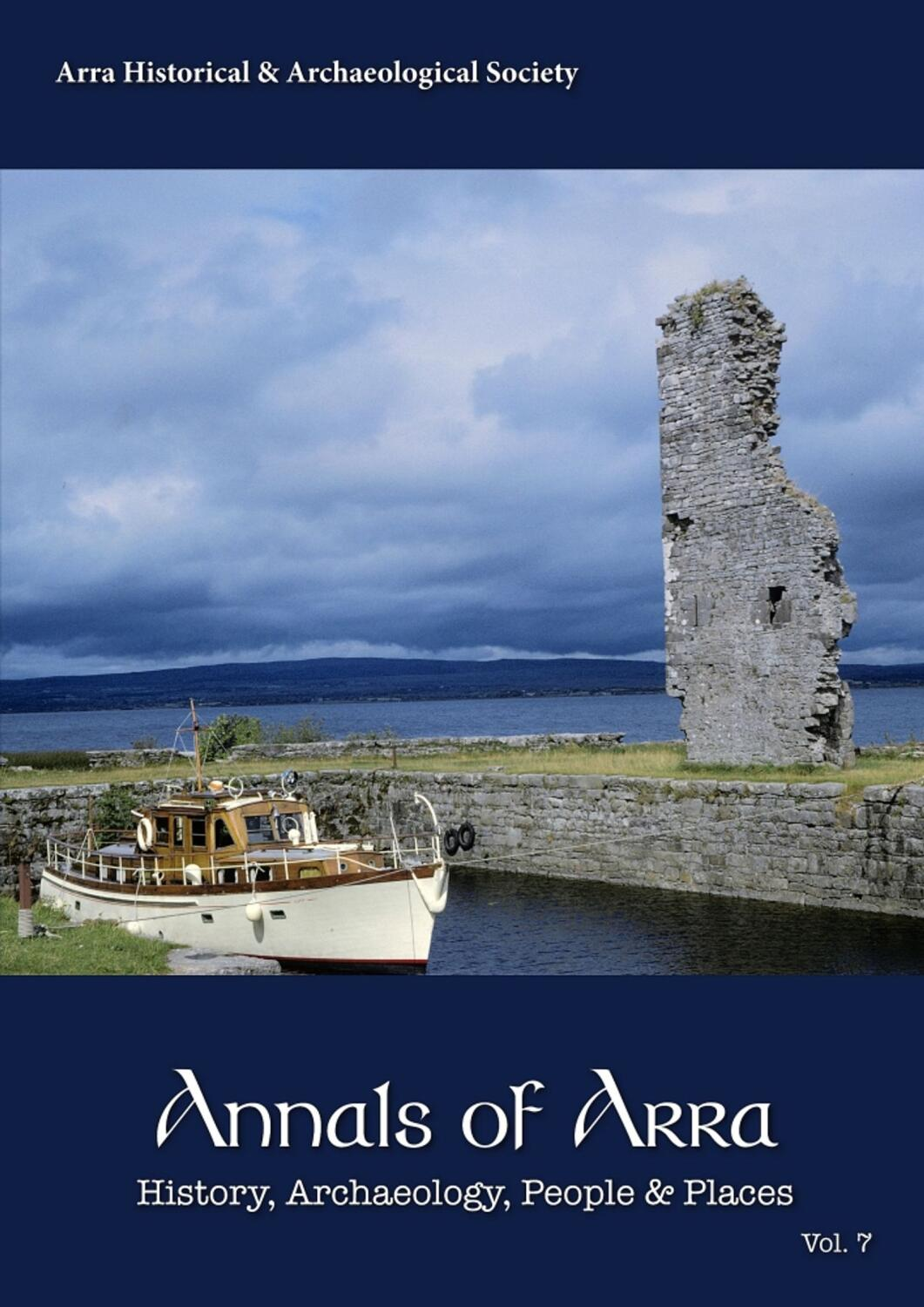
The half barony of Arra may not be vast geographically it spans the Arra mountains and includes the parishes of Portroe, Burgess, Ballina, and parts of Nenagh but it clearly has a rich historical record. Far from having exhausted its stories, the area continues to yield fascinating finds, as showcased in this latest volume. Edited by Michael Gleeson, Jane Quinlan, Joe Ryan (Stock), and Matt Malone, Annals of Arra: Volume VII offers an engaging and accessible exploration of the district’s history, archaeology, people, and places. The book balances detailed historical research with lively, personal narratives, illustrated with striking black-and-white photographs, maps, and tables that enrich the reader’s experience.
The volume is approachable for all readers, not just scholars, presenting information in a tangible and relatable way. It covers a broad spectrum—from vivid accounts of wild cross-country hurling matches to carefully researched biographies of notable figures.
Some stories hint at the extraordinary lives of local people. Jeremiah Seymour and Mary Culhane, Irish immigrants to Victoria, Australia, rose socially and economically in ways that would have seemed impossible to many mid-19th-century emigrants. As their great-granddaughter Bernadette Speirs notes, their journey “is a compelling narrative of transformation,” overcoming racial, ethnic, and religious barriers to build a large family and a productive farm. Locally, figures such as Bridget Gough and Denis Hanly made lasting contributions, founding Ballyartella Woollen Mills, which grew from a modest operation into a globally recognized textile company.
The book also includes humor and playful anecdotes, such as the story of Michael Gleeson’s uncle Marty, who briefly gained a reputation as a mathematical genius after obtaining a homework answers book—only to be caught and face the consequences.
Several articles stand out for their depth and rigor. Derek Ryan Bawn’s study of 17th-century land ownership in Arra meticulously examines the impact of the Battle of Kinsale and the Flight of the Earls on local landholding. Similarly, Michael Gleeson’s biography of Bishop Michael Fogarty, who served over fifty years as Bishop of Killaloe, details his involvement in Ireland’s fight for independence and his interactions with leaders like Arthur Griffith, Michael Collins, and Éamon de Valera, highlighting the Catholic Church’s role in shaping the state.
Finally, Dr. Siobhán Geraghty, current chairperson of the Arra Historical and Archaeological Society, concludes the volume with a summary of the Curraghbally Association, offering insight into pre-famine Ireland and reflecting on the club’s potential trajectory had the Great Famine not disrupted the country.