Introduction
Frontier garrisons and trading posts sometimes occupied similar locations: river crossings, mountain passes, coastal harbors, and routes connecting different political territories. Both could contain imported goods, defensive structures, storage facilities, and evidence of contact with surrounding communities.
Yet their primary functions differed. A garrison was organized around military presence and territorial control, while a trading post focused on exchange, distribution, and commercial relationships. Archaeologists compare architecture, artifacts, food remains, and settlement patterns to determine how a site operated.
The distinction is not always straightforward because military and commercial activities often overlapped.
Why Frontier Sites Developed
Frontiers were not necessarily fixed lines separating two clearly defined territories. They could be broad zones where political authority, cultural practices, and economic networks overlapped.
Authorities established garrisons to protect roads, monitor movement, enforce taxation, or defend strategic positions. Merchants established trading posts where goods could be exchanged, stored, and transported onward.
A site could perform both functions. Soldiers might purchase supplies from merchants, while traders might depend on military protection.
Architecture and Layout
Military installations often contain features associated with defense, including walls, towers, controlled entrances, barracks, and elevated observation points. Their layouts may emphasize visibility, restricted access, and the ability to control approaches.
Trading posts may instead prioritize storage, loading areas, workshops, market spaces, and access to transportation routes. Warehouses and courtyards can be especially important where goods arrived in bulk.
However, architecture alone is insufficient. A trading post could have defensive walls, while a garrison could include extensive workshops and storage buildings.
Weapons and Military Equipment
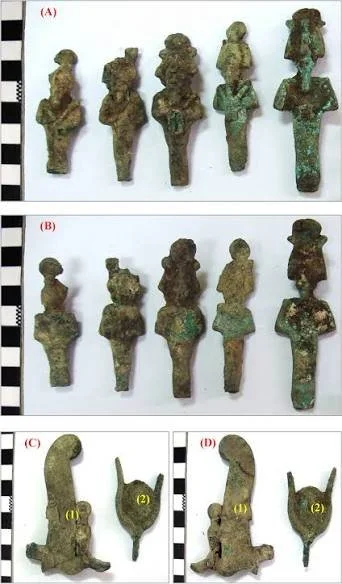
Weapons, armor fittings, arrowheads, ammunition, and military insignia can indicate a martial presence.
Their interpretation depends on context. A small number of weapons might belong to traders, guards, or residents rather than a permanent military unit. Concentrations of military equipment associated with barracks or defensive structures provide stronger evidence.
The absence of weapons does not prove that a site was peaceful. Metal equipment could have been recycled, removed, or poorly preserved.
Commercial Artifacts
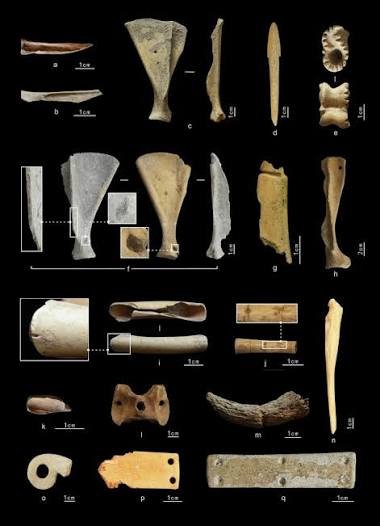
Trading posts may contain weights, scales, coins, seals, transport containers, and objects from distant production centers.
Imported ceramics, glassware, beads, metal goods, and specialized tools can reveal commercial connections. Differences in pottery styles or chemical composition may help identify the origins of traded goods.
Nevertheless, imported objects also occur at garrisons. Soldiers needed supplies, and military personnel could participate in local markets. The quantity, variety, and spatial distribution of artifacts are therefore more informative than isolated discoveries.
Food and Daily Life
Food remains can help reconstruct the site's supply system. A garrison might rely on standardized provisions, locally purchased food, or a combination of military and household supply.
Trading posts could contain plant and animal remains from several regions, reflecting the movement of merchants and workers. But both kinds of sites often depended on local agriculture.
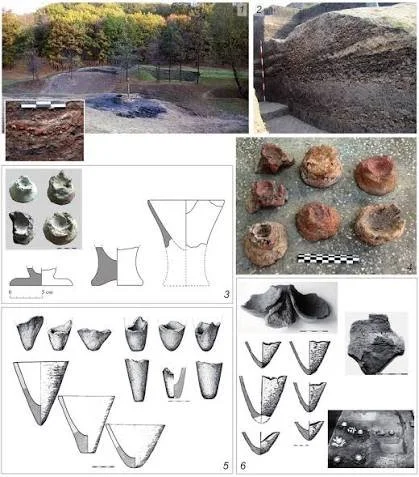
Animal bones, grain remains, cooking vessels, and storage containers can reveal diet and food preparation, although they rarely identify a site's function independently.
Human Mobility
Frontier sites often brought together people from different regions. Soldiers might be recruited from distant provinces, while merchants traveled between markets.
Isotopic analysis of human remains can sometimes identify individuals whose childhood diets or environments differed from those of the local population. Such results can indicate mobility, but they cannot automatically establish whether a person was a soldier, merchant, or migrant.
Burial customs, inscriptions, and associated artifacts may provide additional evidence.
Comparing Material Signatures
EvidenceMore suggestive of a garrisonMore suggestive of a trading postArchitectureBarracks, towers, controlled gatesWarehouses, loading areas, market spacesArtifactsConcentrations of weapons and military fittingsWeights, seals, transport containers, varied importsSpatial layoutDefensive positions and restricted accessStorage and circulation organized around exchangeFood supplyEvidence of organized provisioning may occurDiverse supplies associated with commercial traffic may occurExternal relationshipsStrategic control and military movementExchange networks and redistribution
These are tendencies, not absolute rules. The strongest interpretation comes from several categories of evidence working together.
Changing Functions Over Time
A site may change function. A trading post might become fortified during a period of conflict, while a garrison might develop a commercial settlement outside its walls.
Archaeologists therefore examine occupation phases separately. A site's earliest buildings may have served a different purpose from its later structures.
Dating walls, floors, artifacts, and destruction layers helps identify these changes.
Conclusion
Comparing frontier garrisons and trading posts reveals how military power and economic exchange shaped borderlands. Their material signatures overlap because defense and commerce often depended on one another.
A convincing interpretation requires more than finding a weapon or an imported object. Architecture, artifact distributions, food remains, human mobility, and chronology must be considered together. This approach allows archaeologists to reconstruct not only what a frontier site contained, but how it functioned within a wider political and economic landscape.