Introduction
Animal remains are among the most common discoveries in archaeological excavations. Bones, teeth, horns, and other parts of animal bodies can survive long after the soft tissues have disappeared, providing evidence of food consumption, animal management, craft production, and everyday life. Hooves are particularly interesting because they occupy a position between practical material and biological remains. Depending on the species and the conditions of preservation, hoof material may survive as horn-like keratin, become fragmented, or disappear almost entirely.
The title The Social Life of Hooves invites a broader question about what happened to animal remains after an animal died. Rather than treating every hoof as discarded waste, researchers can investigate whether certain remains were collected, processed, reused, or placed in particular locations. Some may have been connected with ordinary butchery or craft activities, while others might have held symbolic or ritual significance.
The interpretation becomes more complicated when researchers encounter unusual deposits. Hooves found beside a burial, beneath a building foundation, or within a concentrated group of animal remains may appear meaningful, but unusual placement alone does not prove ritual activity. Understanding the role of hoof material requires attention to the animal species, the way the remains were processed, and the wider archaeological setting.
The Importance of Hoofed Animals in Past Societies
Animals such as horses, cattle, sheep, goats, pigs, and other hoofed species played different roles in human economies. Cattle could provide meat, milk, hides, and traction for agricultural work. Sheep and goats supplied meat, milk, wool, and other useful materials. Horses and related animals were important for transportation, riding, and various forms of labor.
The economic value of an animal often extended beyond the parts commonly consumed as food. Hides could be processed into leather, bones could be shaped into tools, and horns could be transformed into containers or decorative objects. Depending on the community and the period, other parts of the animal might also be collected for specialized purposes.
The way people treated these remains was influenced by practical needs, available technology, local customs, and beliefs about animals. In some contexts, the entire carcass was processed efficiently because valuable materials were scarce. In others, certain parts may have been reserved for specific tasks or handled according to established social practices.
These possibilities should not be collapsed into a single explanation. The treatment of a horse's remains might differ substantially from the treatment of a sheep or cow, and practices could vary even between neighboring communities.
Identifying Hoof Material Archaeologically
Identifying hoof remains can be challenging because the organic material associated with hooves does not always preserve well. Keratin is vulnerable to environmental conditions, and archaeological specimens may be incomplete, distorted, or mixed with other animal remains.
Researchers examine the shape, structure, and microscopic characteristics of suspected hoof fragments. Comparison with modern reference specimens can help distinguish them from bone, horn, and other animal-derived materials. The species may sometimes be identified, although fragmentation can limit certainty.
The context in which a fragment is found is just as important as its physical characteristics. A hoof recovered from a butchery area may reflect routine carcass processing. A fragment found within a craft workshop might represent discarded raw material, while a carefully arranged group beneath a building could justify further investigation into deliberate placement.
Even then, interpretation must remain open. A concentration of hoof remains may reflect how people disposed of waste or organized a processing area rather than a ceremonial practice.
Hooves as Raw Materials
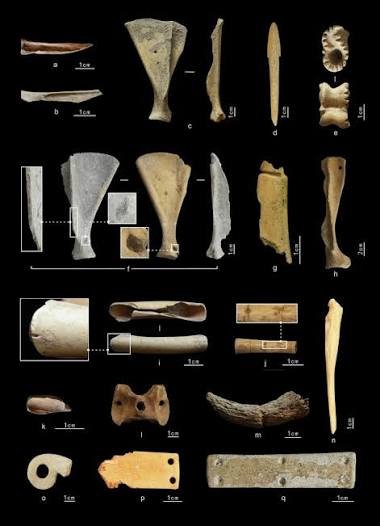
Animal-derived materials were used in many forms of craft production. Bone could be fashioned into awls, needles, handles, and other implements, while horn and antler were used for objects requiring different physical properties. Hoof-derived material may have had specialized uses in certain traditions, but researchers must establish what a particular specimen actually is before assigning it a function.
A fragment showing repeated cutting, shaping, or abrasion may indicate deliberate modification. Perforations and polished areas can suggest that an object was attached to something or handled repeatedly. The presence of manufacturing debris around a concentration of fragments could indicate that the material was being worked at the site.
It is also important to distinguish between an unfinished object and waste. A partly shaped fragment might represent a failed attempt at manufacturing, a discarded offcut, or an object that broke during use. The surrounding artifacts and the pattern of modification can help researchers evaluate these possibilities.
Claims that a particular tool was made specifically from a hoof should be supported by material identification. Objects made from horn, bone, and keratin may look similar after prolonged burial, and confusing them could lead to incorrect conclusions about ancient technology.
Personal Ornaments and Social Meaning
Personal ornaments can communicate identity, status, affiliation, or individual taste. Beads, pendants, buttons, decorative fittings, and other objects made from animal materials occur in archaeological contexts across many periods.
A hoof-derived ornament would be particularly interesting because it could demonstrate that a material usually associated with an animal's feet had been transformed into something intended for display. However, the existence of such an object must be demonstrated rather than assumed from an unusual fragment.
Researchers examine whether an object has been deliberately shaped, perforated, polished, or attached to another material. Wear patterns may indicate repeated contact with skin, clothing, or other objects. Its location in a burial or domestic context may also contribute to the interpretation.
Even when an object is clearly decorative, its social meaning is not necessarily obvious. It might have been valued for its appearance, associated with a particular animal, connected to a family tradition, or used for practical reasons. Without additional evidence, assigning a specific symbolic meaning would go beyond what the object can establish.
Animal Remains in Ritual Deposits
Animal bones and other remains sometimes appear in deposits that archaeologists interpret as ritual or ceremonial. These deposits may occur beneath building foundations, inside graves, near shrines, or in specially constructed pits. Some contain selected body parts, unusual combinations of species, or repeated patterns that differ from ordinary refuse.
Hoof remains could potentially form part of such deposits, but the interpretation depends on the evidence. A group of hooves placed in a deliberate arrangement may deserve closer study, particularly if it occurs with other objects or in a location associated with ceremonial activity.
Yet similar patterns can arise through practical activities. Butchers may separate certain body parts during processing, and craftspeople may collect specific materials for later use. A group of hooves could therefore represent a storage or disposal practice rather than an offering.
The strongest evidence for ritual interpretation usually comes from repeated patterns across several deposits, distinctive placement, and relationships with other archaeological features. Researchers should also consider whether the proposed interpretation fits the broader cultural and chronological context.
Horses, Cattle, and the Meaning of Animal Identity
The species represented in a deposit can influence how archaeologists interpret its significance. Horses have been associated with transportation, warfare, prestige, and specialized labor in many societies. Cattle have often been important sources of food, traction, and wealth, while sheep and goats could be central to pastoral economies.
These broad patterns do not establish universal symbolic meanings. A horse could be an everyday working animal rather than a prestige possession, and cattle remains might represent ordinary food processing rather than a special event.
The age, sex, and condition of the animals can provide additional information. A deposit containing selected animals may reflect herd management or a specific slaughtering strategy. However, the same pattern might have several explanations, particularly when the remains have been disturbed or incompletely recovered.
Animal identity should therefore be considered alongside the location of the deposit, evidence of butchery, associated artifacts, and the history of the site.
Wear Analysis and Scientific Investigation
Microscopic analysis can help identify how a fragment was modified or used. Researchers may examine cut marks, polish, abrasion, drilling, and other traces of contact with tools or surfaces. Experimental archaeology can provide comparisons by reproducing similar actions on modern materials.
Residue analysis may also help identify substances that contacted an object, although residues can be introduced through soil, handling, or conservation. Chemical results should therefore be interpreted alongside the object's physical characteristics and archaeological context.
Spatial analysis is particularly useful when studying concentrations of animal remains. Mapping their locations can reveal whether they were clustered near a hearth, workshop, burial, or building entrance. The pattern may help distinguish a single deliberate deposit from the accumulated waste of repeated activities.
Dating is also essential. If the remains belong to different periods, an apparently meaningful concentration may actually have developed gradually. Researchers must establish whether the objects were deposited together before interpreting them as part of one event.
What the Archaeological Record Can Tell Us
The study of hoof remains encourages archaeologists to look beyond the most familiar parts of animal skeletons. Materials that appear insignificant may preserve evidence of craft production, resource management, personal display, or culturally meaningful treatment of animals.
At the same time, interpretation must begin with the physical evidence. A hoof fragment is not automatically a tool, an ornament, or a ritual object. Its function must be supported by signs of modification, wear, context, and comparison with other finds.
When several kinds of evidence point in the same direction, hoof remains can contribute to a richer understanding of how past communities used animal bodies. They can help reveal the practical decisions people made after slaughter, the materials they considered worth preserving, and the ways animal remains became part of everyday and potentially ceremonial life.