Introduction
Grain storage was essential for communities living in mountain environments, where growing seasons could be short and transport difficult. Stored grain provided food for winter, seed for future planting, and a reserve against crop failure.
Fire can complicate the archaeological record of storage. Although it destroys many organic materials, intense heat may carbonize grain and preserve recognizable kernels. Burned storage structures can therefore provide evidence about agricultural practices, household organization, and the risks communities faced.
However, the presence of charred grain does not automatically prove that a building was designed for fire-resistant storage. Archaeologists must distinguish accidental destruction, deliberate burning, and ordinary cooking or processing activities.
Why Mountain Communities Stored Grain
Mountain agriculture often depended on seasonal conditions. Elevation, temperature, rainfall, and soil quality influenced which crops could grow and when they could be harvested.
Storage allowed households to bridge the gap between harvests. It also reduced dependence on frequent trade with distant settlements, which could become difficult during winter or periods of conflict.
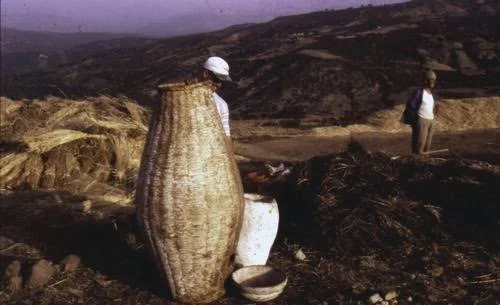
Grain might be stored in houses, raised granaries, pits, bins, or communal facilities. The appropriate method depended on local climate, pests, building materials, and social organization.
How Fire Preserves Grain
When grain is exposed to sufficient heat in conditions that limit complete combustion, its organic material can become carbonized. Carbonized kernels may retain enough of their shape to be identified by archaeobotanists.
Preservation depends on several variables, including temperature, oxygen availability, moisture, and the duration of heating. Some grains survive as recognizable kernels, while others fragment or become ash.
A burned building may preserve grain in its original storage location, providing unusually clear evidence of how supplies were arranged before destruction.
Identifying Storage Structures
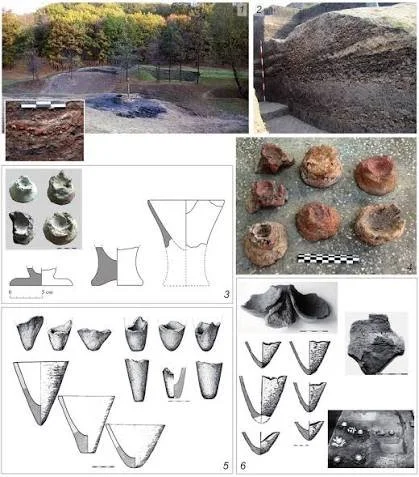
Archaeologists examine building plans, floor surfaces, postholes, wall remains, ventilation features, and the distribution of plant remains.
A structure containing a concentrated mass of grain may have functioned as a storage building, but alternative explanations must be considered. Grain could have been processed or temporarily accumulated in a domestic room.
Raised floors, sealed containers, thick walls, and controlled openings may indicate attempts to protect food from moisture, rodents, and insects. These features must be interpreted in their local architectural context.
What Burned Grain Can Reveal
Carbonized grain can help identify cultivated crops. Wheat, barley, millet, rye, and other cereals have distinctive characteristics, although fragmentation can make identification difficult.
The proportions of different crops may reveal agricultural choices. A store containing several cereal types could represent diversified production, mixed storage, or the pooling of harvests from multiple households.
Seed size, weed seeds, chaff, and other plant remains may also reveal harvesting and cleaning practices.
Accidental Fires and Deliberate Destruction
A burned granary could result from a cooking accident, lightning, warfare, an earthquake followed by fire, or intentional destruction. The pattern of burning may help distinguish among these possibilities, but it rarely provides an answer by itself.
Researchers examine the extent of heat damage, collapsed walls, burned household objects, weapons, and evidence of rebuilding. Historical records may offer additional context.
Even when a settlement was destroyed violently, it is important not to assume that every burned storage building was targeted deliberately.
Storage and Community Organization
The size and location of grain stores can reveal aspects of social life.
Small household bins may indicate that families managed their own reserves. Larger facilities could suggest communal storage, centralized collection, or the management of agricultural surplus by an institution or elite household.
Yet capacity alone does not establish ownership. A large store might serve several families, while a smaller one might belong to a wealthy household.
Archaeologists need to compare storage architecture with settlement layout, access routes, and the distribution of domestic spaces.
Mountain Climate and Preservation
Mountain environments can produce unusual preservation conditions. Cold temperatures, seasonal moisture, and limited access to settlements may influence storage methods.
At the same time, moisture can encourage mold and decay, making ventilation important. Communities may have used raised platforms, sealed containers, or separate buildings to reduce these risks.
Fire could destroy stored supplies and threaten survival, but the resulting carbonization sometimes allows modern researchers to recover evidence that would otherwise have disappeared.
Scientific Analysis
Archaeobotanical study usually involves carefully collecting and examining charred plant remains. Flotation can separate lightweight botanical material from soil, allowing researchers to recover seeds and fragments.
Microscopic analysis may identify crop species, while radiocarbon dating can help establish when the plant material grew. Because grain may have been stored for a period before burning, its date does not necessarily equal the exact date when a structure was built.
Spatial mapping is equally important. The distribution of charred grain across a floor can help determine whether it came from a single container, multiple bins, or material scattered during collapse.
Conclusion
Fire-preserved grain storage provides a rare opportunity to reconstruct agricultural life in mountain villages. Charred seeds reveal what people cultivated, stored, and relied upon, while the remains of storage buildings show how communities organized food reserves.
The most reliable interpretations combine botanical identification, architectural evidence, spatial analysis, and dating. By studying both the grain and the circumstances of its preservation, archaeologists can investigate how mountain communities managed seasonal uncertainty and responded to disasters that threatened their food supply.