Geological surveys at Mongolia’s Oyut Deposit have revealed 3,000-year-old nomadic burial mounds, uncovering Bronze Age and medieval khirgisuur graves.
While investigating the area’s mineral potential, researchers unexpectedly gained insight into Mongolia’s ancient nomadic past. During large-scale surveys in central Mongolia, a cluster of burial sites was discovered, illustrating funerary practices that span over a thousand years. MONTSAME reports that this shows how industrial exploration can intersect with archaeology when preservation laws are enforced.
The discoveries came from mineral exploration conducted by the state-owned Erdenet Mining Corporation (EMC) under a government permit covering parts of Orkhon and Bulgan aimags, regions historically central to steppe civilizations. Exploration at the Oyut Deposit, which began in 2023, confirmed an estimated 357 million tonnes of ore containing more than 1.1 million tonnes of pure copper, making it one of Mongolia’s most significant mineral finds in recent years.
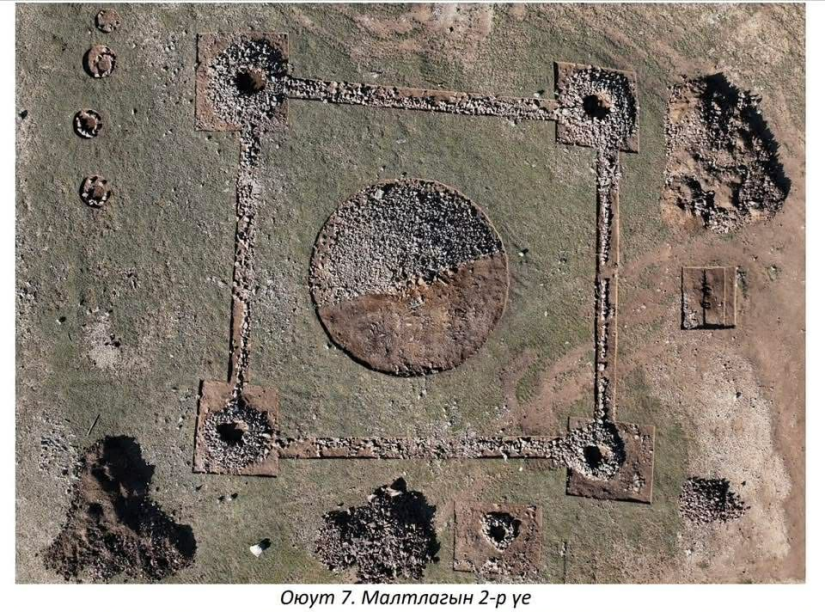
Amid these economic findings, geological teams in 2024 identified 10 ancient burial mounds, known locally as khirgisuur. Following Mongolia’s cultural heritage laws, industrial activity was immediately suspended in the area, and archaeologists were called in to document and study the sites.
Collaboration Between Industry and Archaeology
EMC’s excavation team partnered with the Institute of Nomadic Archaeology at the National University of Mongolia (NUM). Fieldwork continued over several months and concluded in October, with researchers producing a detailed archaeological report, according to MONTSAME.
All ten graves were carefully excavated and documented. Four were securely dated to the Bronze Age, two to the Medieval period (approximately 8th–13th centuries), while the remaining four could not yet be assigned to a specific era. The Bronze Age burials were notably well-preserved despite the region’s harsh climate.
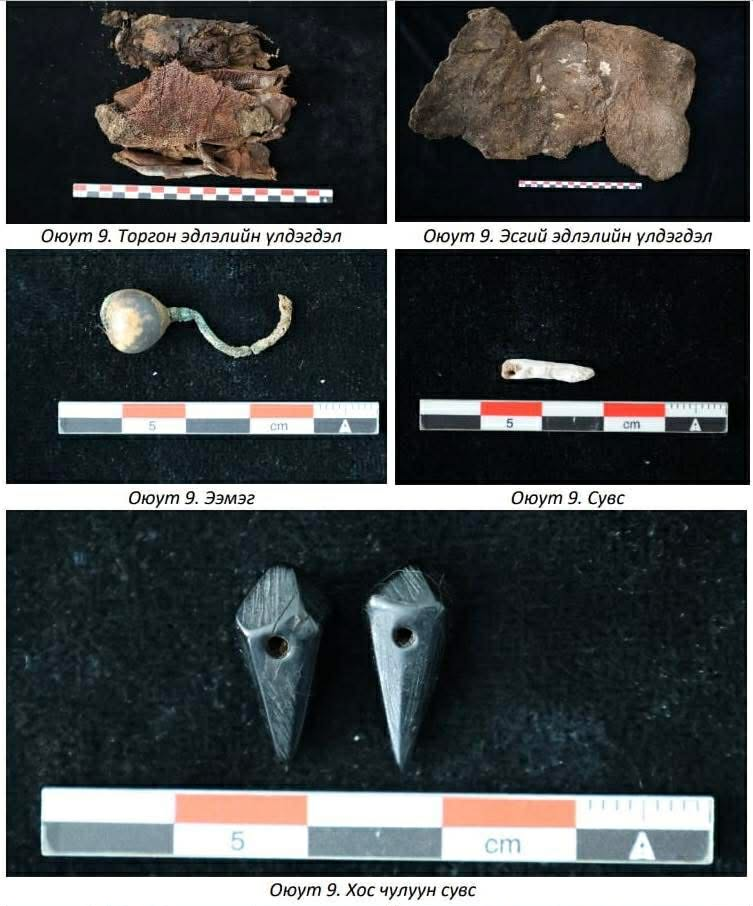
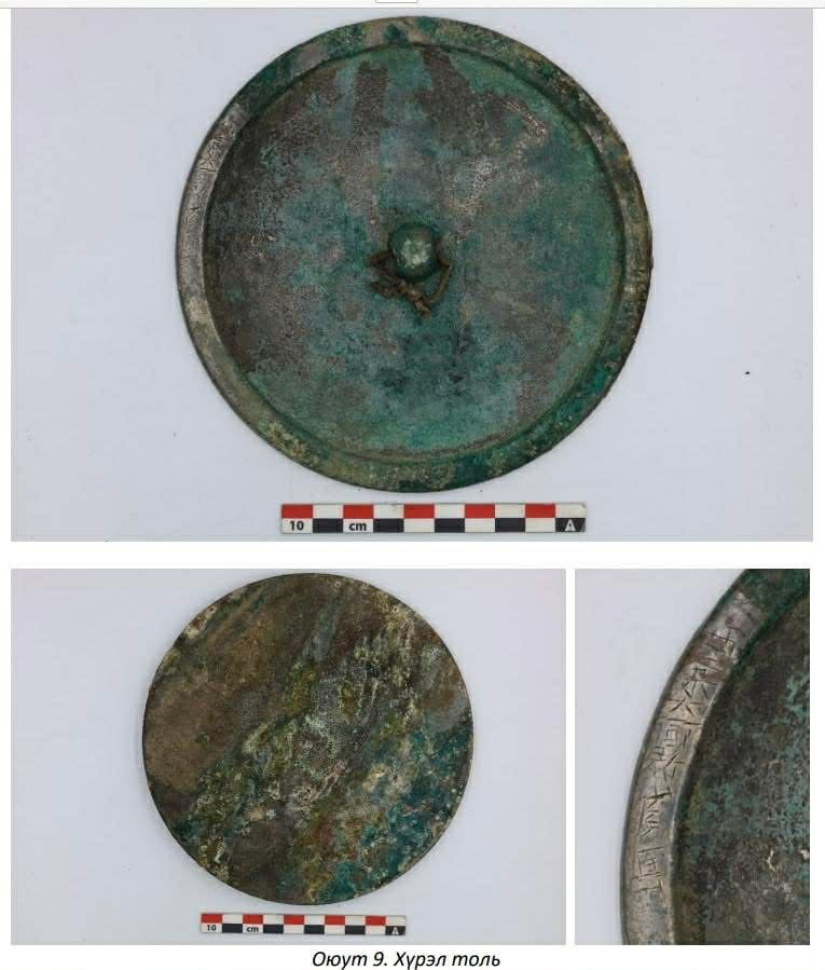
Artifacts recovered included bronze toli (mirrors), fragments of felt, animal bones, and various funerary offerings. These items are typical of steppe nomadic burial practices, where personal belongings and symbolic objects accompanied the deceased into the afterlife.
What Is a Khirgisuur?
Khirgisuur refers to a distinctive type of burial mound found across Mongolia and parts of Inner Asia. Primarily dating to the Late Bronze Age, these stone-covered mounds are often surrounded by features such as standing stones or remains of sacrificial animals. Scholars believe khirgisuur functioned not only as graves but also as ceremonial landmarks, reinforcing social memory and territorial identity among mobile pastoralist communities.
The discovery of khirgisuur at the Oyut Deposit underscores that Orkhon and Bulgan aimags were key corridors for nomadic movement and ritual activity for thousands of years.
A Region Rich in Steppe History
The Orkhon Valley is already recognized as a UNESCO World Heritage Site for its significance in the rise of steppe empires, including the Turkic Khaganates and the Mongol Empire. The newly recorded burial mounds provide additional insight, showing continuity in ritual practices from the Bronze Age through the medieval period.
Archaeological work at the Oyut Deposit spanned 1,032 hectares, making it one of the most extensive heritage assessments associated with mining exploration in recent years.
As Mongolia seeks to balance economic growth with cultural preservation, discoveries like these highlight the importance of collaboration between industry, government, and academic institutions. What began as a copper exploration has revealed lasting traces of the people who shaped the Eurasian steppe long before modern borders or mining operations existed.